Electric Heaters

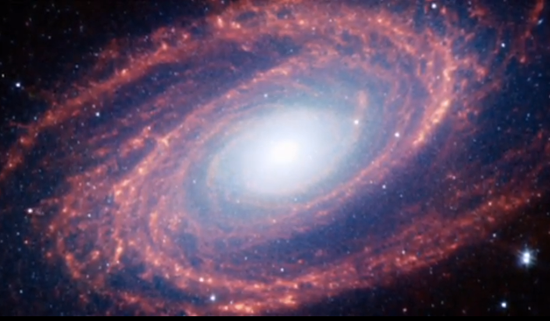
Aug 20, 2018 Gas and dust in space are not heated by gravity. Picture of the Day articles note that astronomers persistently identify electromagnetic formations as gravitationally induced phenomena. For example, particles surging out from stars like the Sun are called a “wind”, instead of electric charge flow. Streams of…

Continue reading

The Universal Force

Aug 15, 2018 Electricity is stronger than gravity. Electricity is really just organized lightning. — George Carlin Cosmic rays are ions from deep space traveling at high velocities. Most cosmic rays are single protons, followed by 5% helium nuclei, with the rest comprising all other elements in the periodic table….

Continue reading

Radio Filaments

Aug 13, 2018 Some galactic jets emit radio broadcasts. It is not the consensus opinion, but Electric Universe proponents think that galactic evolution occurs when large-scale plasma discharges form coherent, electrodynamic filaments. In that view, the Universe is an electrical system that is ever charging and discharging. Rather than gravity, electricity…

Continue reading

Power Planet

Aug 10, 2018 Jupiter dissipates so much electromagnetic energy that it could be thought of as a star. Jupiter’s magnetosphere is so powerful that it reaches beyond Saturn’s orbit, over 600 million kilometers away. Zones of extreme radiation, similar to the Van Allen radiation belts, surround the planet, except that the radiation…

Continue reading

Burning Bright

  Aug 9, 2018 Stars are electrical and they evolve according to the laws of plasma physics. “Every circuit which contains an inductance is intrinsically explosive. The inductive energy…can be tapped at any point of the circuit. If we try to interrupt the current…the inductance tends to supply its energy…

Continue reading

Plasma Waves

Aug 8, 2018 Ganymede’s electric charge means it interacts with Jupiter’s magnetosphere. Planetary scientists sent seven different science experiments to Jupiter over the last forty years, beginning with Pioneer 10 in 1973. Of all Jupiter’s moons, Ganymede is possibly the most exotic, with a mix of topography, including fractures, craters…

Continue reading