Macrocosmic Charge

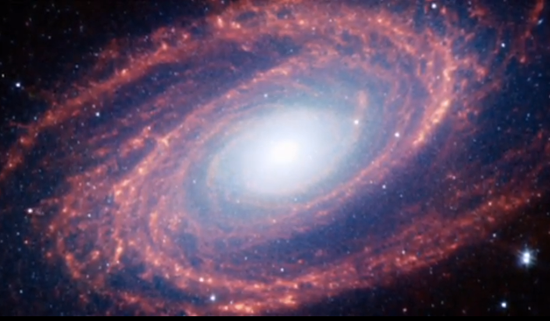
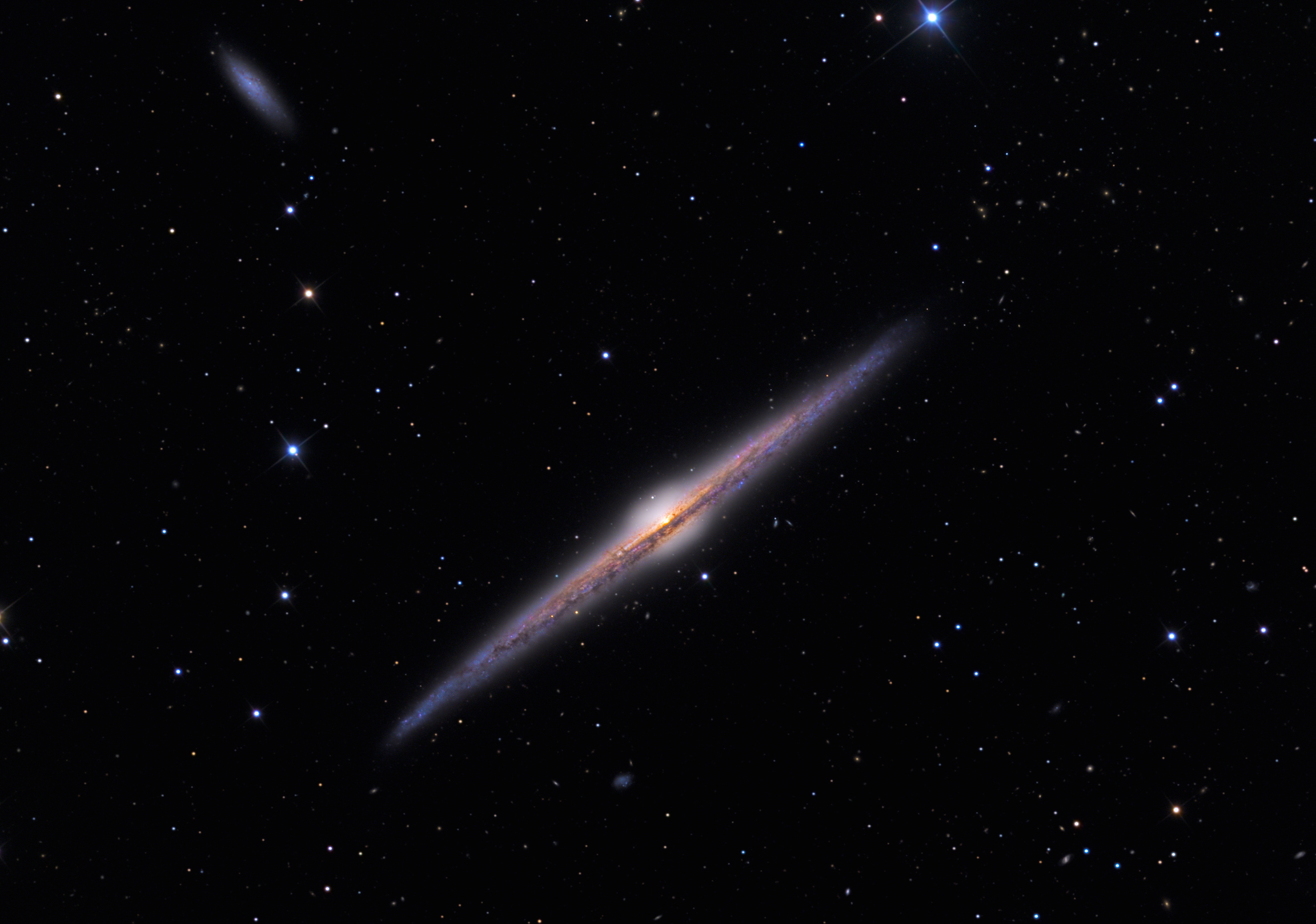
  Feb 16, 2016 What are galaxies? Gal·ax·y /’ɡaləksē/ noun; plural noun: galaxies. A system of millions or billions of stars, together with gas and dust, held together by gravitational attraction. Modern astronomers suggest that galaxies are clouds of hydrogen gas and intergalactic dust that were assembled by gravity billions…
Continue reading

Similarities

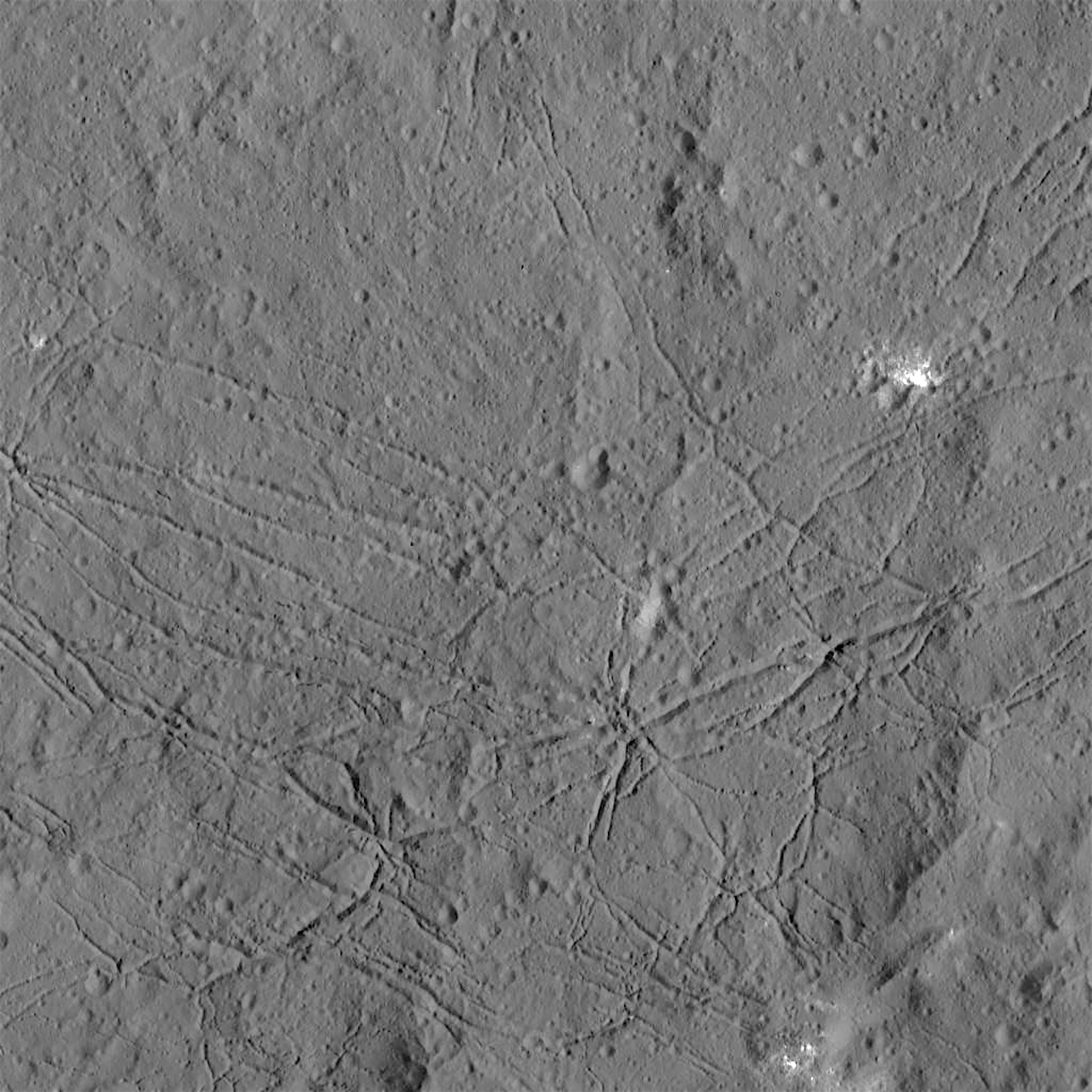
  Feb 10, 2016 The topography of Ceres is reminiscent of other planets and moons. NASA launched the Dawn spacecraft on September 27, 2007. Its scientific observations of the asteroid Vesta began on July 17, 2011 and ended on September 5, 2012 when Dawn fired-up its ion thruster engine and headed toward…

Continue reading

Charge Fluctuation

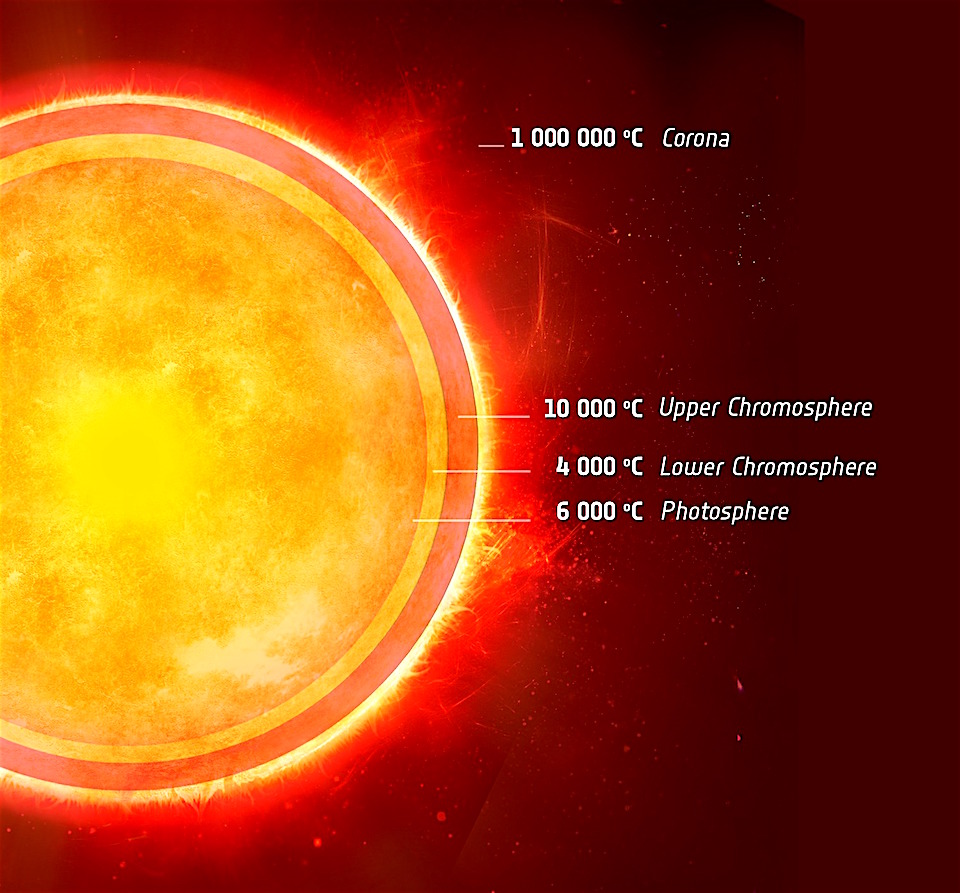
  Feb 8, 2016 The Sun’s activity remains mysterious. Among heliophysicists it is commonly thought that the Sun accelerates charged particles into space in the same way that sound waves are amplified. Solar energy is said to travel outward from the interior through “acoustical wave-guides”, known as magnetic flux tubes….

Continue reading

Radio Lobes

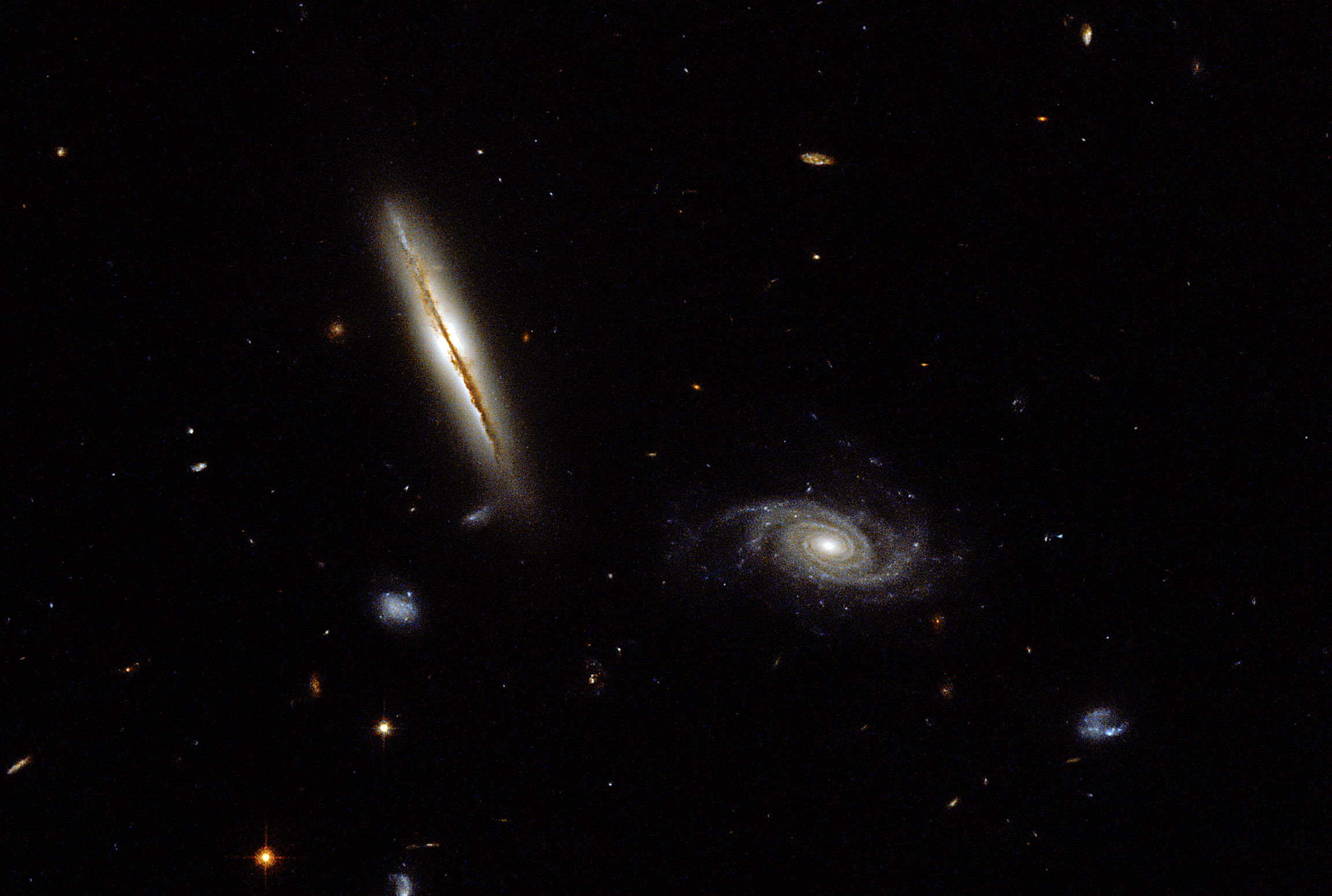
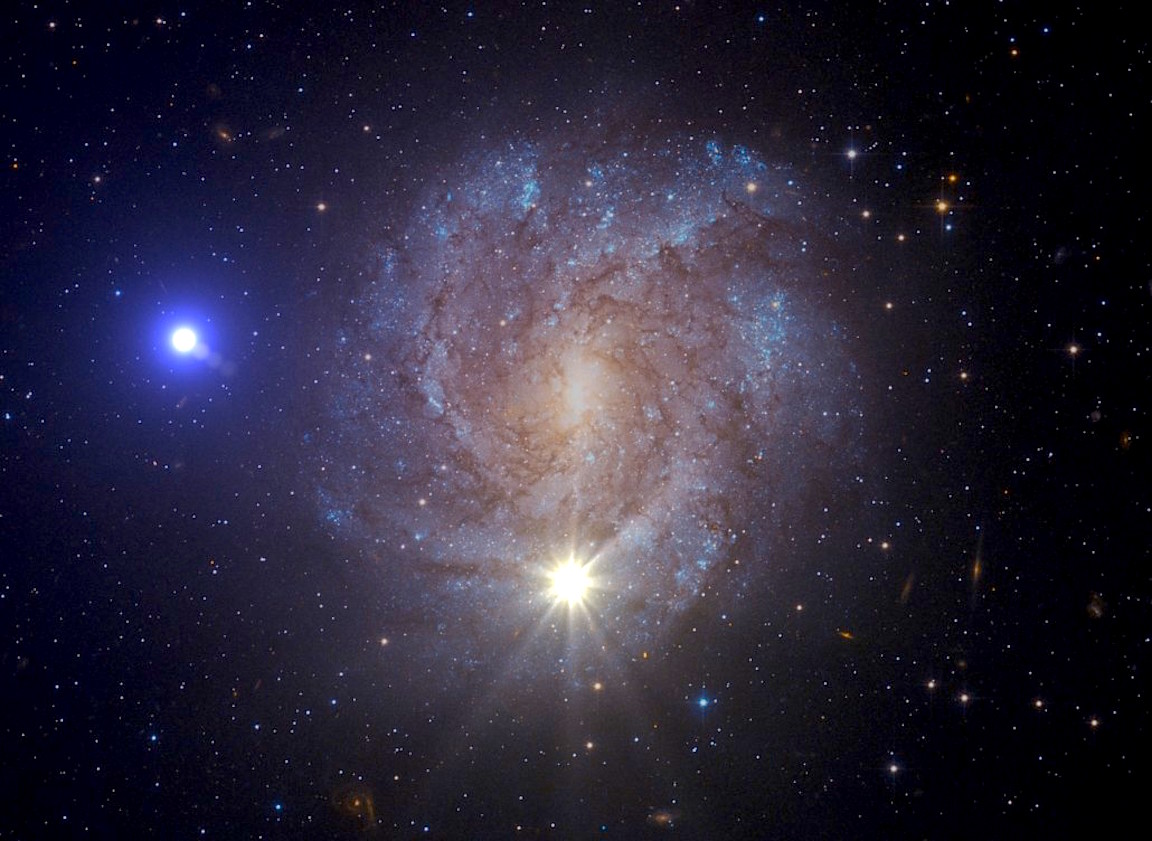
  Feb 5, 2016 Synchrotron radiation from a galactic core. A recent press release from the Hubble Space Telescope announces that the spiral galaxy LO95 0313-192 is ejecting a light-years long jet of material that emits intense radio waves, producing lobate clouds above and below the galactic nucleus. Astronomical theories…

Continue reading

Light Storms

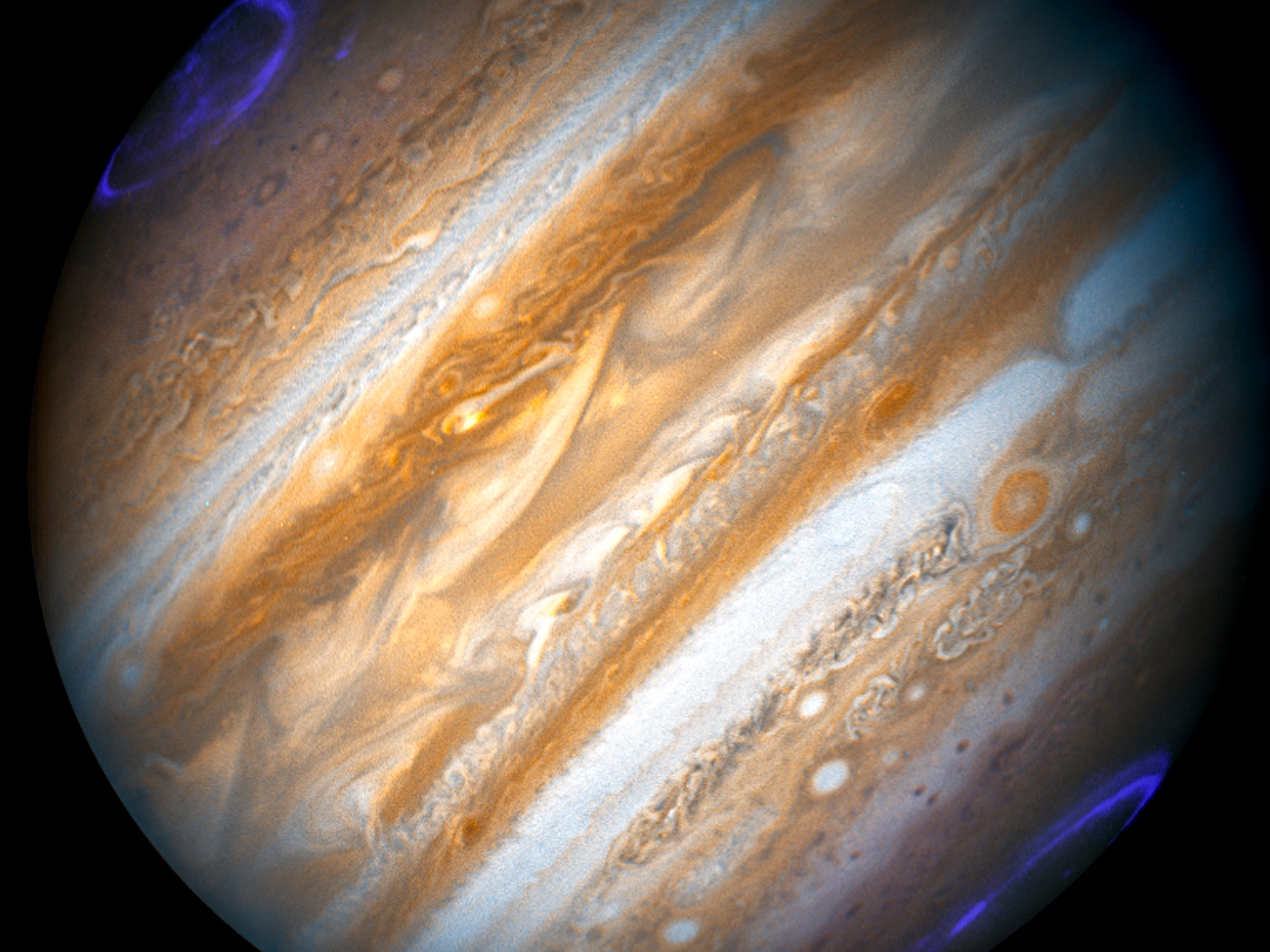
  Feb 4, 2015 Auroral substorms on Jupiter are not caused by the solar wind, alone. A previous Picture of the Day published in late 2012 quoted Jonathan Nichols from the University of Leicester: “The main aurora oval on Jupiter we think should dim when the solar wind blows harder, but…

Continue reading

Prop Wash

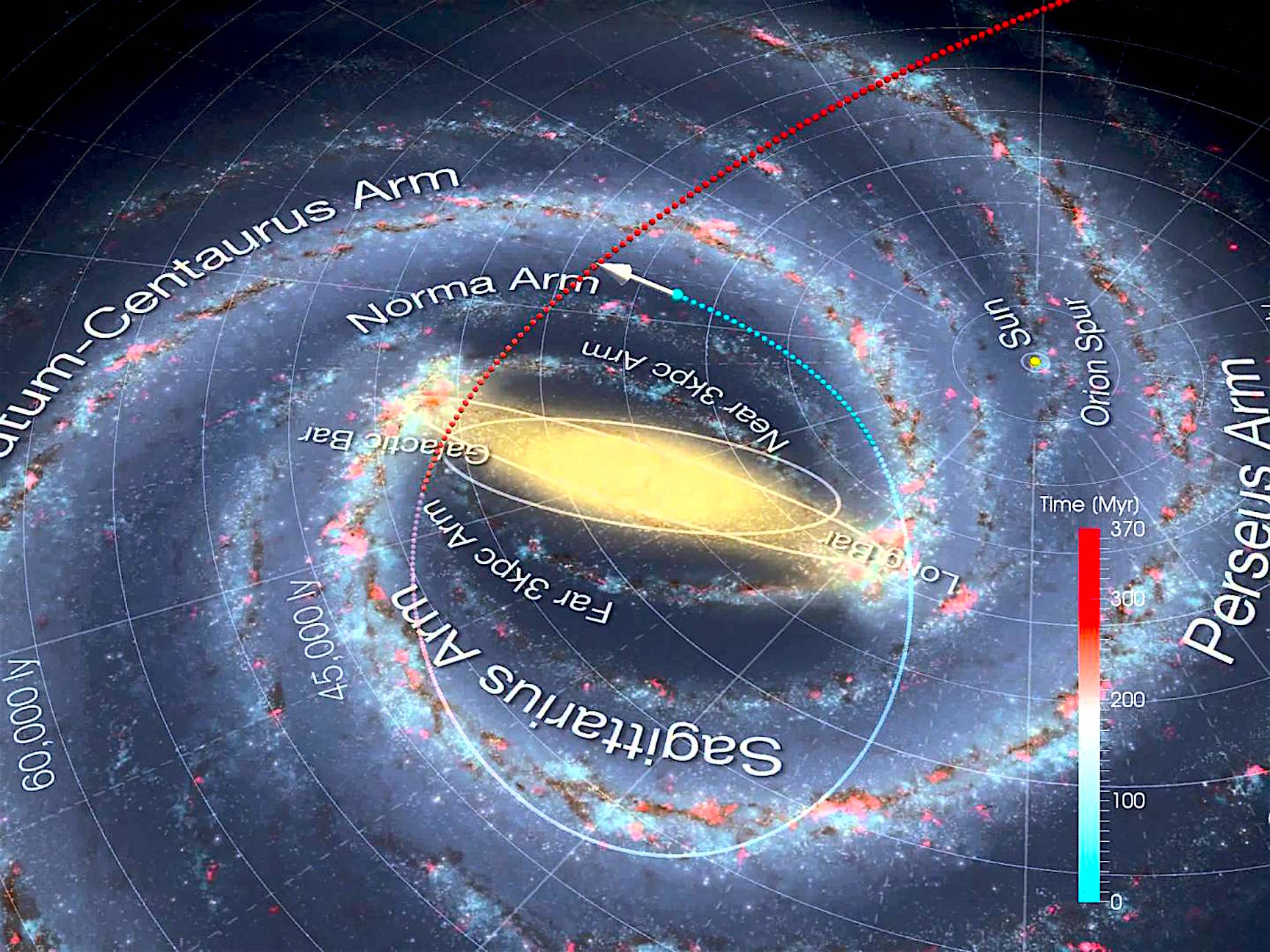
  Feb 3, 2016 Stars in galaxies are affected by electromagnetic fields. According to a recent press release, the Milky Way “…hosts a propeller stirring up chaos in its wake.” By examining the positions of dwarf galaxies and globular clusters around our galaxy, astronomers found that they are not randomly…

Continue reading

Enigmatic Colossus

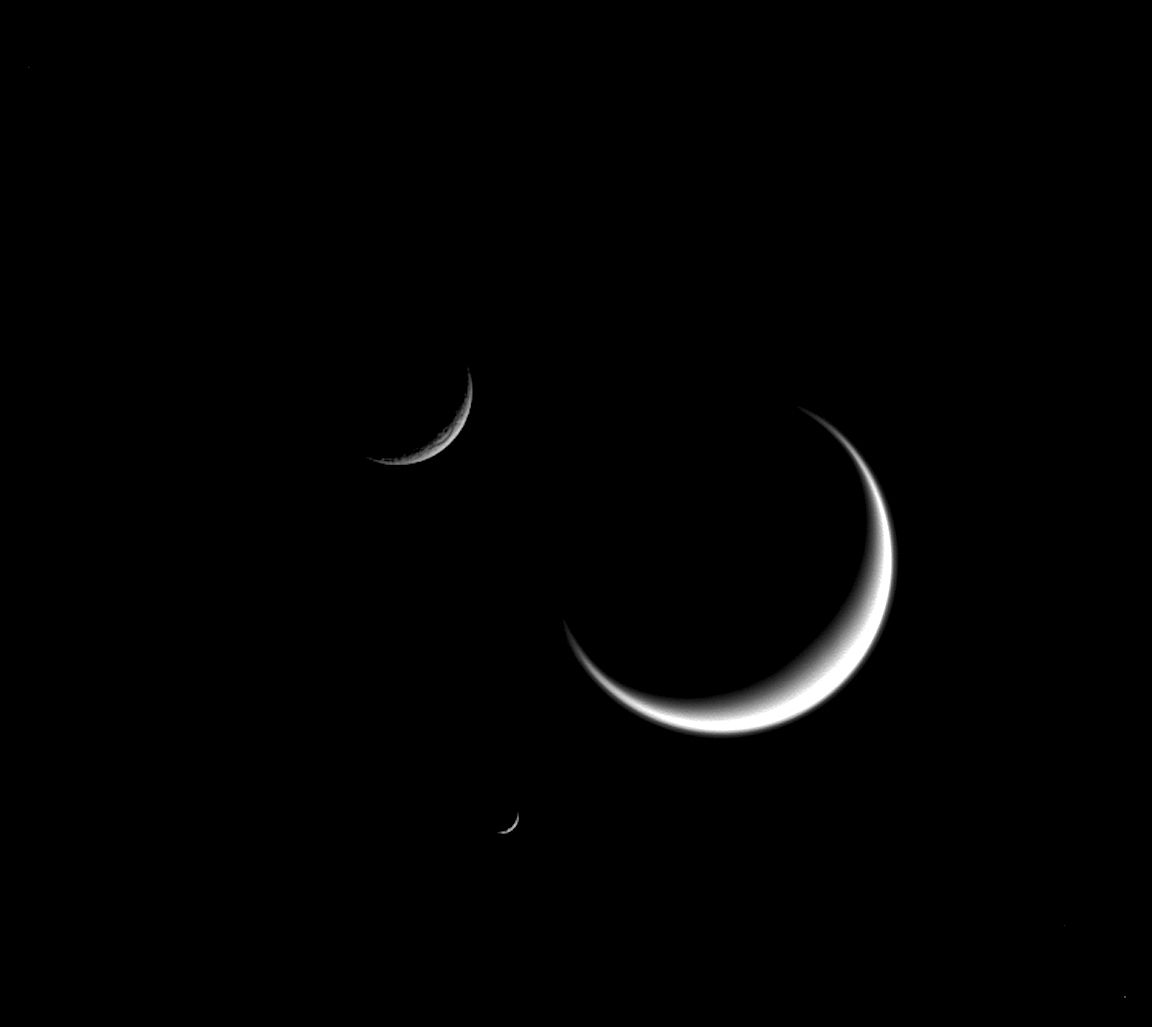
  Feb 2, 2016 Titan’s characteristics support Electric Universe ideas about planet formation. Titan is the second largest moon in the Solar System, with a mean diameter of 5150 kilometers. Only Ganymede is larger, at 5262 kilometers. The planet Mercury is smaller than Titan (4879 kilometers), as is the Moon…

Continue reading

Alpha Orionis

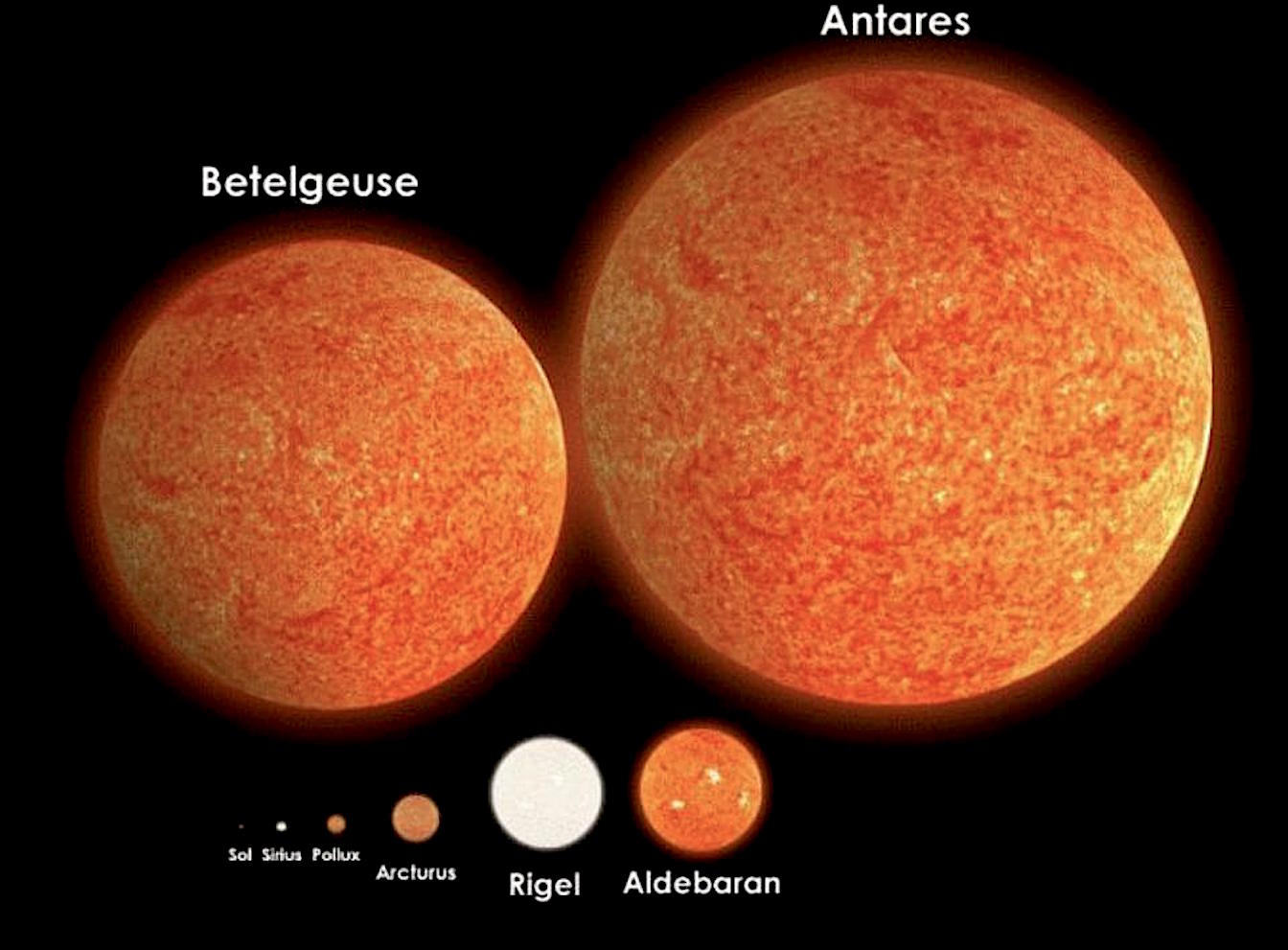
  Feb 1, 2016 More evidence for the Electric Star theory. Betelgeuse is one of the largest stars in the observable Universe. If it were in the Sun’s position, it would be larger than Jupiter’s mean orbital diameter. However, the star’s material structure is so diffuse that the orbits of…

Continue reading

Happy Anniversary

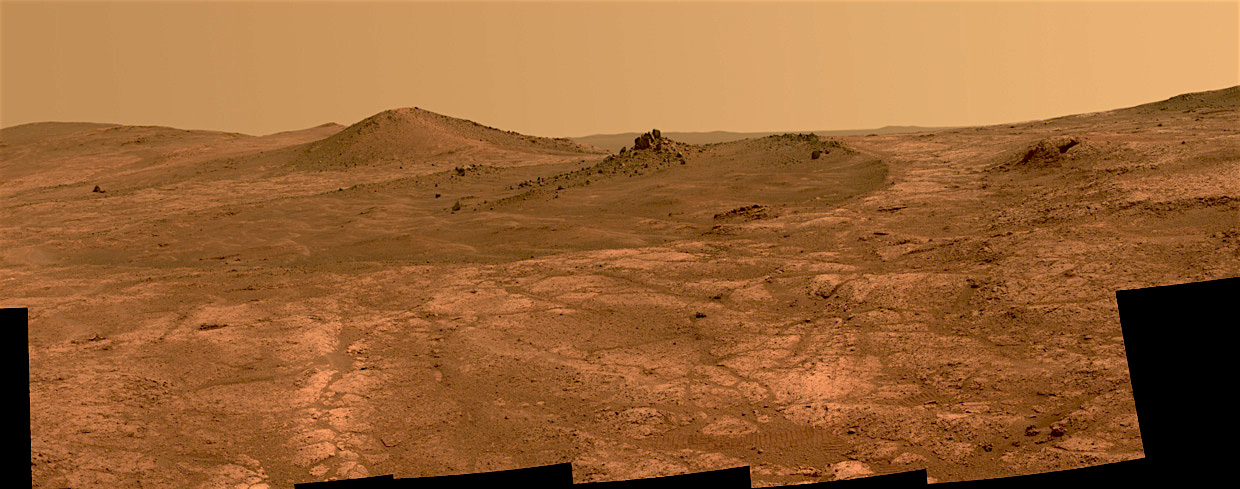
  Jan 29, 2016 The Opportunity rover marks twelve years on Mars. The Mars Exploration Rover (MER) Opportunity bounced to a landing in Meridiani Planum on Sunday, January 5, 2004 after spending six months in flight. Opportunity was scheduled to spend six months in the frozen desert of Mars, but…

Continue reading