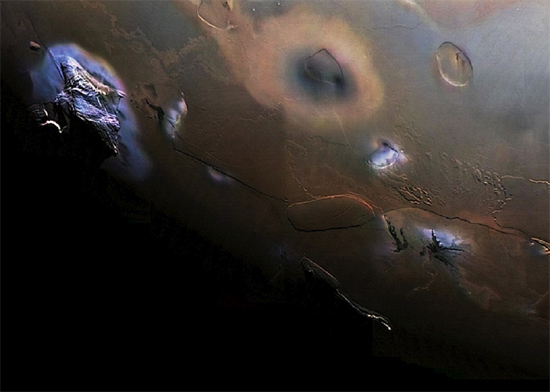
Io

The south polar region of Io

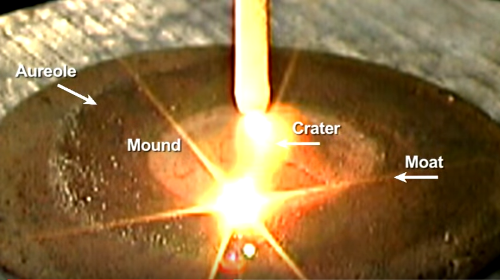
July 02, 2012 Io has puzzled planetary scientists for years. Electric Universe advocates are not so mystified. “The Io close-up shows a surface that bears all of the classic features of a spark-machined surface—the flat clean crater floors and steep circular scalloped walls with sharp edges.” — Wal Thornhill, December…

Continue reading

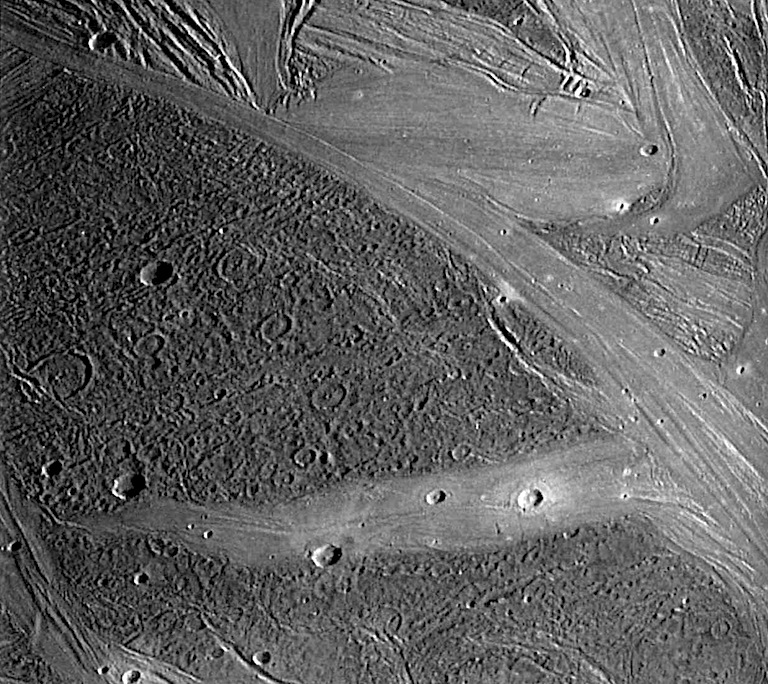
Ganymede

 June 29, 2012 The only moon in the Solar System with an all-encompassing magnetic field continues to be a source of speculation. Over the last three decades, beginning with Pioneer 10 in 1973 and including the most recent visit by New Horizons, seven different remote observation platforms have flown past…

Continue reading

It Has a Nice Ring To It

Galaxy AM 0644-741

June 28, 2012 Galactic haloes are best explained using the Electric Universe theory. There are rings around planets, rings around stars, and there are rings around galactic nuclei, as demonstrated by the Hubble Space Telescope image of AM 0644-741. Although the conventional explanation for such structures is that they are…

Continue reading

Callisto

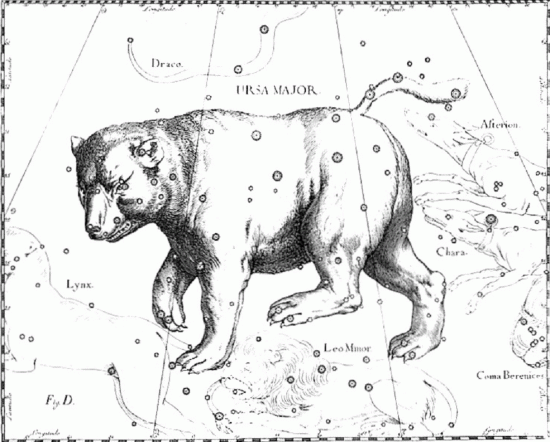
Callisto transformed by Zeus into a constellation

Callisto transformed by Zeus into a constellation. Credit: Uranographia by Johannes Hevelius June 27, 2012 The Galileo mission’s exploration of Jupiter and its environs provided substantial evidence for the Electric Universe hypothesis. The Galileo spacecraft was launched October 18, 1989, following a delay of several years while NASA recovered from…

Continue reading

Rime of the Ancient Water Bridge

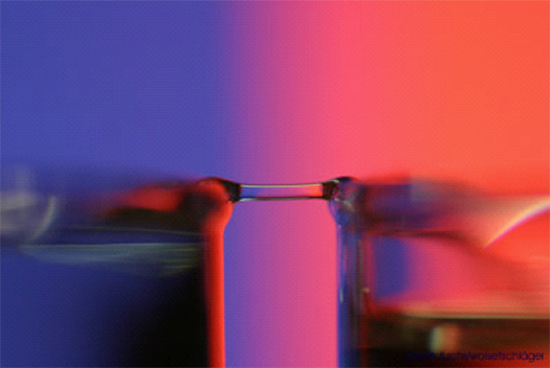
June 25, 2012 Discoveries in space plasma may provide an explanation for a century-old mystery. Sir William Armstrong, an English hydraulics engineer, first observed the floating water bridge in 1893. It defied explanation and was ignored until recently. Findings in space plasma that have renewed attention to plasma’s electrical properties,…

Continue reading

Another Year

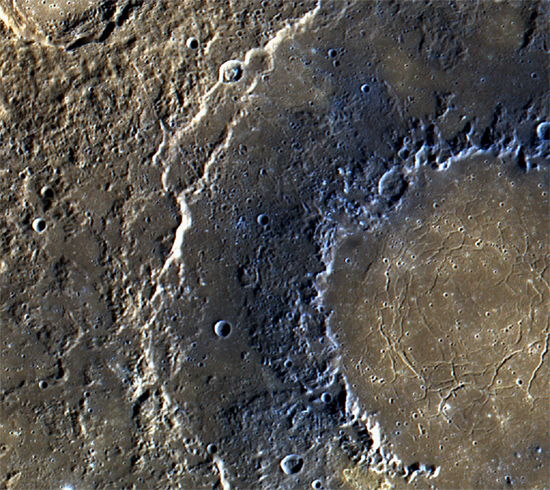
Color image of Rachmaninoff basin

June 22, 2012 The MESSENGER spacecraft has recently been approved for an extended mission in Mercury orbit. The Mercury Surface, Space Environment, Geochemistry and Ranging (MESSENGER) spacecraft was launched from Cape Canaveral on August 3, 2004. On March 17, 2011 MESSENGER entered orbit, initiating a yearlong study of the Solar…

Continue reading

Sun Stroke

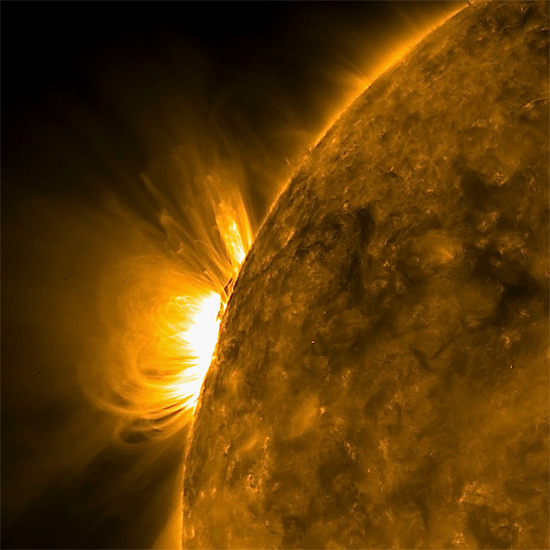
An exploding double layer on the Sun

June 21, 2012 Is it the breaking and reconnecting of magnetic field lines that power solar phenomena? According to a popular view of the Sun, its core pressure is supposed to be so high that it crushes hydrogen atoms together until they fuse into helium atoms, releasing energy of such…

Continue reading

Stars That Will Not Explode

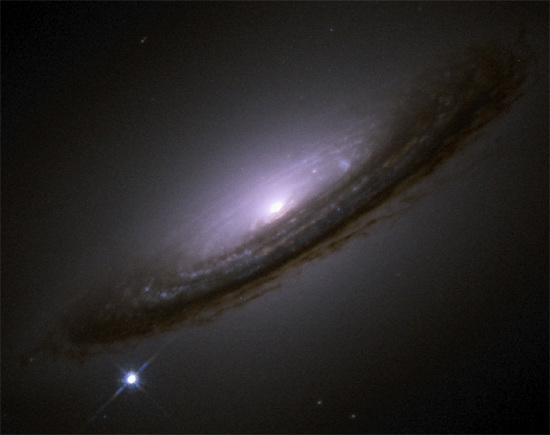
SN1994D, a supernova in NGC 4526

June 20, 2012 NASA computer simulations are not able to correctly model supernova explosions. Contemporary astrophysical models of stellar evolution rely on the mechanical action of cold gas collapsing from gravitational impetus. Stars are seen as whirling vortices of compressed matter heated to fusion temperatures by pressure, alone. Clouds of…

Continue reading