How’s the Weather?

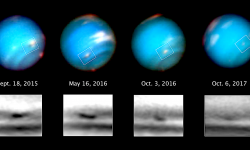
  Feb 19, 2018 Neptune’s clouds contradict consensus viewpoints. On July 12, 2011 Neptune completed its first orbit around the Sun since it was discovered on September 23, 1846. This means that observations are limited, since great distance strains technology’s ability. Spectrographic data about Neptune, for instance, is limited to…

Continue reading

Forbidden Doughnut

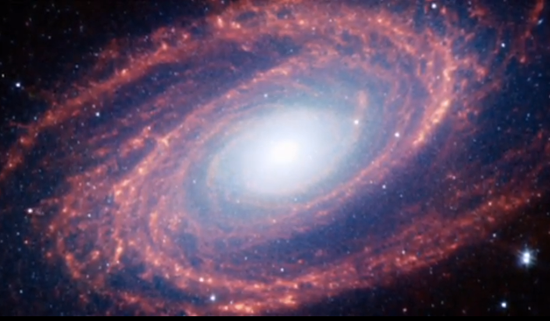
  Feb 16, 2018 A ring of galactic plasma. There is a twisted ring of material surrounding the nucleus of Galaxy Centaurus A; an “active galaxy” that exhibits axial jets and a doughnut-shaped plasma discharge. Active galaxies are brighter than other galaxies of the same type, since they radiate excess…

Continue reading

Back to Basics

  Feb 14, 2018 Newton, Einstein, Darwin and the other early explorers of science discovered the “New World” of fundamental laws of reality, and the scientists who have come after them are mere colonists. Continuing this line of thought, John Horgan writes in THE END OF SCIENCE that the latecomers…

Continue reading

Cassini’s Legacy

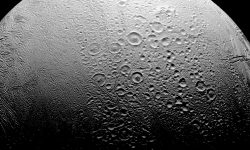
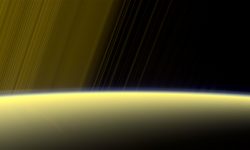
  Feb 12, 2018 Data from the now defunct Cassini mission provides more clues to Saturn’s environment. Cassini-Huygens was launched from Cape Canaveral on October 15, 1997. Its primary mission was to explore the Saturnian system, including the atmosphere, rings, magnetosphere and a number of its moons. As Cassini made its final…

Continue reading

Imaginary Lines

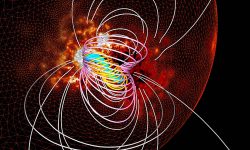
  Feb 9, 2018 There are no discrete magnetic field lines. According to a recent press release, researchers from the Centre de physique théorique (CNRS/École Polytechnique) believe that twisted magnetic fields called, “flux ropes” become trapped in a “cage”, causing explosions of “magnetic energy” on the Sun. An “…entanglement of magnetic…

Continue reading

Bubble Layers

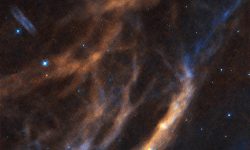
  Feb 8, 2018 Spherical shells around stars are signs of electrical activity. More than 70 years ago Dr. Charles Bruce noted that planetary nebulae are similar to electric discharges. He reasoned that their shapes were hourglasses, with central stars obscured by dusty toroids. Since nebular shapes are similar to…

Continue reading

Charge Flow

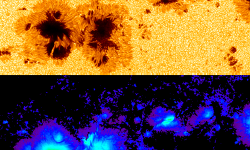
  Feb 7, 2018 Capacitance, resistance, and induction power the Sun. What are stars? And, by extension, what is the Sun? Consensus opinions state that the Sun is composed of elements formed in the Big Bang; other elements created in dying stars; and elements formed in supernovae explosions. Primordial hydrogen…

Continue reading