Circuit Breakers

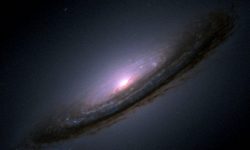
  March 20, 2018 Computer simulations cannot correctly model supernova explosions. Contemporary astrophysical models of stellar evolution rely on the mechanical action of cold gas collapsing from gravitational impetus. Stars are seen as whirling vortices of compressed matter heated to fusion temperatures by pressure, alone. Clouds of gas and dust…

Continue reading

Nothing to Melt

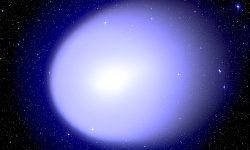
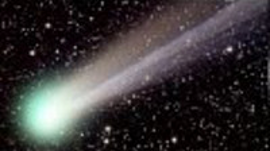
  Mar 16, 2018 Comets are not made of ice and mud. Accepted astrophysical theories would never lead astronomers to consider X-rays from comets. Comets are supposed to be dirty snowballs, gradually melting away as they approach the Sun. However, as previously written, both the Giotto and Deep Impact missions…

Continue reading

Field of Vision

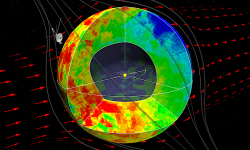
  March 15, 2018 New ways to see the cosmos. According to a recent press release, an electromagnetic field connects the Large and Small Magellanic Clouds. As previously written, the Small Magellanic Cloud is no more than a smudge of light in the southern sky. Its companion, the Large Magellanic…

Continue reading

Gamma-Ray Glow

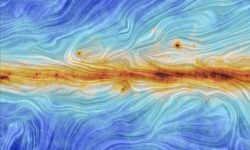
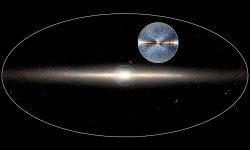
  Mar 14, 2018 The Milky Way is built from plasma. NASA launched the Fermi Gamma-Ray Space Telescope on June 11, 2008. Its primary mission is observing high frequency electromagnetic waves in space, including gamma-rays. Gamma-rays are the most energetic of the three types of radioactivity, with values 10^15 times…

Continue reading

Shocked Moon

  Mar 12, 2018 Electricity sculpted Rhea. Recently, Cassini completed its multi-year mission in orbit around Saturn. During that time, it trained its camera on the majority of Saturn’s moons, including Rhea. Rhea is second in size to Titan, with a mean diameter of 1528 kilometers. One of its more…

Continue reading

Mergers and Spinoffs

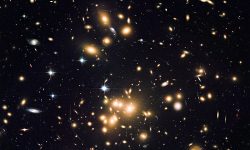
  Mar 9, 2018 High temperatures in galaxy clusters are an enigma. Astronomers use gravity as their primary explanation for most energetic events, like high temperatures in the galaxy cluster shown above. It “must be” because of collisions among its member galaxies in the remote past, or from the merger…

Continue reading

Jovian Powerhouse

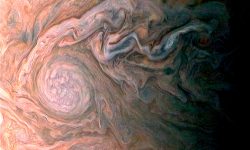
  March 8, 2018 Jupiter’s electromagnetic fields are larger than predicted. The Juno spacecraft entered orbit around Jupiter on July 4, 2016 after an August 5, 2011 launch and a five-year flight. Since there are radiation belts around Jupiter similar to the Van Allen radiation belts that surround Earth, but…

Continue reading