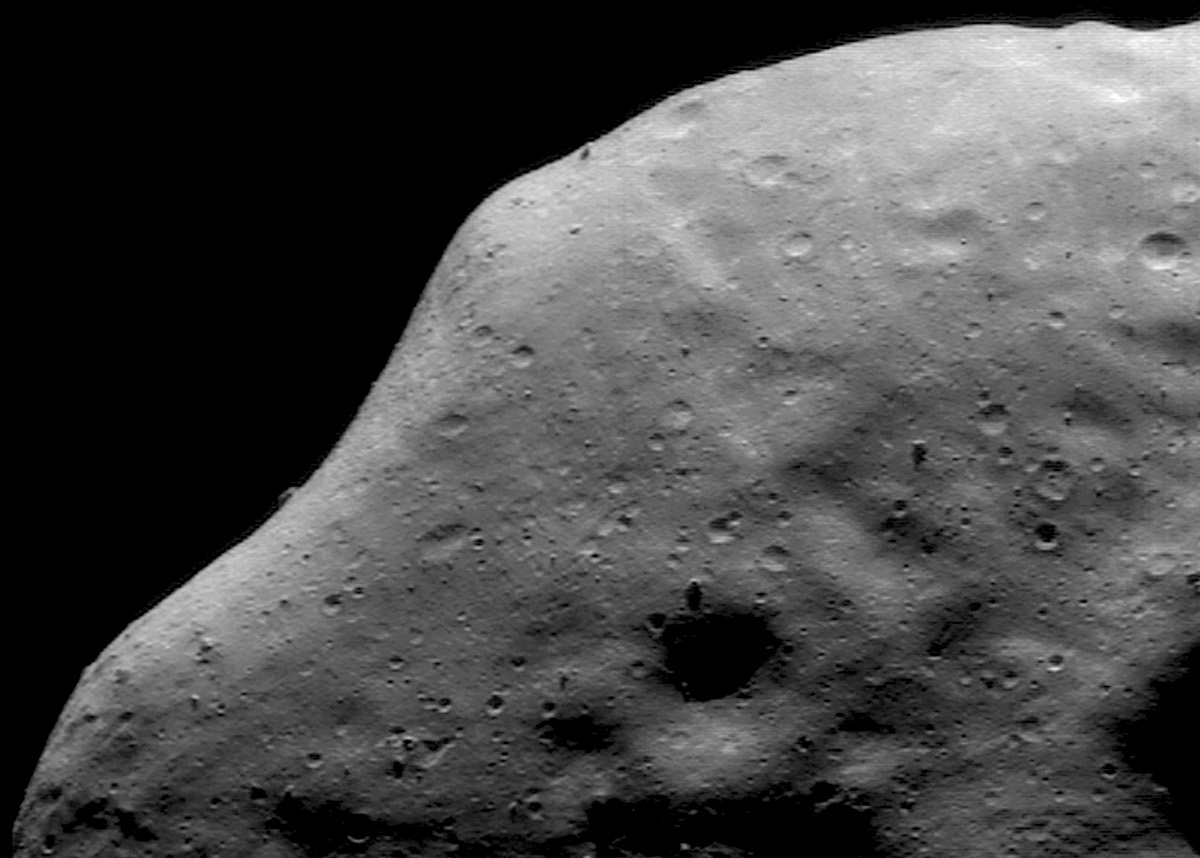
Rocking Rock

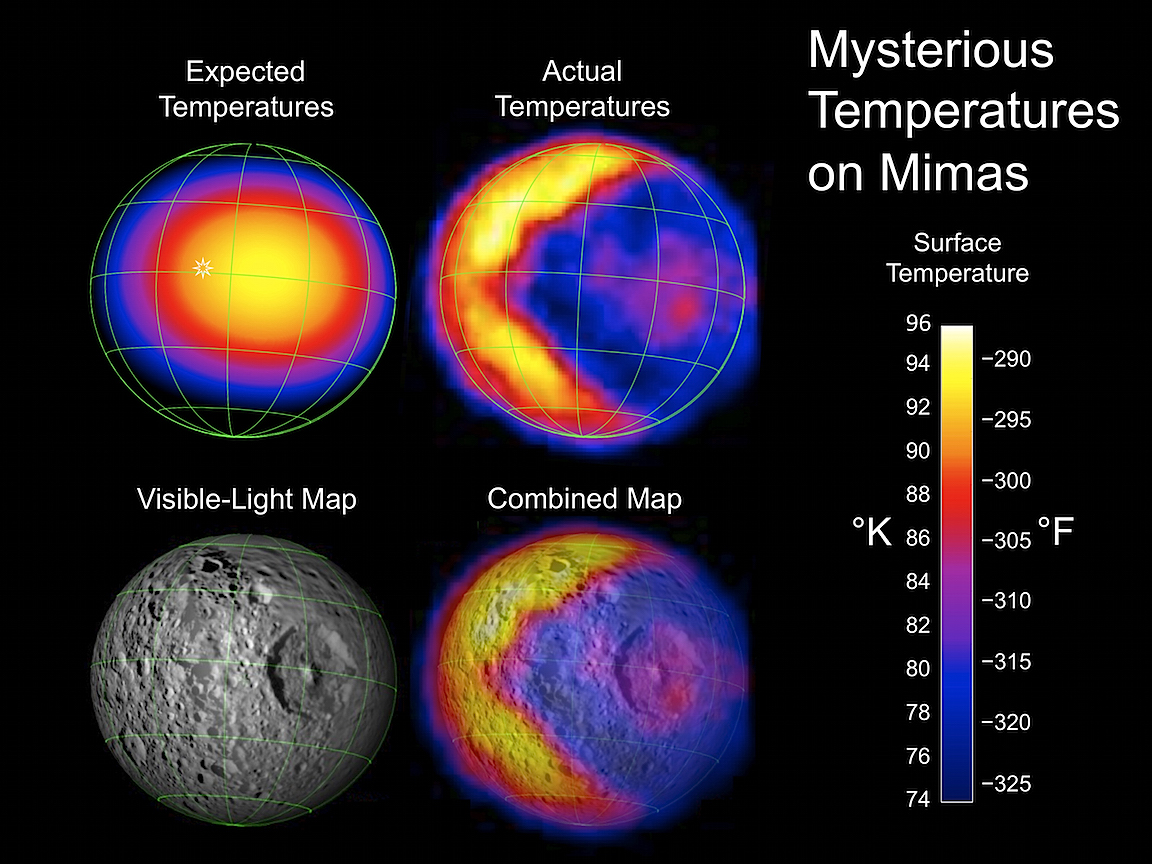
  Apr 16, 2015 Saturn’s moon Mimas exhibits a significant libration. In past Picture of the Day articles, several moons in the Solar System were analyzed in terms of their electrical connection with their parent bodies. In particular, the discovery that Jupiter’s moon Io and Saturn’s moon Enceladus are exchanging powerful…
Continue reading

Plasma Contortions

  Apr 15, 2015 Rather than black holes, electricity should be considered. Electric Universe advocates propose that electric currents in plasma generate magnetic fields that constrict the current flow. As previous Picture of the Day articles point out, the constricted channel is known as a “Bennett pinch,” or “z-pinch.” Pinched…

Continue reading

La Grasa Oscura

  Apr 14, 2015 The largest galaxy cluster is said to contain a majority of dark matter. “One can show the following: given any rule, however ‘fundamental’ or ‘necessary’ for science, there are always circumstances when it is advisable not only to ignore the rule, but to adopt its opposite.” —…

Continue reading

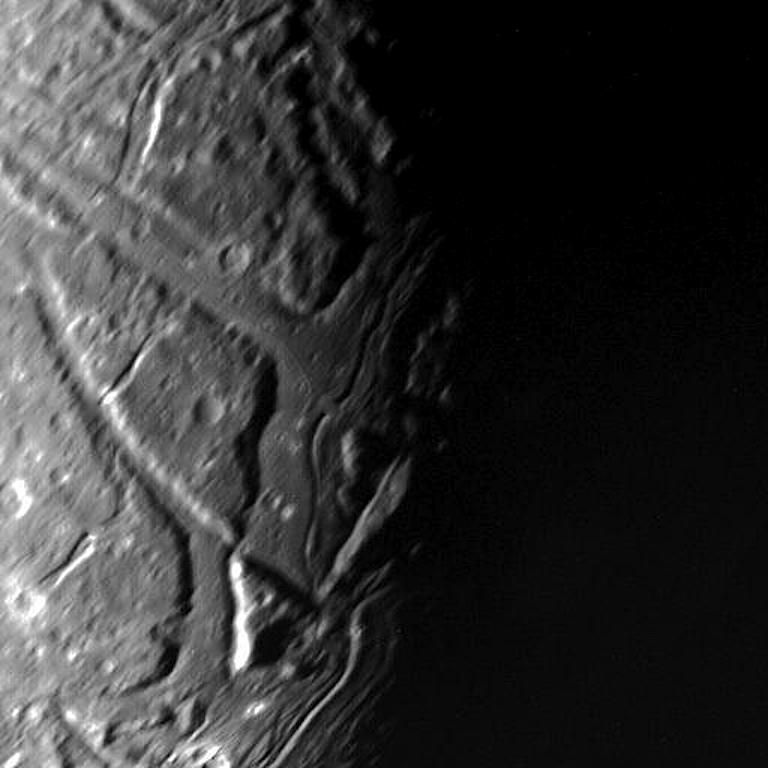
Tempestuous Ariel

  Apr 13, 2015 Another moon with unmistakable signs of electric discharge impacts. The moon Ariel is pockmarked with craters ranging from five to ten kilometers across—almost undetectable in the image above—however, a few craters measuring 20-30 kilometers across are visible. The crater dimensions might seem small, but considering Ariel’s…

Continue reading

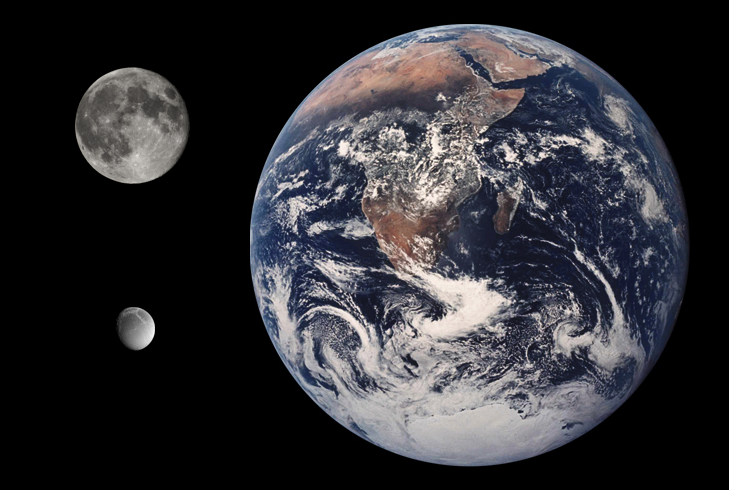
Desolate Dione

  Apr 10, 2015 Saturn’s fourth largest moon indicates that plasma events of some kind once clawed into its surface. The first images of Dione revealed a moon whose surface appeared to be dominated by bright “wisps” that wound around its face. Later, when higher resolution pictures were decoded, the wisps were…

Continue reading

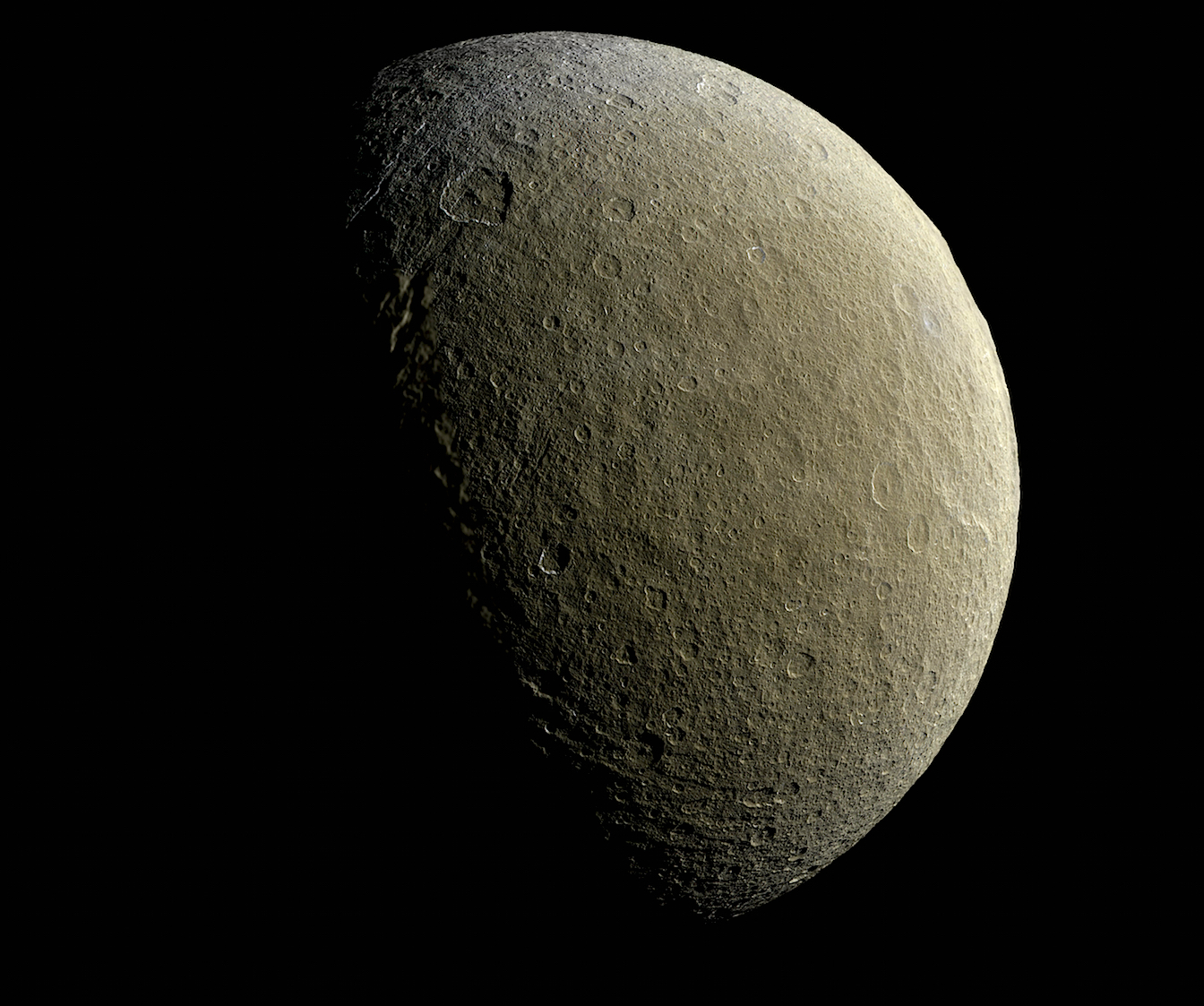
Resolving Rhea

  Apr 8, 2015 Rhea bears examination in light of electrical theories. Rhea is one of Saturn’s medium-sized moons, second only in size to Titan, with a mean diameter of 1528 kilometers. The entire visible surface of Rhea is covered in craters, making it a candidate for the most heavily…

Continue reading

Charged Gravity

  Apr 7, 2015 Space and time do not bend or warp. In September 1998 astrophysicists documented an inexplicable “tug” acting on the now defunct Ulysses spacecraft as it traveled through the Solar System in an orbit over the Sun’s poles. When radio signals from Earth were returned from an onboard…

Continue reading

Primordial Plasma

  Mar 27, 2015 Hot gas or streams of charged particles? Complex rings, knots, and twisted streamers are often ejected from stars (and other celestial objects). The overall shape of so-called “planetary nebulae” sometimes reveal gigantic, bifurcated jets emerging from their central stars, indicating the beginnings of helical shapes. According…

Continue reading

Jet Filaments

  Mar 26, 2015 Particle jets are not caused by black holes. How jets of ionized particles erupt from various objects in space is one of the most difficult problems facing modern astronomers. What force creates energetic particle emissions that can sometimes span distances measured in light-years, or even thousands of…

Continue reading