Solar Plasma

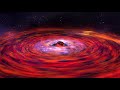
  Oct 23, 2018 The Sun is not a ball of hot gas. The conventional model of how the Sun works relies on thermonuclear processes. Although no direct measurement is possible, temperatures in its core are thought to be more than 15 million Celsius, with compressive strain greater than 340…

Continue reading

Not a Crater?

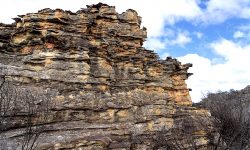
Oct 22, 2018 The terrain found in Australia is not easy to explain using conventional theories. Many previous Picture of the Day articles discuss the continent of Australia. Wilpena Pound, Uluru, the Olgas, and the coastal topography seem to disprove gradual processes of sedimentation and erosion over millions of years….

Continue reading

Blue Oblivion

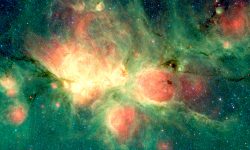
Oct 19, 2018 The Chandra X-ray Observatory recently experienced a fault that, were it not resolved, would have meant the end of its life. As many Pictures of the Day demonstrate, Chandra, along with Hubble, Spitzer, and other space telescopes, provides fuel for Electric Universe fires. Modern astronomers measure the…

Continue reading

Charged Aurora

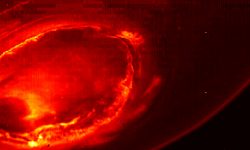
  Oct 18, 2018 Aurorae on Jupiter are poorly understood by consensus astrophysicists. Jupiter is 142,984 kilometers in diameter at its equator. A day on Jupiter lasts only 9.925 hours. Its rapid rotational velocity means that its equatorial diameter is 9275 kilometers more than the distance between its poles. According…

Continue reading

Land Ho!

Oct 17, 2018 MASCOT is on the surface of Ryugu. The Japan Aerospace mission, Hyabusa 2, recently deployed its third lander to the surface of asteroid 162173 Ryugu. After its December 3, 2014 launch date, and a velocity nudge from Earth’s gravity on December 5, 2014 Hyabusa 2 entered orbit…

Continue reading

Dust Eruption

  Oct 16, 2018 How can water vapor explode from a comet far from the Sun? The Rosetta Cometary Probe was launched March 2, 2004 on a rendezvous mission with comet 67P/Churyumov-Gerasimenko. It was in hibernation for most of the trip, only powering up its instruments in January of 2014….

Continue reading