Electric Aurorae

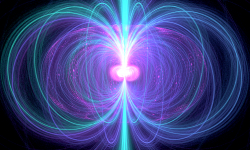
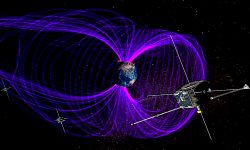
  Feb 21, 2018 There is an electrical structure called a magnetotail extending away from Earth for millions of kilometers. In 1966, the U.S. Navy satellite, TRIAD, recorded electromagnetic disturbances as it passed over Earth’s poles and through the Van Allen Radiation Belts. Those vertical electric currents that flow to Earth from…
Continue reading

How’s the Weather?

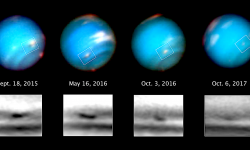
  Feb 19, 2018 Neptune’s clouds contradict consensus viewpoints. On July 12, 2011 Neptune completed its first orbit around the Sun since it was discovered on September 23, 1846. This means that observations are limited, since great distance strains technology’s ability. Spectrographic data about Neptune, for instance, is limited to…

Continue reading

Forbidden Doughnut

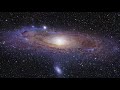
  Feb 16, 2018 A ring of galactic plasma. There is a twisted ring of material surrounding the nucleus of Galaxy Centaurus A; an “active galaxy” that exhibits axial jets and a doughnut-shaped plasma discharge. Active galaxies are brighter than other galaxies of the same type, since they radiate excess…

Continue reading

Back to Basics

  Feb 14, 2018 Newton, Einstein, Darwin and the other early explorers of science discovered the “New World” of fundamental laws of reality, and the scientists who have come after them are mere colonists. Continuing this line of thought, John Horgan writes in THE END OF SCIENCE that the latecomers…

Continue reading

A Brown Study

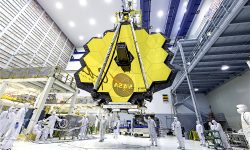
  Feb 13, 2018 Brown dwarf stars could be harbors for life in the cosmos. The James Webb Space Telescope (JWST) is scheduled for launch in October 2018 on a five-year mission. Its goals are to search for the earliest galaxies—meaning that it will look for those with the greatest…

Continue reading

The Mysterious Hum

Thunderblog -- The Mysterious Hum

 The Mysterious Hum By Jimmy Mikecz You hear a low rumble that sounds like it is about a mile away. You go outside, but the annoying noise is actually louder in your house. The low hum is not an appliance, and there are no factories or highways nearby. You and…

Continue reading

Sputtering Canyons, Part 2

Thunderblog -- Sputtering Canyons, Part 2 dsci0098

Sputtering Canyons, Part 2 By Andrew Hall In Sputtering Canyons, Part 1, we discussed Arches National Monument and evidence that it was formed by a complex sputtering discharge process. That process involved a thermal spiking, barrier discharge in a layer of wet sandstone. In Part 2, we’ll take a broader look…

Continue reading