Sputtering Canyons, Part 1

Thunderblog -- Sputtering Canyons dsci0213

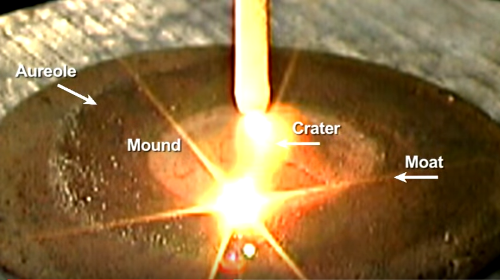
Sputtering Canyons, Part 1 By Andrew Hall In summer of 2016, following the Electric Universe conference in Phoenix, Arizona, EU Geology researchers visited Arches National Monument and the deep reaches of Canyonlands, Utah, where the Green and Colorado Rivers channel through the Colorado Plateau. Arches National Monument is an astonishing…


Continue reading

Cassini’s Legacy

  Feb 12, 2018 Data from the now defunct Cassini mission provides more clues to Saturn’s environment. Cassini-Huygens was launched from Cape Canaveral on October 15, 1997. Its primary mission was to explore the Saturnian system, including the atmosphere, rings, magnetosphere and a number of its moons. As Cassini made its final…

Continue reading

Imaginary Lines

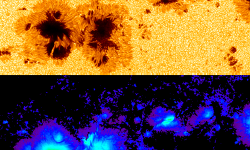
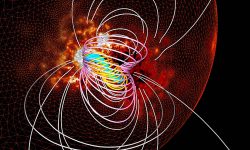
  Feb 9, 2018 There are no discrete magnetic field lines. According to a recent press release, researchers from the Centre de physique théorique (CNRS/École Polytechnique) believe that twisted magnetic fields called, “flux ropes” become trapped in a “cage”, causing explosions of “magnetic energy” on the Sun. An “…entanglement of magnetic…

Continue reading

Bubble Layers

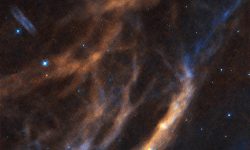
  Feb 8, 2018 Spherical shells around stars are signs of electrical activity. More than 70 years ago Dr. Charles Bruce noted that planetary nebulae are similar to electric discharges. He reasoned that their shapes were hourglasses, with central stars obscured by dusty toroids. Since nebular shapes are similar to…

Continue reading

Charge Flow

  Feb 7, 2018 Capacitance, resistance, and induction power the Sun. What are stars? And, by extension, what is the Sun? Consensus opinions state that the Sun is composed of elements formed in the Big Bang; other elements created in dying stars; and elements formed in supernovae explosions. Primordial hydrogen…

Continue reading

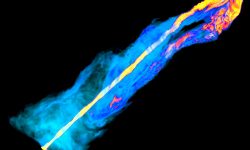
Jet Power

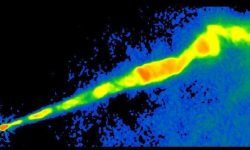
  Feb 5, 2018 Are blazars close-by and not far away? Twin lobes of gamma-rays extending beyond the Milky Way’s central bulge highlighted a previous Picture of the Day. The formations, each about 65,000 light-years in diameter, are a sign that Birkeland currents form z-pinches in galactic plasmas. Electromagnetic fields…

Continue reading