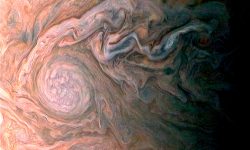
Jovian Powerhouse

May 10, 2017 Jupiter’s electromagnetic fields are larger than predicted. The Juno spacecraft entered orbit around Jupiter on July 4, 2016 after an August 5, 2011 launch and a five-year flight. Since there are radiation belts around Jupiter similar to the Van Allen radiation belts that surround Earth, but thousands…

Continue reading

Organized Plasma

  May 9, 2017 Space structures exhibit electromagnetic behavior. “In order to understand the phenomena in a certain plasma region, it is necessary to map not only the magnetic but also the electric field and the electric currents. Space is filled with a network of currents which transfer energy and momentum…

Continue reading

Fuego Frio

May 8, 2017 Conventional theories state that stars are born in the cold. Stars are commonly thought to be bright, burning balls of hydrogen whose gravitational attraction holds planets in their orbits. Theories say that fusion fire in stellar cores sends energy on a million-year journey before the radiation is…

Continue reading

Ball of Confusion

May 5, 2017 What gives a globular cluster its structure? The Visible and Infrared Survey Telescope for Astronomy (VISTA) began operations a day after its December 11, 2009 dedication ceremony. One of its major contributions is the ability to “see through” dust clouds that obscure background objects. In the image…

Continue reading

Dark Quintessence

  May 4, 2017 Regions of space more than 500 million light-years in diameter are said to reveal dark energy influences. “I have always believed that astrophysics should be the extrapolation of laboratory physics, that we must begin from the present Universe and work our way backward to progressively more…

Continue reading

Glimmers in the Night

May 3, 2017 Rapid fluctuations in nebular “protostars”. Young stars in the Orion Nebula are changing in brightness faster than previously thought possible. Instead of it requiring years for gaseous envelopes surrounding so-called “proto-planetary disks” to heat up and cool down, it is happening in weeks. The information was provided…

Continue reading

Finder’s Fallacy

  May 2, 2017 Don’t stop looking. The Finder’s Fallacy is the downside of the “Eureka!” of discovery. Searching for a needle of explanation in the haystack of data is exhausting, frustrating, often disappointing. Finally to have found a needle, a theory that “works”, is cause for celebration. But the…

Continue reading

Mars 2020

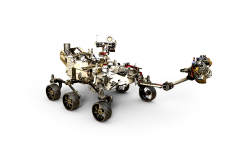
May 1, 2017 A new Mars rover. Sometime in late July or early August 2020 NASA will launch the next Mars lander, based on the design of the Mars Science Laboratory, otherwise known as Curiosity. The Mars 2020 rover includes a new drill design that can collect, sort, and set…

Continue reading

Broken Plates

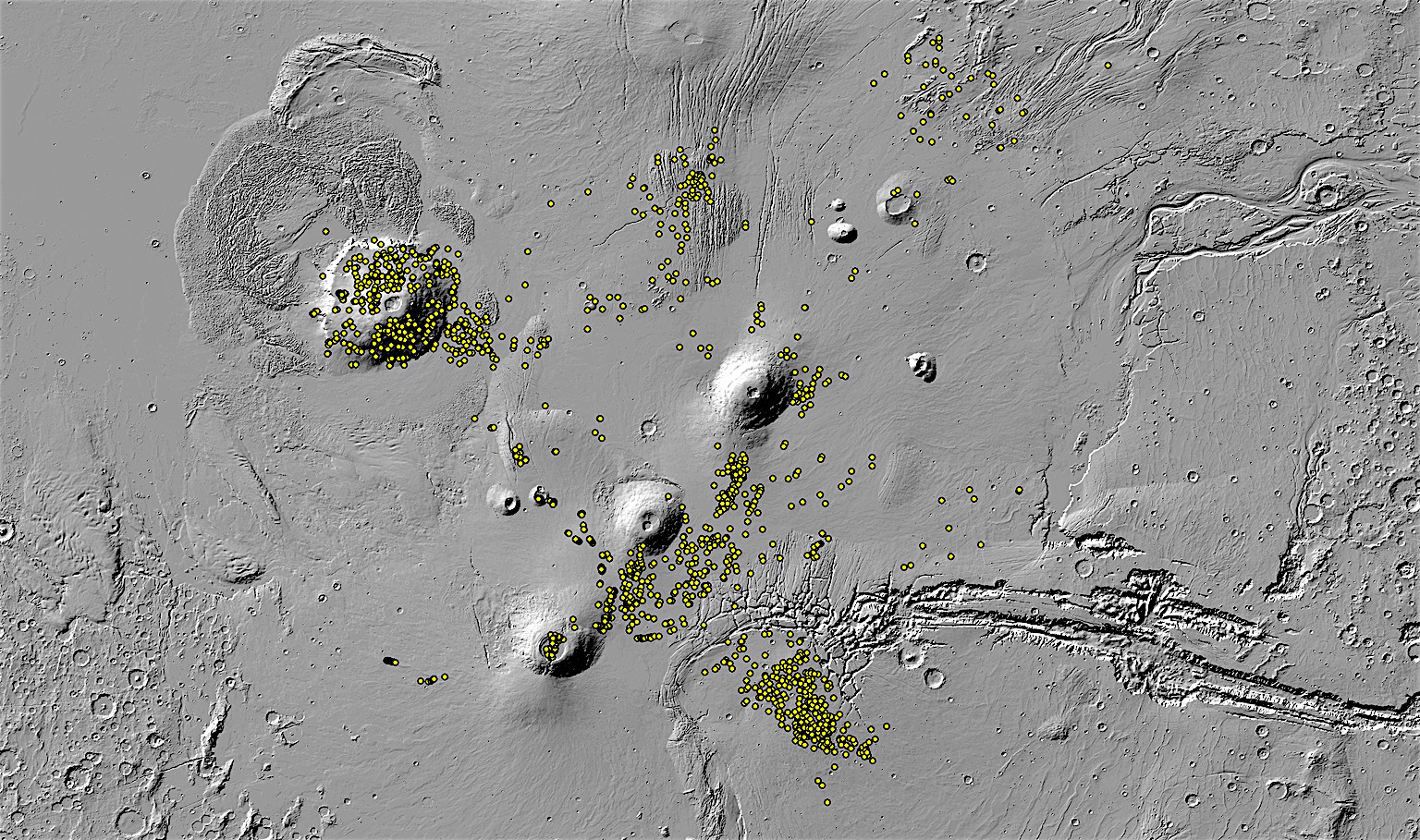
  April 27, 2017 Do crustal blocks slide around? According to planetary scientists, plate tectonic activity on Mars is similar to what happens on Earth. Studies undertaken by the University of California Los Angeles suggest that: “Mars is at a primitive stage of plate tectonics. It gives us a glimpse…

Continue reading