Category: Picture of the Day
A picture and essay from the perspective of the Electric Universe.
Krónos Elektron
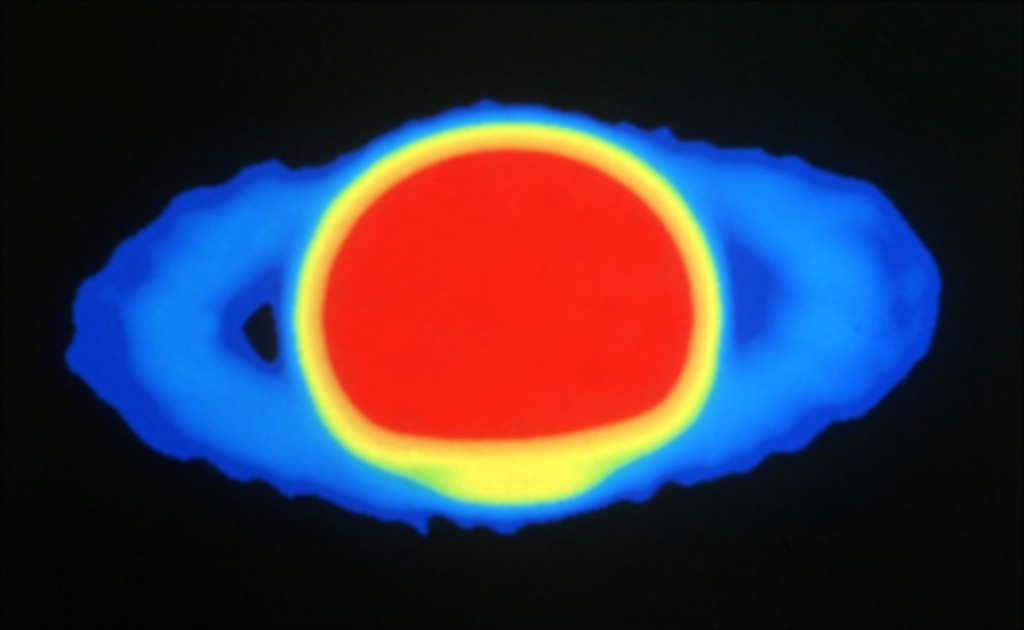
April 25, 2017 Saturn generates electricity. Saturn is quite large compared to Earth; its mean equatorial diameter is about 121,000 kilometers. However, Saturn rotates so fast (10 hours, 34 minutes) that its polar diameter is 108,700 kilometers. The difference is caused by “flattening” as angular momentum pushes the low-density…
A Brown Study
Bubble Layers
Apr 21, 2017 Spherical shells around stars are signs of electrical activity. More than 70 years ago Dr. Charles Bruce noted that planetary nebulae are similar to electric discharges. He reasoned that their shapes were hourglasses, with central stars obscured by dusty toroids. Since nebular shapes are similar to…
A Box of Plasma Rain
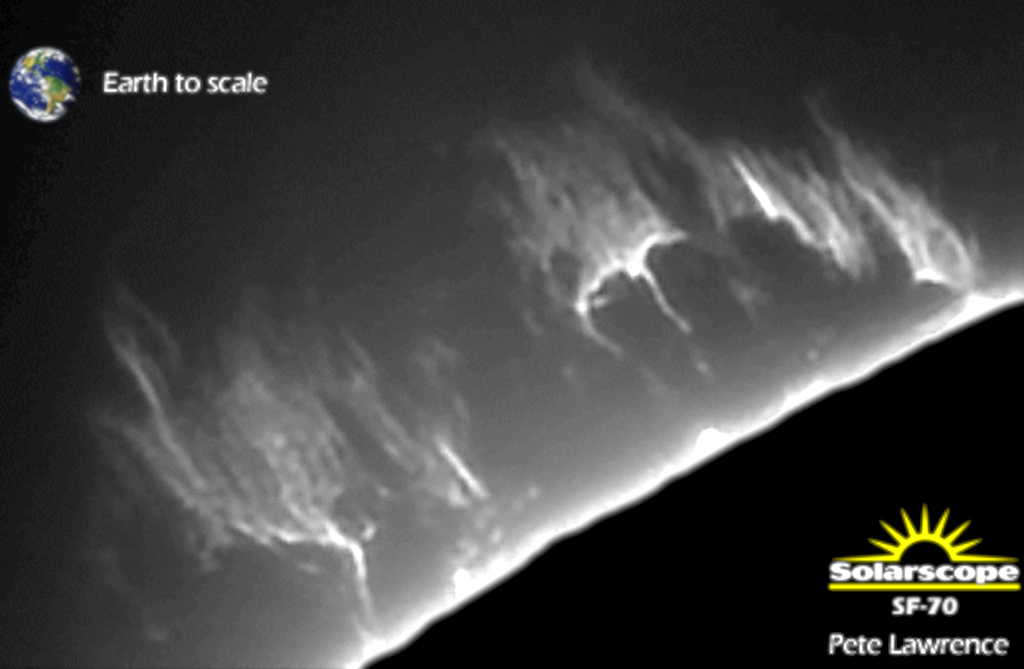
April 20, 2017 “Walk into splintered sunlight…” NASA launched the Interface Region Imaging Spectrograph (IRIS) on June 28, 2013. Its primary mission includes a study of the solar corona: why is it far hotter than the Sun’s surface, or photosphere? Heliophysicists see formations that resemble “mini-tornadoes” in the Sun’s…
A Bridge of Sighs
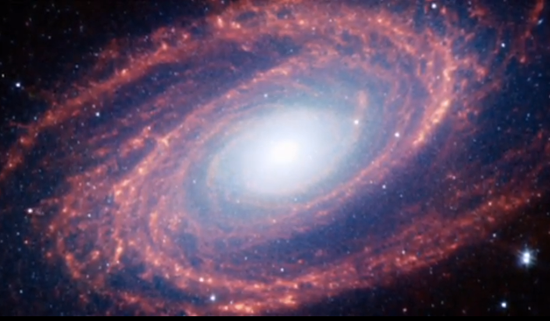
A Star of the Eighth Magnitude
Electric Vortex
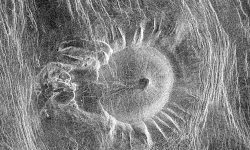
Apr 17, 2017 Instead of tectonic activity, Venus shows signs of electric discharges. The planet Venus shows signs of a somewhat recent catastrophe: giant cracks extend for hundreds of kilometers; formations called “coronae” are accompanied by massive fracture zones, branching out like carved lightning bolts; and vast caldera with upraised…
Rapid Rise
Apr 14, 2017 Stars form at a faster rate in a starburst galaxy. Astronomers using the Hubble’s Wide Field Camera 3 (WFC3) recently announced that a distant galaxy is creating stars at an anomalous rate. So-called “starburst galaxies” contain regions where stars form at “a breakneck rate”, so fast that…