Plateau du Vercors

  Jan 06, 2014 Aciculate peaks and curvilinear ridges outline giant circular depressions in the French Alps. As previously written, stone monoliths can be found all over the world. There are colossal formations that make up the French Alps, for instance. In particular, Mont Aiguille (Needle Mountain) is similar to…
Continue reading

Comets and Galaxies

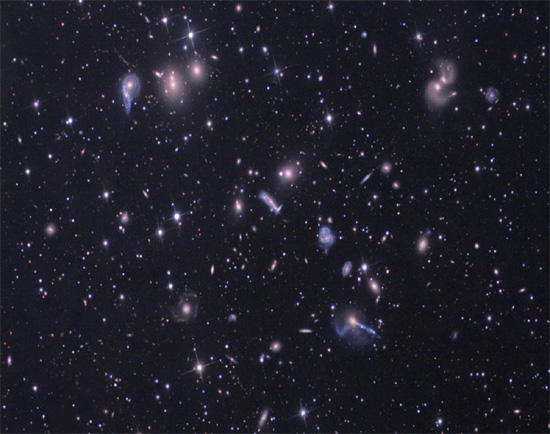
  Jan 02, 2014 Galactic tails, bright comas, and central nuclei are reminiscent of comets. What is a comet? Most astronomers think comets are small, fragile, irregularly shaped objects composed mostly of water ice and dust, along with carbon and silicon-based compounds. “Dirty snowballs,” as Fred Whipple described them in…

Continue reading

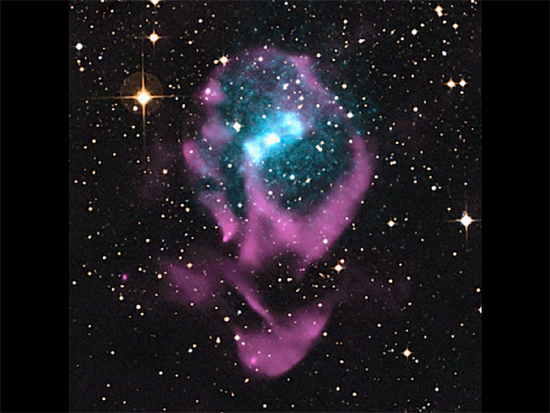
Circinus: an X-Ray Binary?

  Dec 27, 2013 Neutron stars are not viable explanations for energetic objects. Recently, the Chandra observatory detected what they are calling the “youngest” X-ray binary star radiating massive amounts of energy into space. The radiation is in X-ray wavelengths, which non-electrical theories can only interpret as being generated by…

Continue reading

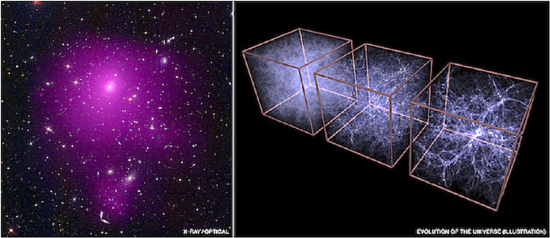
Dark Expansion

abell 85_universe simulation

  Dec 23, 2013 Observations better fit the Electric Universe theory. In previous Thunderbolts Picture of the Day articles about the existence of “dark matter” it was noted that it is primarily an add-on, or ad-hoc theory, so that the current gravitational model of the Universe can be preserved. The lack…

Continue reading

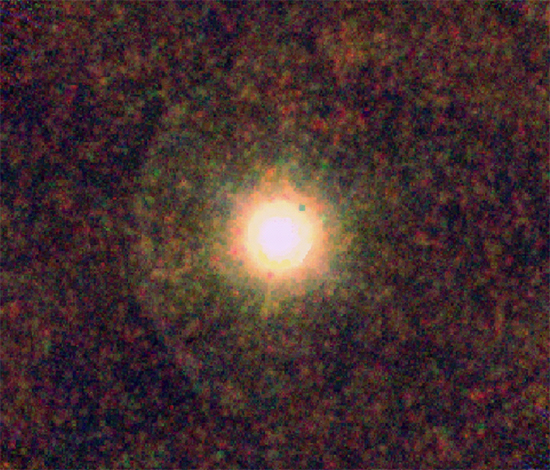
Water in Stars?

  Dec 20, 2013 Some stars are said to be surrounded by haloes of hot water mixed with carbon dust. Astronomers using the Herschel infrared space observatory discovered a putative cloud of hot water surrounding a giant star in the constellation Leo known as IRC+10216. They were also puzzled by…

Continue reading

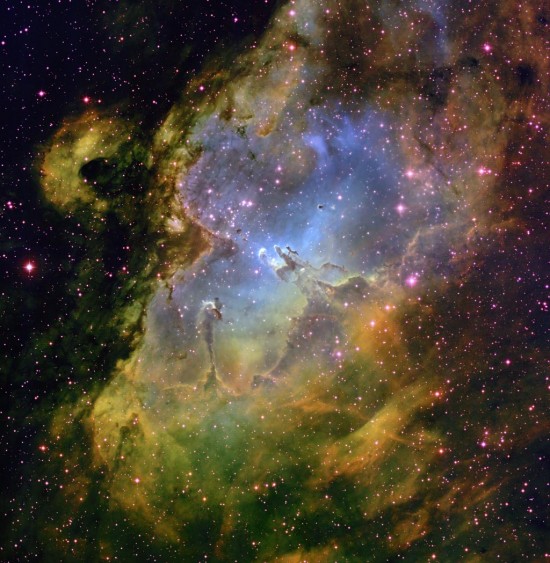
Dusty Plasma

The Eagle Nebula (M16). Credit: T.A.Rector (NRAO/AUI/NSF and NOAO/AURA/NSF) and B.A.Wolpa (NOAO/AURA/NSF)

  Dec 19, 2013 Spiraling filaments suggest electric currents in space. Dust at a temperature near absolute zero shows up in the image above as a blue fog deep in the heart of the Eagle nebula. The Eagle nebula, located in the constellation Serpens approximately 7000 light-years away, is supposedly an active…

Continue reading

Farthest

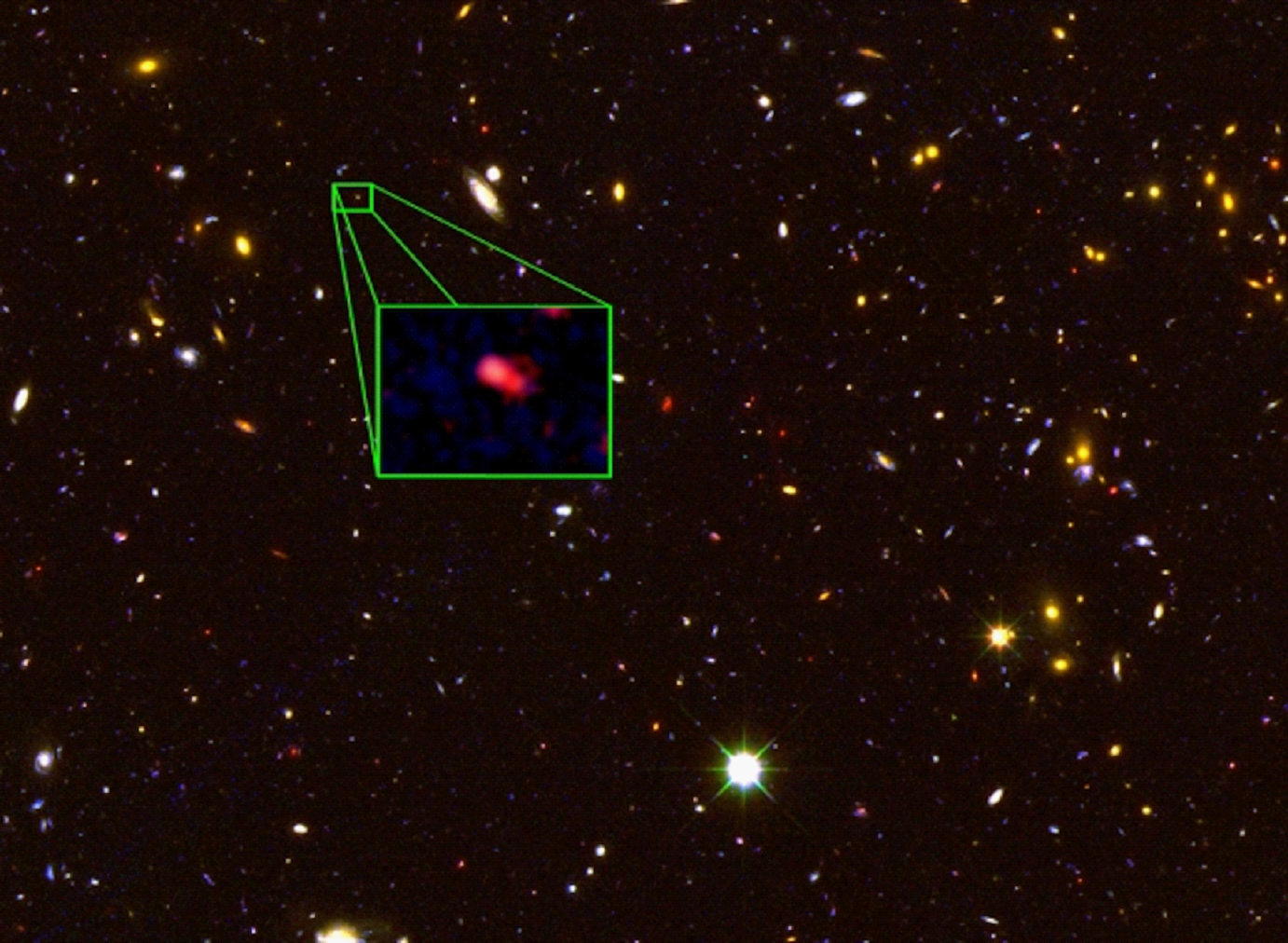
  Dec 18, 2013 The Big Bang theory dominates cosmological theories. A recent press release announced that astronomers using the Hubble Space Telescope and the twin, 10-meter Keck telescopes, have found an object 13.1 billion light-years from Earth, making it “…officially the most distant object ever detected.” Casey Papovich, an…

Continue reading

Electromagnetic Nebulae

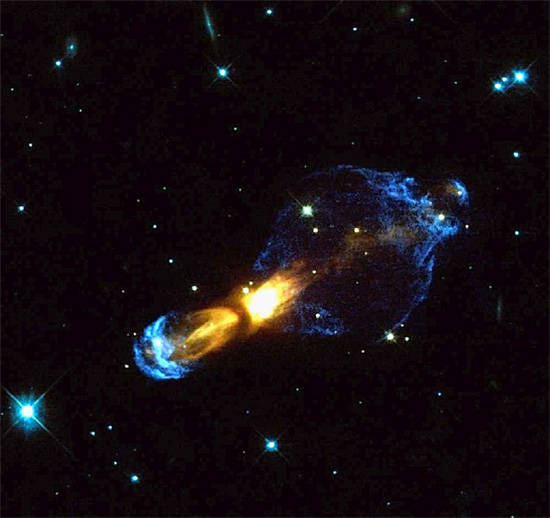
  Dec 17, 2013 The Universe behaves according to the laws of plasma dynamics. In every science journal discussing the behavior of planetary nebulae, the prevailing opinion usually involves gases and dust “blowing” through them, as well as “winds” created by “shock waves” from exploding stars. In many cases, the…

Continue reading

X Flares

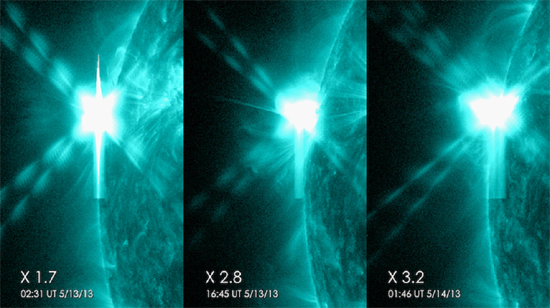
  Dec 16, 2013 An X-2 class solar flare recently missed a direct impact with Earth. Heliophysicists classify solar flares according to their brightness in X-ray wavelengths. C-class flares are the smallest on the scale, with X-ray measurements in the 10^-6 watts per square meter range (W/m^2), while X-class flares…

Continue reading