Black Flares

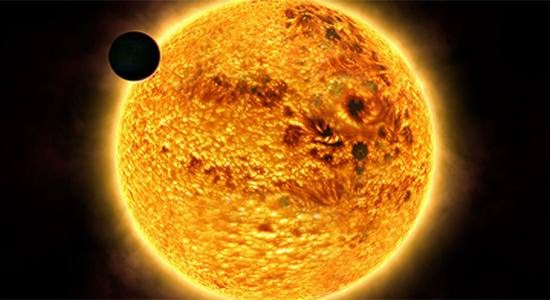
Artist's conception of flaring black hole GX 339-4

  Jan 27, 2014 Black hole theory contradicts itself. Most astrophysicists try to explain narrow jets erupting from various sources by using words like “nozzle” or “high pressure,” contradicting the known behavior of gases in a vacuum. For example, according to a recent press release, “flares” have been discovered jetting from…

Continue reading

The Galilean Moons

  Jan 24, 2014 A collection of the largest moons in the Solar System will soon be observed by a new satellite in orbit around the largest planet. The Juno mission will be looking separately at Jupiter’s four largest moons. Since they vary in size, chemical composition, temperature, and appearance,…

Continue reading

Does Recession Exist?

  Jan 22, 2013 Cosmologists still have no idea what dark energy is. In 1998, two astronomical research teams independently discovered what is now called “dark energy.” Saul Perlmutter of the Lawrence Berkeley National Laboratory and Brian Schmidt from the Australian National University projects each led the two teams who…

Continue reading

Stars in the Plasma Focus

  Jan 20, 2014 Supernovae are what Hannes Alfvén called them: exploding double layers. The Large Magellanic Cloud (LMC) is relatively small, irregular galaxy approximately 168,000 light-years from Earth. The distance is approximate, because different parallax values are obtained when different measuring sticks are used. Within the LMC is an…

Continue reading

Star Forces

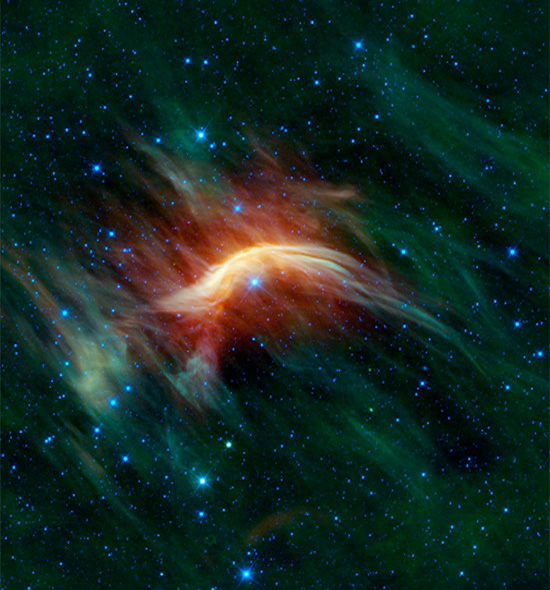
Zeta Ophiuchi in infrared

  Jan 15, 2014 What model best fits heliospheric behavior? “How now, wit! Whither wander you?” — William Shakespeare: As You Like it, Act 1, Scene 2 Space, it is said, is a vacuum. Since the best pumped vacuum on Earth reaches a 0.1 millimeter spacing between individual atoms, while,…

Continue reading

Shaping What Is

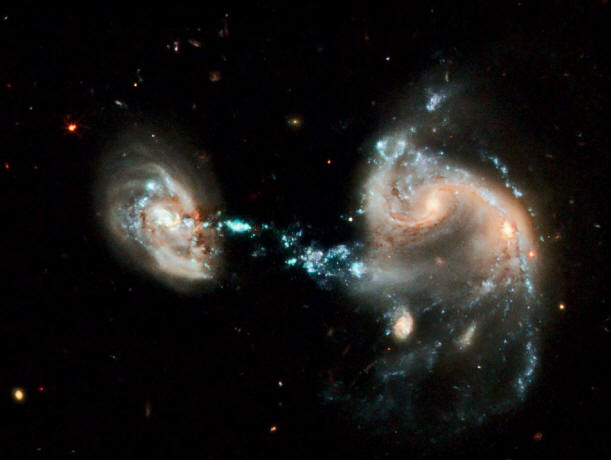
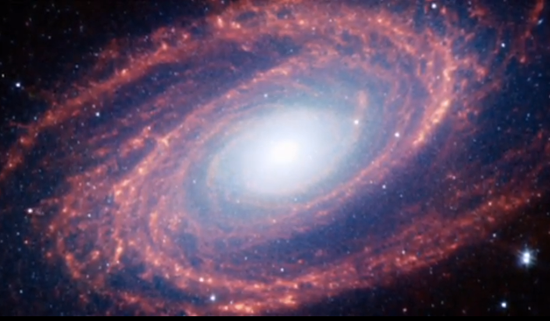
  Jan 14, 2014 Galaxies are the luminous children of electrical parentage, not the darkling spawn of invisible forces. “Hear one side and you will be in the dark. Hear both and all will be clear.” — Lord Chesterfield “Galaxies come in many shapes and sizes, but until recently astronomers have been…

Continue reading

Flame On!

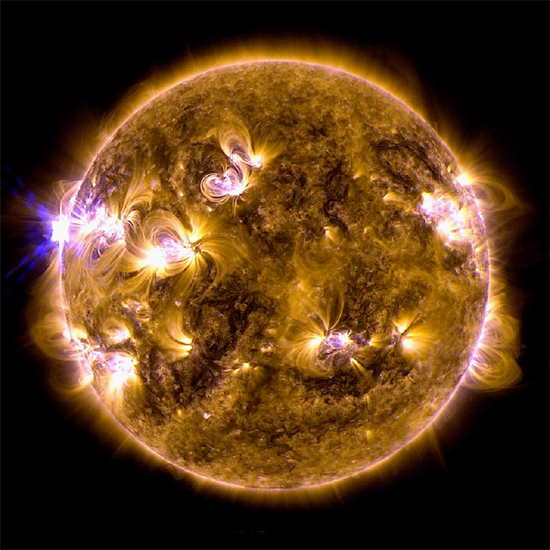
Space News -- X 1.7-class solar flare

  Jan 07, 2014 What causes some stars to rapidly fluctuate in brightness? The Electronic Sun theory postulates that sunspots, solar flares, anomalous coronal heating, and coronal mass ejections on the Sun are due to changes in the electrical supply that it receives from the galaxy. In other words, the Sun…

Continue reading