Category Archives: essential guide to the eu
Appendix II: The Electro-magnetic Field Equations
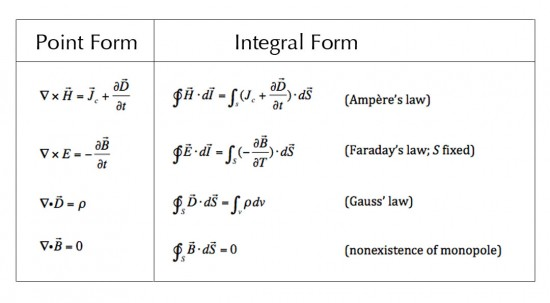
Introduction Maxwell’s Equations and the Lorentz Force Law together comprise the e/m field equations; i.e., those equations determining the interactions of charged particles in the vicinity of electric and magnetic fields and the resultant effect of those interactions on the … Continue reading
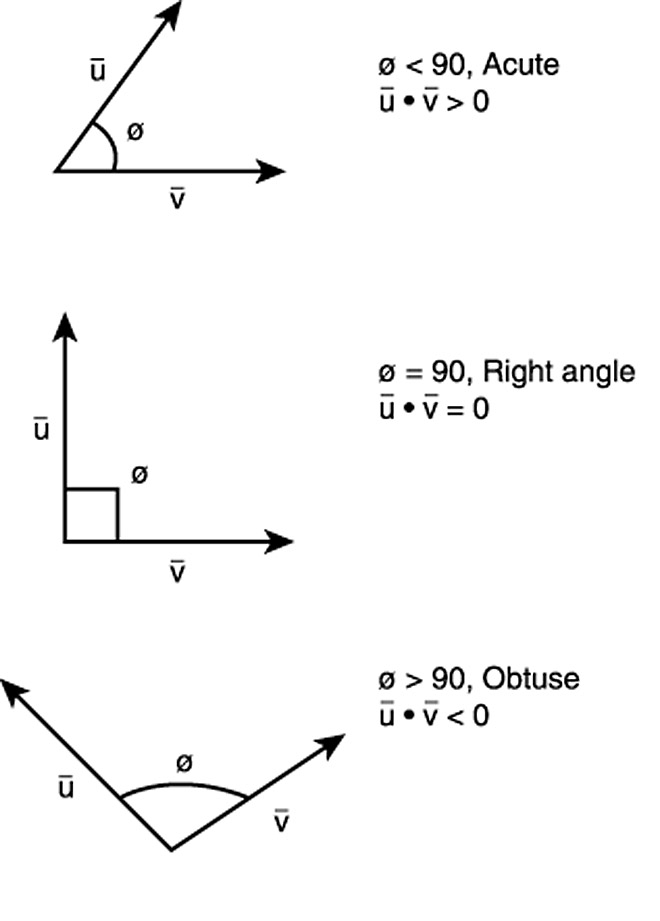
Appendix I – Vector Algebra
Vector algebra is formulated to handle vectors; i.e., quantities with both magnitude and direction. Normal algebra, geometry and trigonometry are efficient at dealing with scalar quantities, that is, those with only magnitude, but are inefficient at handling vectors. Vector algebra … Continue reading
Essential Guide to the EU – Chapter 11
Radiation
11.1 Light Visible light ranges from red through yellow and green to blue and violet. Newton was the first to discover that white light is a mixture of all the colors. White light can be split into its component colors … Continue reading
Essential Guide to the EU – Chapter 10
Rotational Effects
10.1 Rotation and Faraday Motors One of the reasons for the assumption of large amounts of Cryogenic (or Cold) Dark Matter (CDM) in the Gravity Model is to explain the observed rotation of galaxies. Astronomers have found that the individual … Continue reading
Essential Guide to the EU – Chapter 9
Plasma Circuit Instabilities
9.1 Exploding Double Layers The inductive energy of a circuit is a function of the current and the inductance. If any inductive circuit is disrupted, for example, by opening a switch, then the inductive energy of the circuit will be … Continue reading
Essential Guide to the EU – Chapter 8
Current Sheets, Perpendicular Currents and Electric Circuits
8.1 Plasma Current Sheets Reference has already been made to the filamentation of current sheets. This section will explore the nature of current sheets and their relationship to the magnetic field. A current sheet is exactly what it says – … Continue reading
Essential Guide to the EU – Chapter 6
Currents, Filaments and Pinches
6.1 Thermal Motion and Current It is important to distinguish between random thermal motion and uniform linear motion in a plasma. The latter is an electric current which flows due to the presence of an electric field. The random thermal … Continue reading
Essential Guide to the EU – Chapter 5
Plasma Sheaths, Cells, and Current-Free Double Layers
5.1 Plasma Temperature and Potential We have seen that temperature is a measure of the thermal energy of the particles in matter. More specifically, temperature is a measure of the kinetic energy of the particles’ random thermal motion. An electron … Continue reading
Essential Guide to the EU – Chapter 4
Electromagnetism
4.1 The Electromagnetic Field Equation Scientists attempt to explain physical systems in terms of mathematical models which describe and predict the behavior of the system. For example, Kepler explained the movement of the planets with his three laws. In the … Continue reading