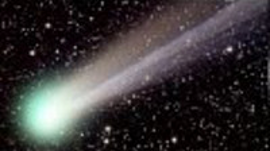
Frozen Fires

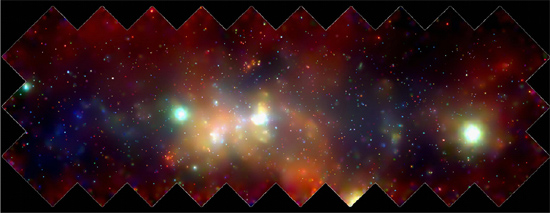
  Nov 02, 2012 The Chandra X-ray Telescope has puzzled astronomers with the discovery of abnormally high temperatures at the core of the Milky Way. A news release announcing this image of the center of the Milky Way stated that the X-ray spectrum of the gases is consistent with a…

Continue reading

Daughter of Heaven

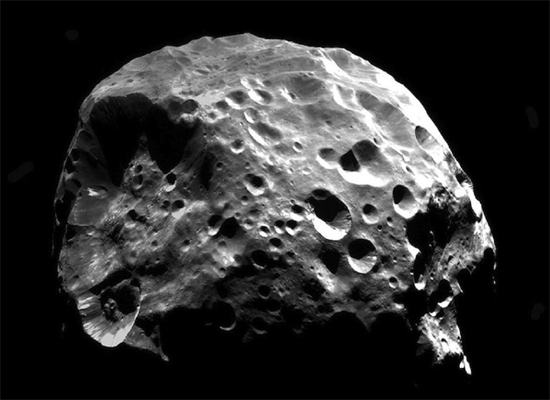
  Oct 30, 2012 Recent analyses suggest that Saturn’s moon Phoebe resembles a planet. Saturn’s moon Phoebe is comparatively small, roughly 220 kilometers in diameter. Its surface gravity is 0.224m/s^2, compared to the 9m/s^2 on Earth. Phoebe is also as black as night, making it one of the darkest objects in the Solar System….

Continue reading

Troubles With Bubbles

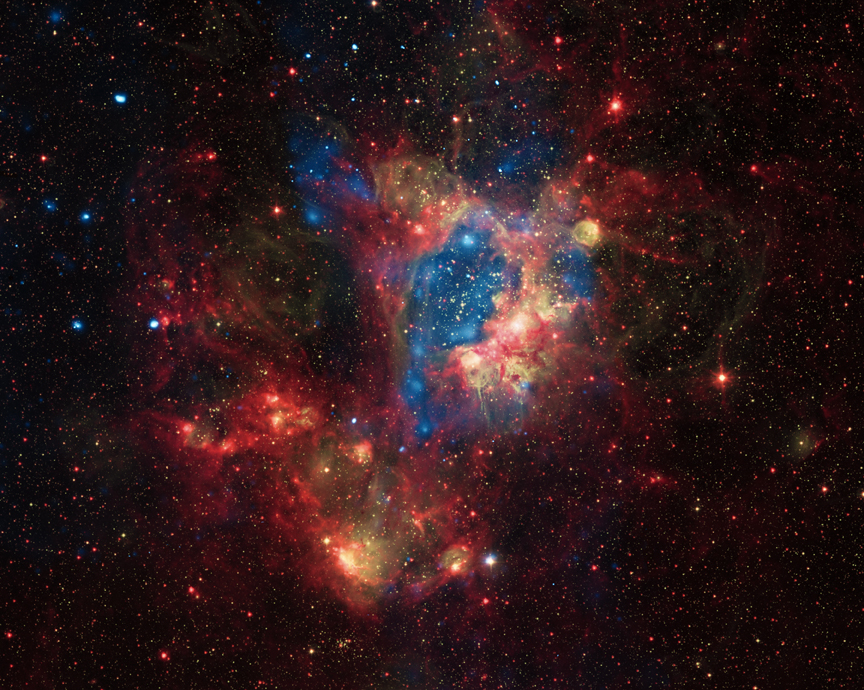
  Oct 26, 2012 Both nuclear powered stars and electrically powered stars produce bubbles in the plasma surrounding them. From that common observational beginning, the theoretical explanations diverge. Nuclear generated bubbles come in two types: planetary nebulae (PNs) and supernova (SN) remnants. The PNs are bubbles that are produced during…

Continue reading

Shell Game

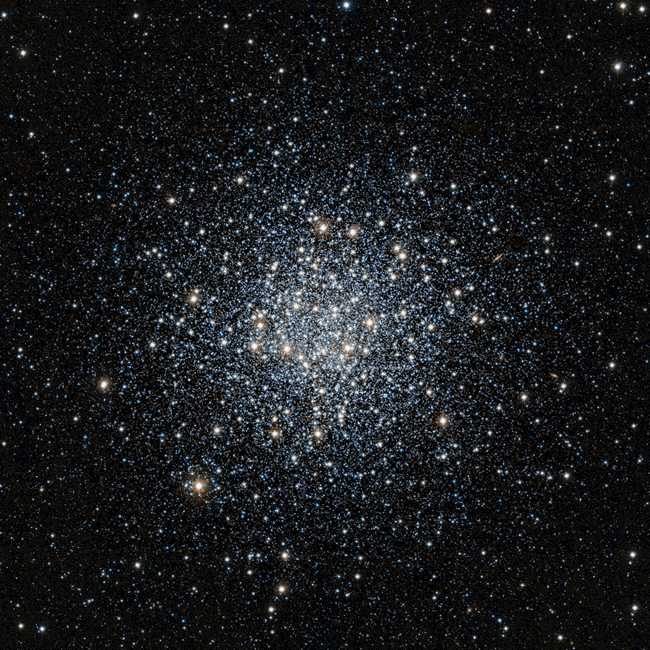
  Oct 24, 2012 The geometry of gravity is spherical: a uniform attraction toward a center of mass that tends to produce ball-shaped objects. This “bias for balls” predisposes astronomers to interpret rings as spherical shells. The European Southern Observatory press release announcing new observations (above) of the “old” star R Sculptoris…

Continue reading

Poseidon Aegaeus

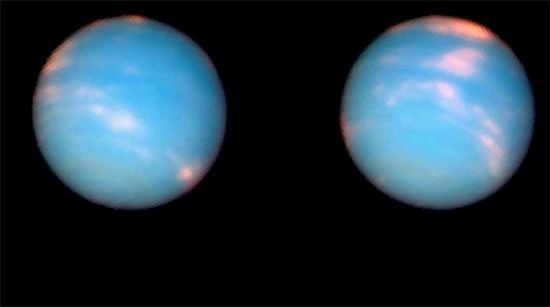
Neptune's clouds in false color

  Oct 23, 2012 Neptune is the Solar System’s most remote planet. What drives its extraordinary winds? The winds on Jupiter average about 400 kilometers per hour, with the fastest streaming around the Great Red Spot at 635 kilometers per hour. On Saturn, wind speeds up to 1800 kilometers per hour have…

Continue reading