Electric Helix
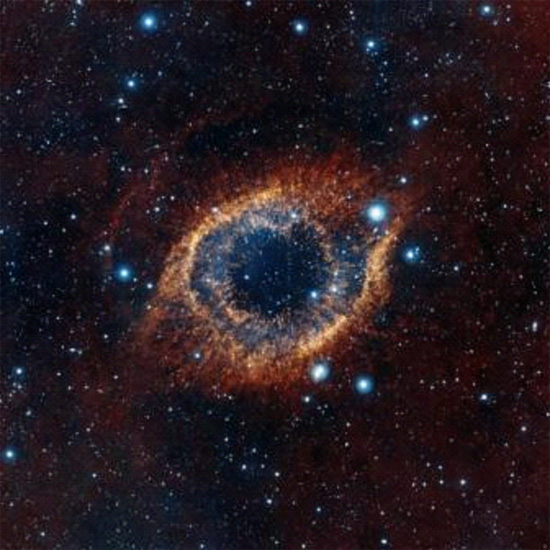
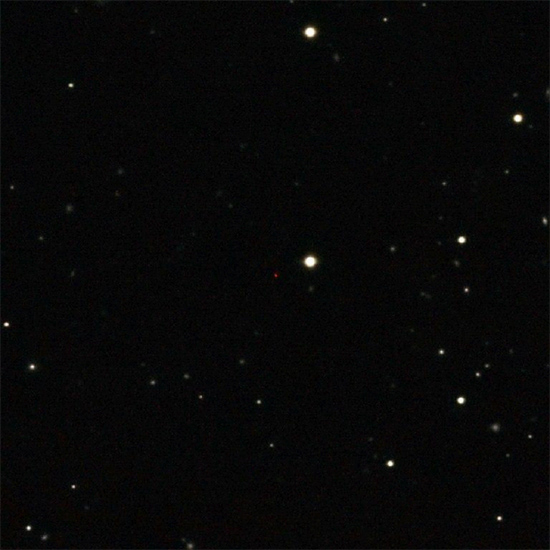
Jan 20, 2012 A recent image of the Helix Nebula in the constellation Aquarius exposes more details of its electrical structure. The new infrared image shows radial Birkeland currents (called “strands” in the press release) crossing the concentric rings and converging on the central star. (Will “strands” now replace the…
Balanced Water
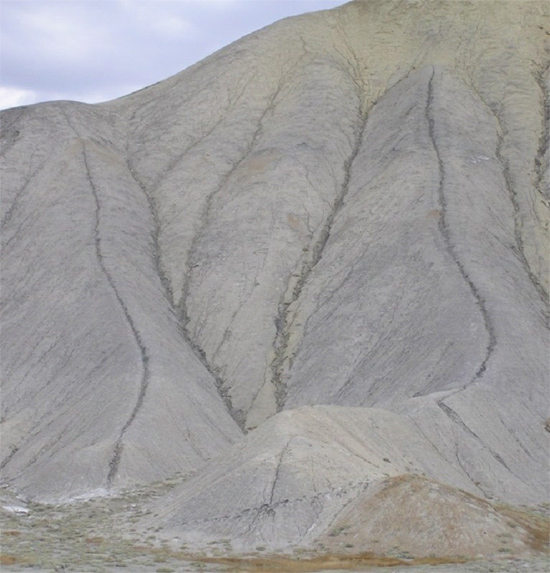
Jan 14, 2012 Balanced rock formations are common. But how to explain balanced water? At first thought, one would not expect water to run down the hip ridge of a hill. The gravitational condition is unstable equilibrium: any deviation from the exact locus of highest points will perpetuate the deviation,…
Astronomical Fashion Flips
Jan 03, 2011 Mergers are out. Vanity is in: active galaxies are self-absorbed. For many years, the only acceptable explanation of high galactic x-ray output accompanied by high redshift was mergers of galaxies. The universe became a bumper-car arena where every presumed high-energy event was proof of a collision. Proof…
Billions of Suns, Billions of years
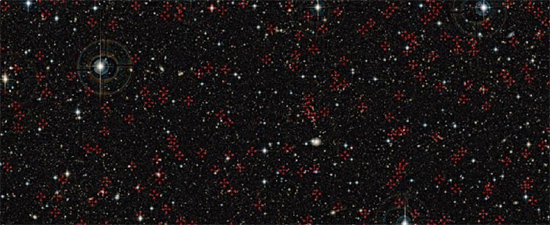
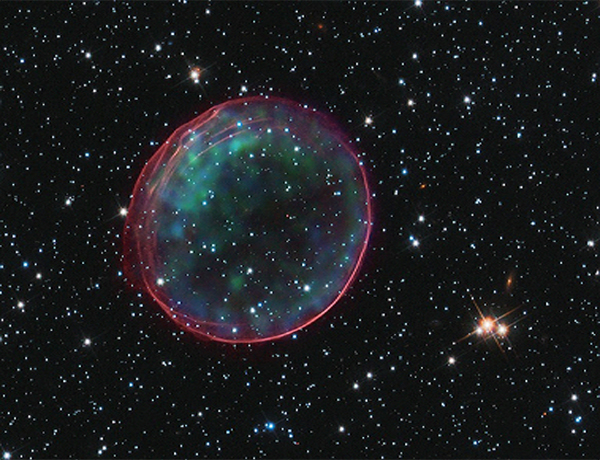
Jan 02, 2012 If redshift (z) indicates distance, then astronomers have discovered the superlative object: the most distant, the most ancient, the most luminous, the most massive. Analysis of the object’s spectrum shows that its lines have shifted toward the red by over 700% (z=7.1). The consensus opinion is that…
The Ornament Not Seen
Dec 22, 2011 This image of the Christmas Ornament nebula in the Large Magellanic Cloud looks the same to Electric Universe and Gravity Universe proponents alike. Their radically contrary descriptions of what it is result from their ideas about what they don’t see. Gravity Universe proponents describe a star that…
Getting Sloshed
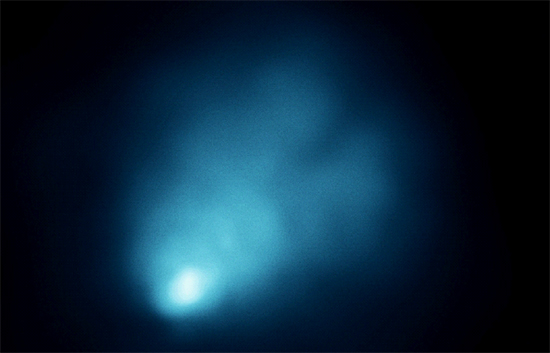
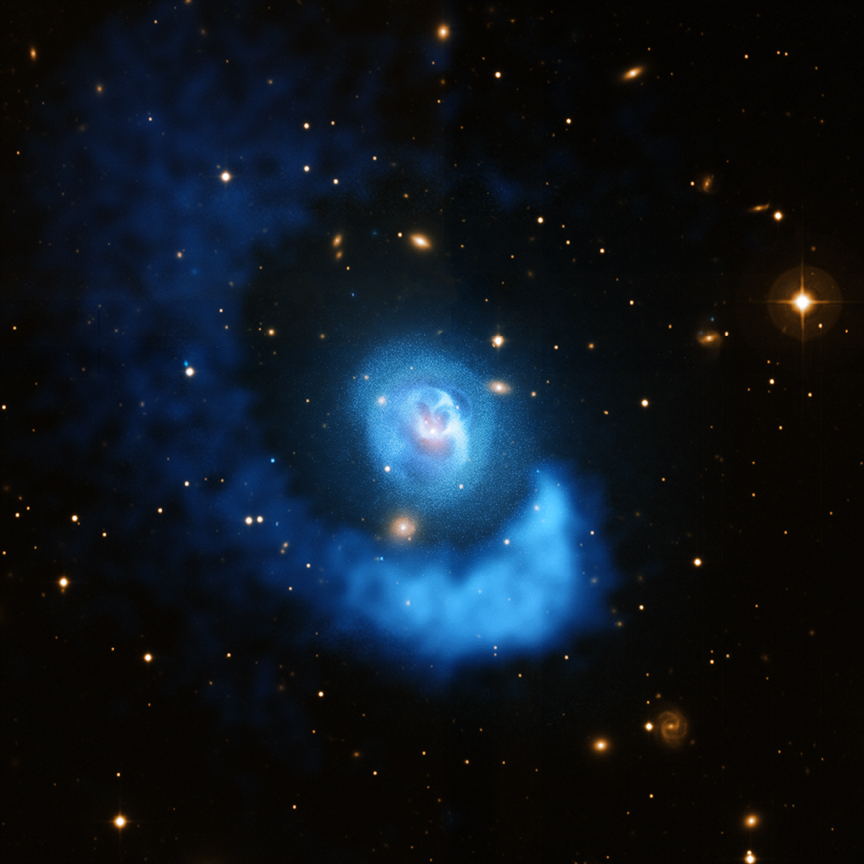
Dec 20, 2011 Is hot gas sloshing in a gravitational wine glass—or is astrophysicists’ reasoning going in a circle? A recent press release explains: “Like wine in a glass, vast clouds of hot gas are sloshing back and forth….” The blue image is assembled electronically from x-ray data and superimposed…
Lines We Neatly Stumble Over
A Superstar for Gravity is Normal for Plasma
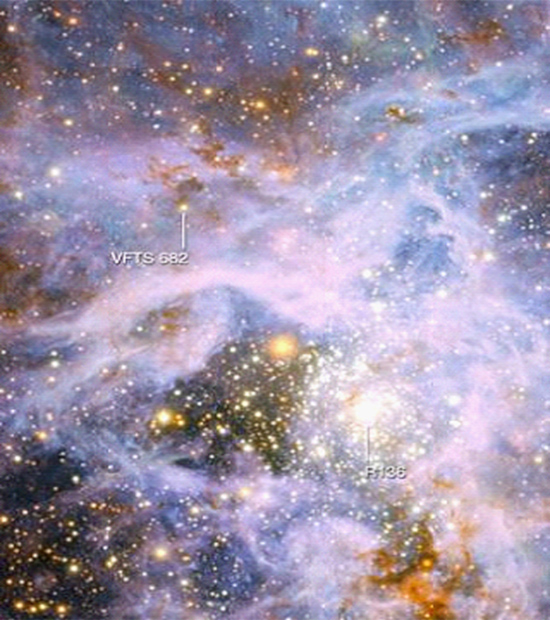
Dec 05, 2011 A bright star without companions challenges popular theories. Electricity comes to the rescue. The European Southern Observatory (ESO) has released this image of a “superstar,” named VFTS682. It appears reddish, but the color is attributed to the absorption of higher wavelengths by surrounding dust. The spectrum indicates…