Strange Brew

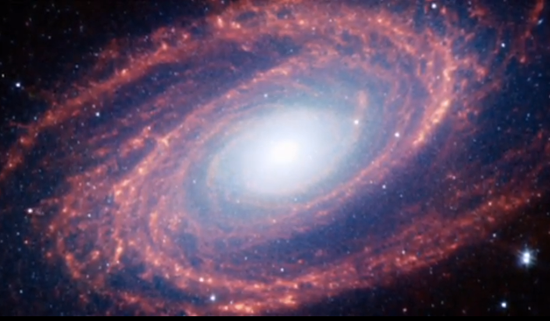
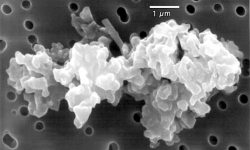
Nov 30, 2018 Why don’t globular clusters fly apart? Globular clusters are an example of how plasma is organized and confined into formations that are difficult to explain. Astronomers believe that globular clusters begin as groups of stars from a single birthing event. According to standard theory, gas and dust…

Continue reading

Twists and Turns

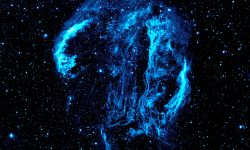
Nov 28, 2018 Most celestial objects exhibit some kind of filamentation. “Keep your eyes on the stars, and your feet on the ground.” — Theodore Roosevelt Every science journal describes the formation of nebulae in terms of “blowing winds” created by shock waves from exploding stars. Nebulae are thought to…

Continue reading

The Strokes of Night

  Nov 27, 2018 Lightning phenomena are scaleable. Transverse electric currents accompany a main discharge channel. That channel is often seen by most people as a terrestrial lightning bolt. Slow-motion videos show that multiple leader strokes descend from the clouds, while less visible potential contacts rise from the ground. Once…

Continue reading

On Its Way

Nov 26, 2018 A new Mercury mission. The European Space Agency (ESA) launched the BepiColombo satellites to Mercury from French Guyana on October 20, 2018. The mission is named for Giuseppe Colombo (1920-1984), an astronomer who was the first to realize that Mercury rotates three times for every two orbits…

Continue reading

Tail Lights

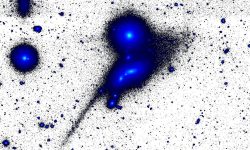
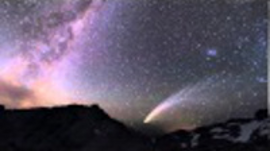
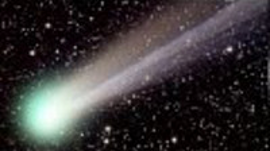
Nov 23, 2018 Energetic tails are common features in the Universe. Celestial objects such as Centaurus A; hot-bright stars, planets, and comets, exhibit collimated jets or trailing emissions that are difficult to explain. Every new observation requires a new theoretical revision, or an admission of complete bafflement. A group of…

Continue reading

Target in Sight

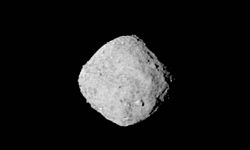
Nov 21, 2018 Osiris-Rex approaches Asteroid Bennu. On September 8, 2016 NASA launched Osiris-Rex on a mission to study the asteroid, 101955 Bennu. The mission objectives include collecting a sample from Bennu and returning it to Earth. Bennu is one of more than 7000 Near Earth Objects (NEO), and, like…

Continue reading

Morning Star

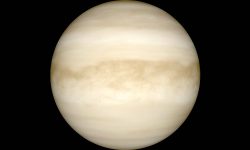
  Nov 20, 2018 Venus is an electrically active world. The European Space Agency’s (ESA) Venus Express was launched from Baikonur Cosmodrome in Kazakhstan on November 9, 2005. The spacecraft entered orbit around Venus on April 11, 2006. One its “surprising” discoveries was electric discharges in the planet’s upper atmosphere….

Continue reading

Luminous Essence

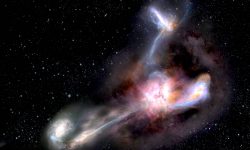
  Nov 19, 2018 Electric filaments energize galaxies. “A colour is a physical object as soon as we consider its dependence, for instance, upon its luminous source, upon other colours, upon temperatures, upon spaces, and so forth.” — Ernst Mach A recent press release talks about cosmic filaments connecting vast…

Continue reading

Cooling Off

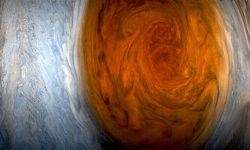
  Nov 15, 2018 Jupiter’s Red Spot is shrinking. For over 300 years, the Great Red Spot has persisted in Jupiter’s atmosphere—longer than telescopes have existed to see it. It is commonly believed to be a cyclonic storm driven by thermal convection from deep inside Jupiter’s atmosphere. How it was…

Continue reading