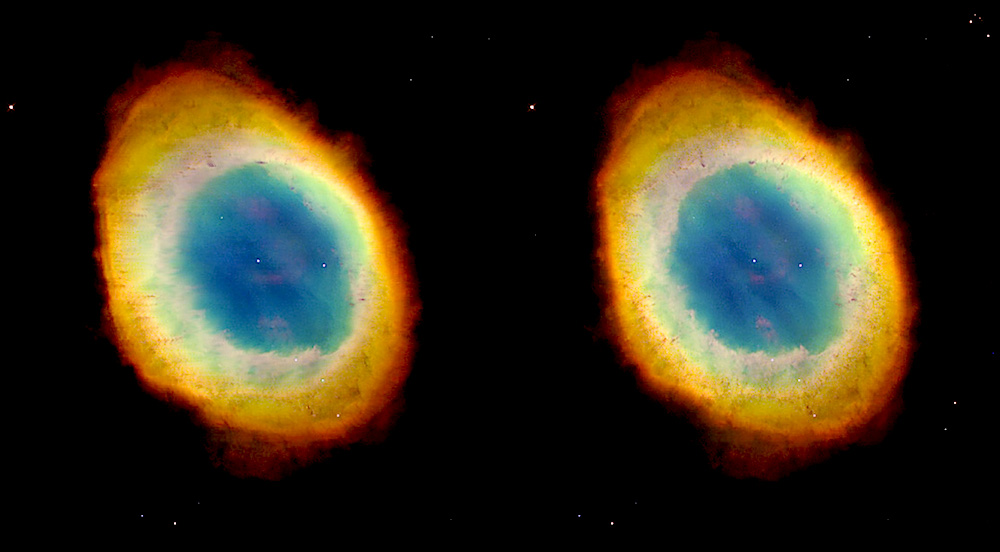
The Ring is a Barrel

  Sep 1, 2014 The Ring Nebula could be called the “Tube Nebula”. “Bipolar outflow” is a term often used to describe the nebular structure seen above, although the cause of the effect remains baffling to consensus astronomers. The prevailing opinion is that nebular structures form “knots” because gases and…
Continue reading

Dynamic Jupiter

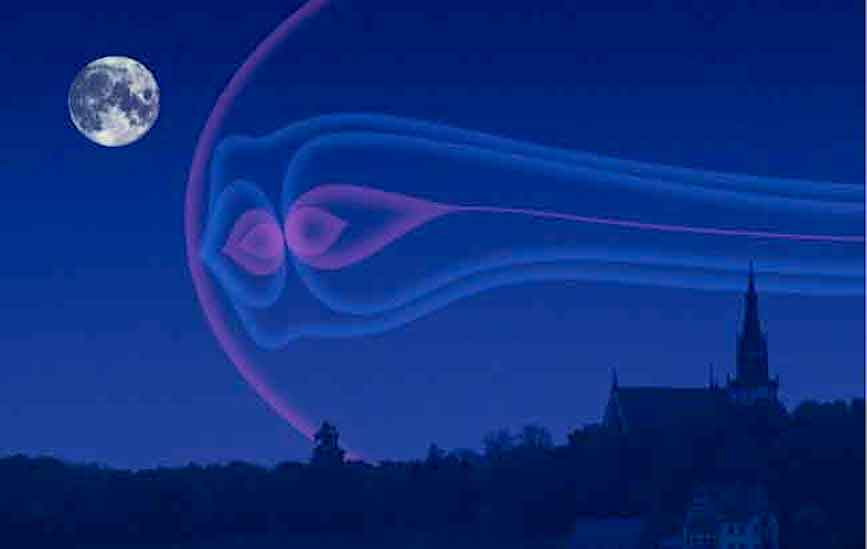
If Jupiter's magnetosphere were in glow mode, it would be the largest structure visible in the night sky. Credit: NASA

  Aug 29, 2014 Could two dynamos made of hydrogen create Jupiter’s magnetosphere? Jupiter is the largest of all the planets. At 142,984 kilometers in diameter at its equator, it is so large that all the other planets could fit within its volume. Jupiter rotates so fast that a day…

Continue reading

Solar Supernova

  Aug 26, 2014 How do supernovae relate to the Sun? On June 7, 2011 the Sun erupted with the largest plasma event yet recorded by the Solar Dynamics Observatory. SDO was launched on February 11, 2010 into a geosynchronous orbit, with plans for a five-year mission. It is capable of observing the Sun in…

Continue reading

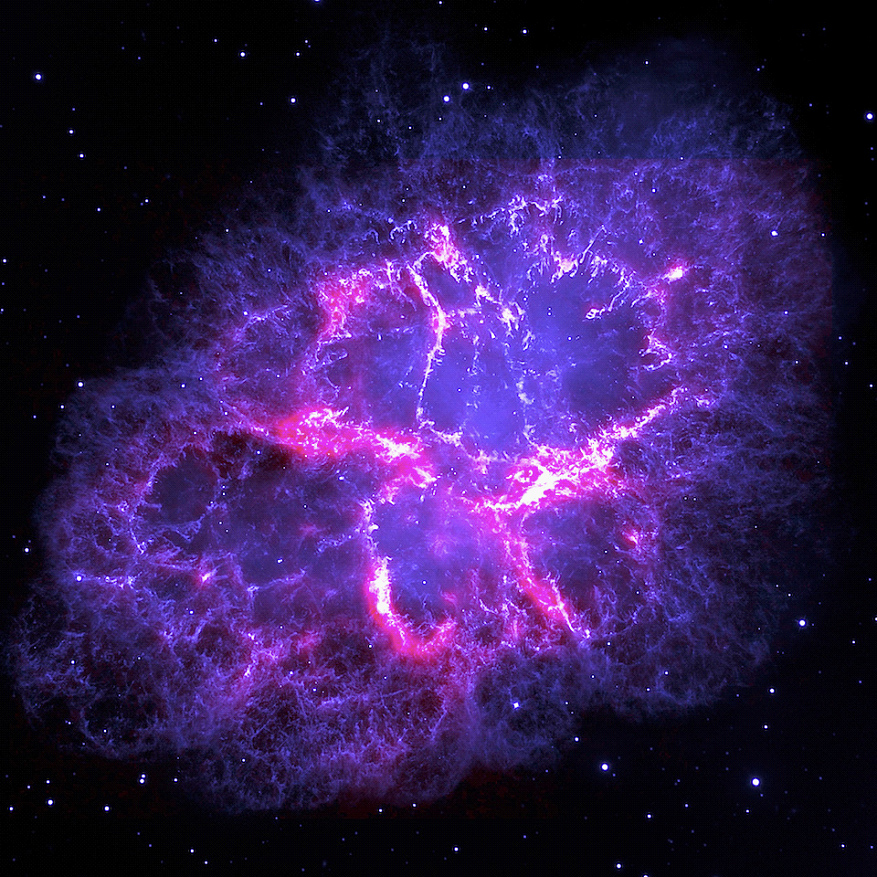
Puppis A

  Aug 25, 2014 Can shockwaves create X-rays? Many Picture of the Day articles point out that stars are not simplistic globes of hot gas under pressure, they are composed of plasma. Plasma is electrically charged. Since it is ionized, it does not behave like a pressurized gas, so shockwaves…

Continue reading

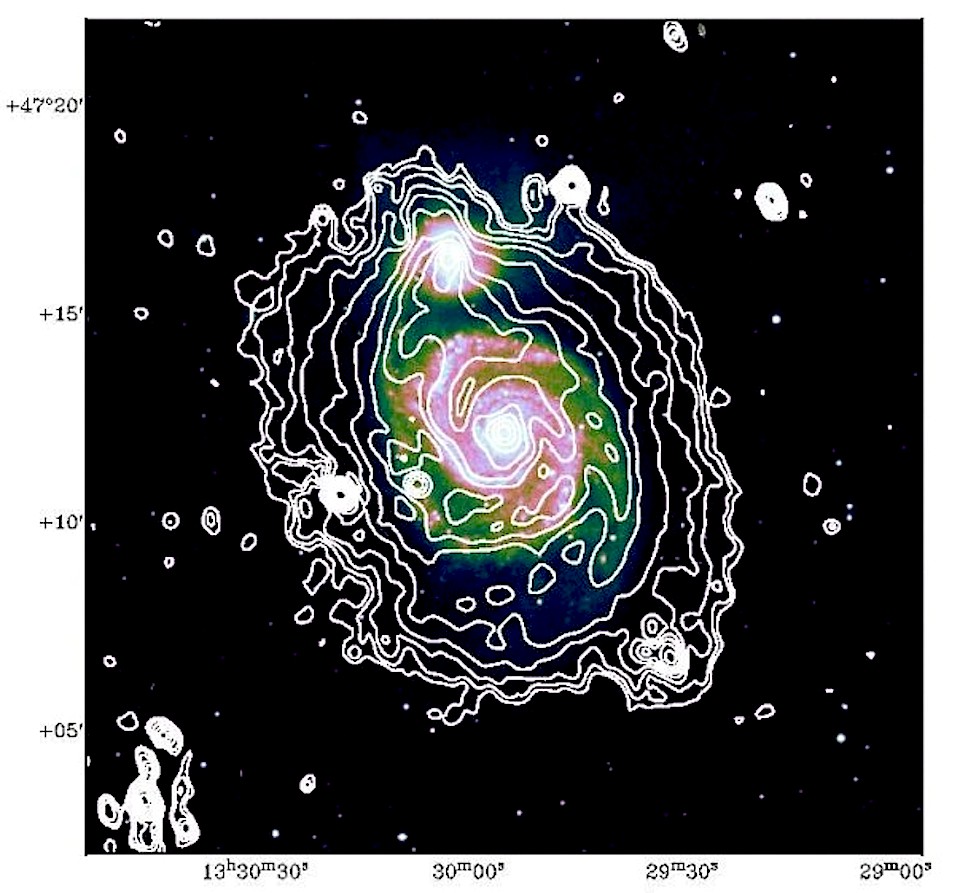
Galactic Magnetic Fields

  Aug 22, 2014 New observation techniques increase galactic field mapping accuracy. The LOw-Frequency ARray, (LOFAR) is a radio interferometer, or radio telescope, made up of several observing stations in Europe. Signals received at the various observing stations are digitally integrated into a phased array, which is a collection of…

Continue reading

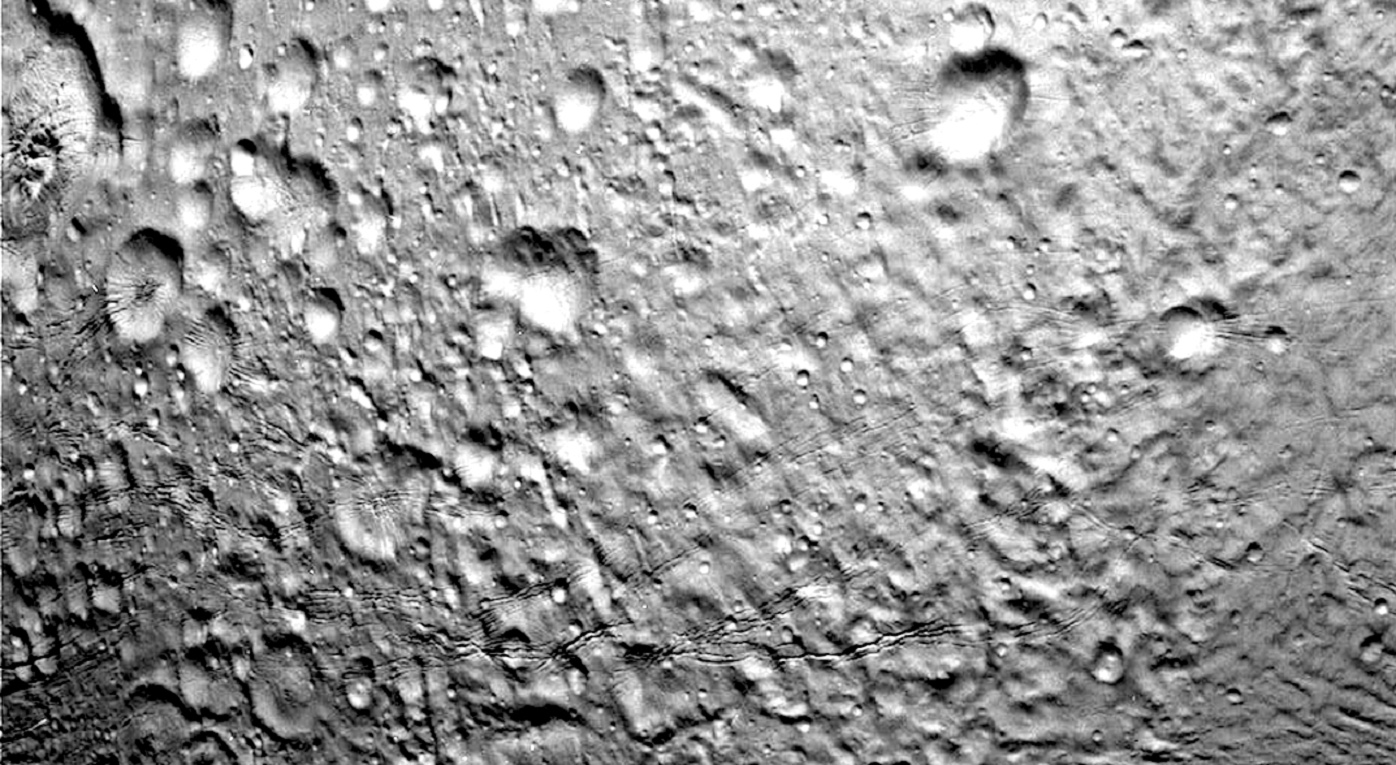
Ski Enceladus

  Aug 21, 2014 This small moon is said to be covered with powdery snow. Enceladus was one of the Gigantes, or Titans, who were overthrown by Zeus and his minions. It is perhaps an ironic name, since it is a tiny world only 494 kilometers in diameter. Its gravitational acceleration…

Continue reading

Homunculus in 3D

  Aug 20, 2014 A double-lobed nebula stirs the imagination. Inside the Large Magellanic Cloud, a dwarf galaxy orbiting the Milky Way, is a structure known to astrophysicists as a “supernova remnant”. Theories of stellar evolution state that extremely massive stars are short-lived, converting their mass into radiant energy at…

Continue reading

The Universe in Lace

Cosmic Frequency by Simon Daduk

  Aug 19, 2014 Is the recently announced “cosmic web” based on erroneous conclusions? A press release from the University of California, Santa Cruz (UCSC), reports observations of the filamentary structure that comprises the Universe. A nebula exceeding 2 million light-years across, surrounding a quasi-stellar radio source (quasar) known as UM287, is said to…

Continue reading

Hot Clouds

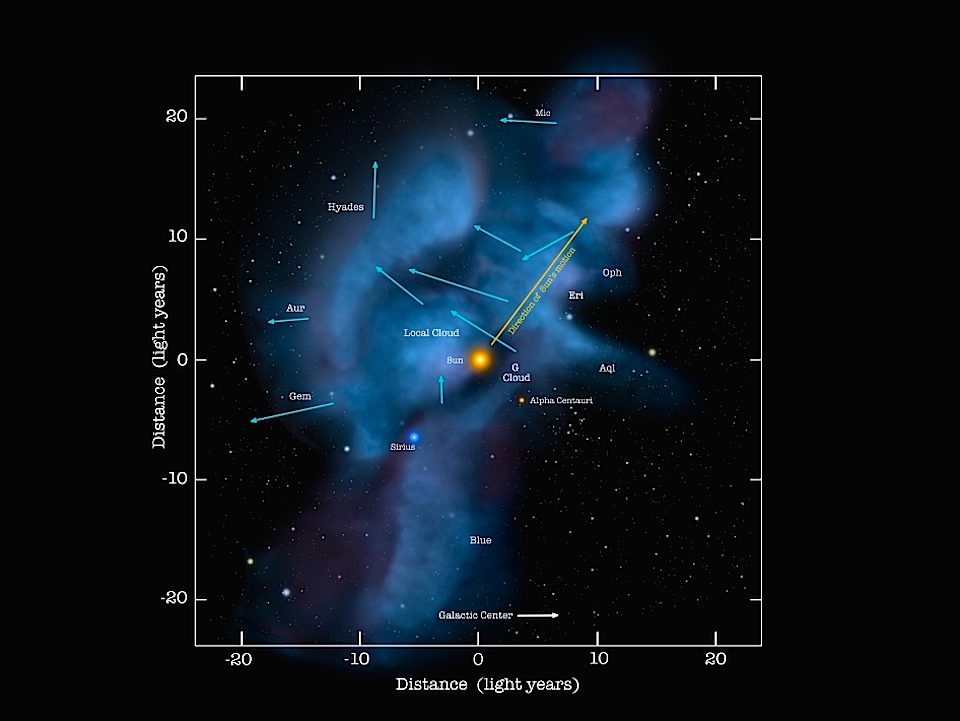
  Aug 18, 2014 Charged plasma surrounds the Solar System. Electric Sun theory presupposes that the Sun is a glowing anode, or positively charged electrode. Its oppositely charged cathode is invisible, a “virtual cathode,” called the heliosphere that exists billions of kilometers from its surface, where a “double layer” isolates…

Continue reading