Organized Plasma

  Aug 22, 2016 Space structures exhibit electromagnetic behavior. “In order to understand the phenomena in a certain plasma region, it is necessary to map not only the magnetic but also the electric field and the electric currents. Space is filled with a network of currents which transfer energy and…
Continue reading

Dark Quintessence

  Aug 19, 2016 Regions of space more than 500 million light-years in diameter are said to reveal dark energy influences. “I have always believed that astrophysics should be the extrapolation of laboratory physics, that we must begin from the present Universe and work our way backward to progressively more…

Continue reading

Broken Plates

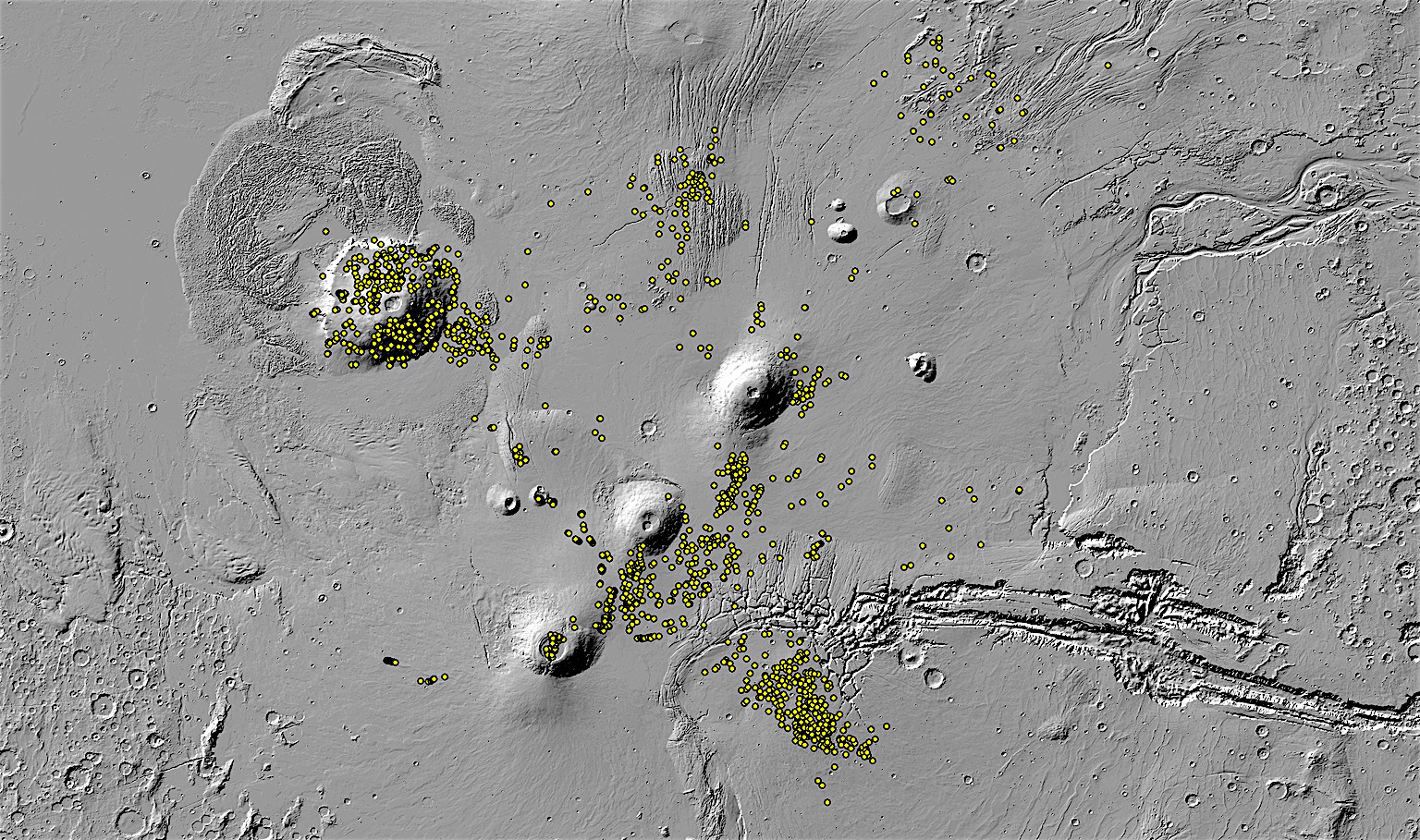
  Aug 15, 2016 Do crustal blocks slide around? According to planetary scientists, plate tectonic activity on Mars is similar to what happens on Earth. Studies undertaken by the University of California Los Angeles suggest that: “Mars is at a primitive stage of plate tectonics. It gives us a glimpse…

Continue reading

Krónos Elektron

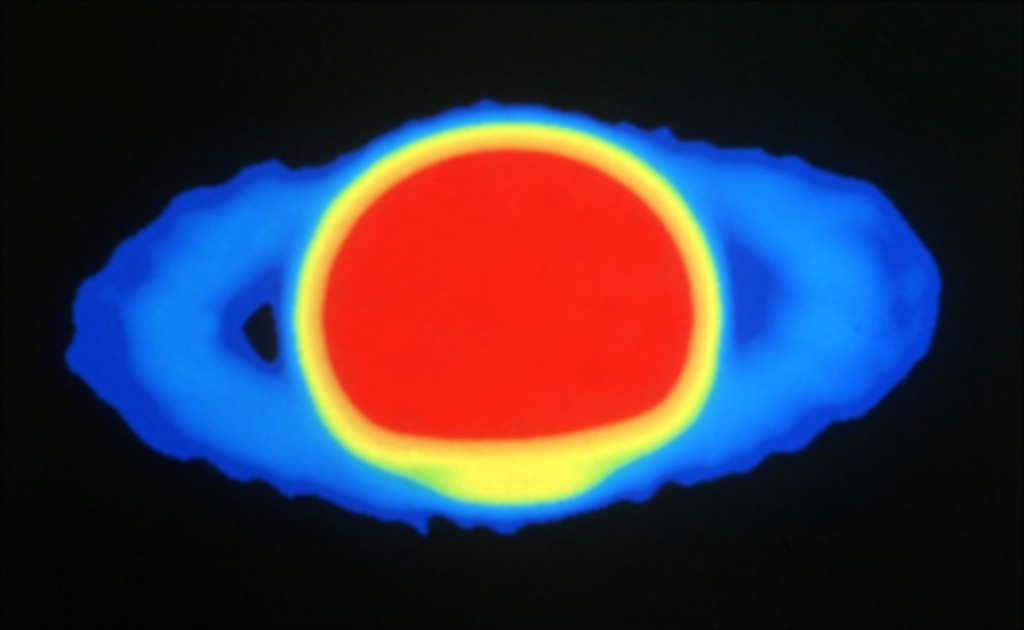
  Aug 12, 2016 Saturn generates electricity. Saturn is quite large compared to Earth; its mean equatorial diameter is about 121,000 kilometers. However, Saturn rotates so fast (10 hours, 34 minutes) that its polar diameter is 108,700 kilometers. The difference is caused by “flattening” as angular momentum pushes the low-density…

Continue reading

A Box of Plasma Rain

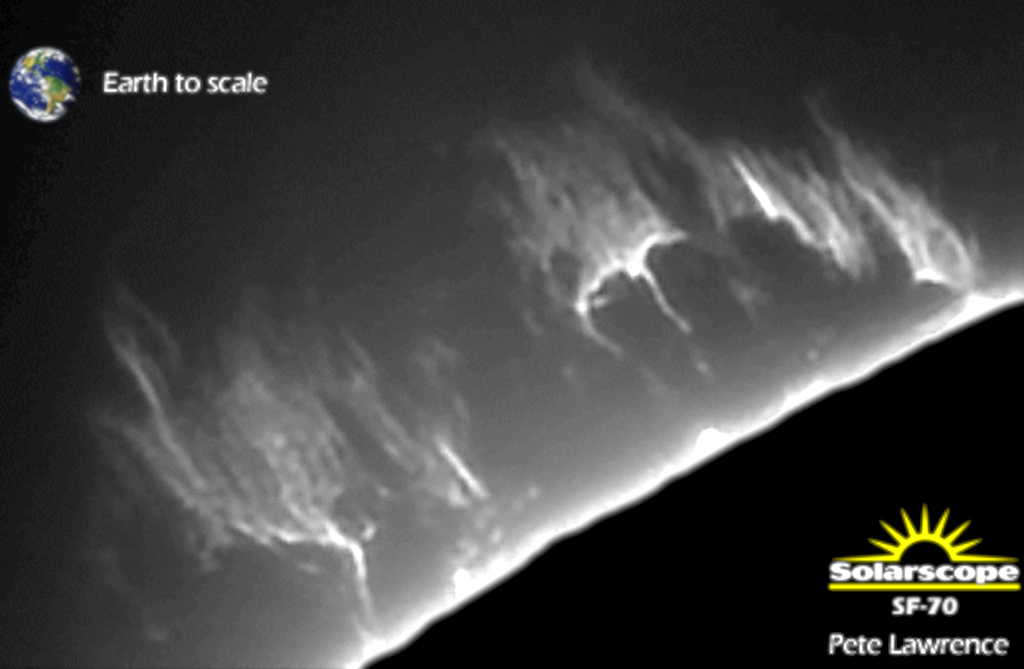
  Aug 8, 2016 “Walk into splintered sunlight…” NASA launched the Interface Region Imaging Spectrograph (IRIS) on June 28, 2013. Its primary mission includes a study of the solar corona: why is it far hotter than the Sun’s surface, or photosphere? Heliophysicists see formations that resemble “mini-tornadoes” in the Sun’s…

Continue reading

Life on Europa

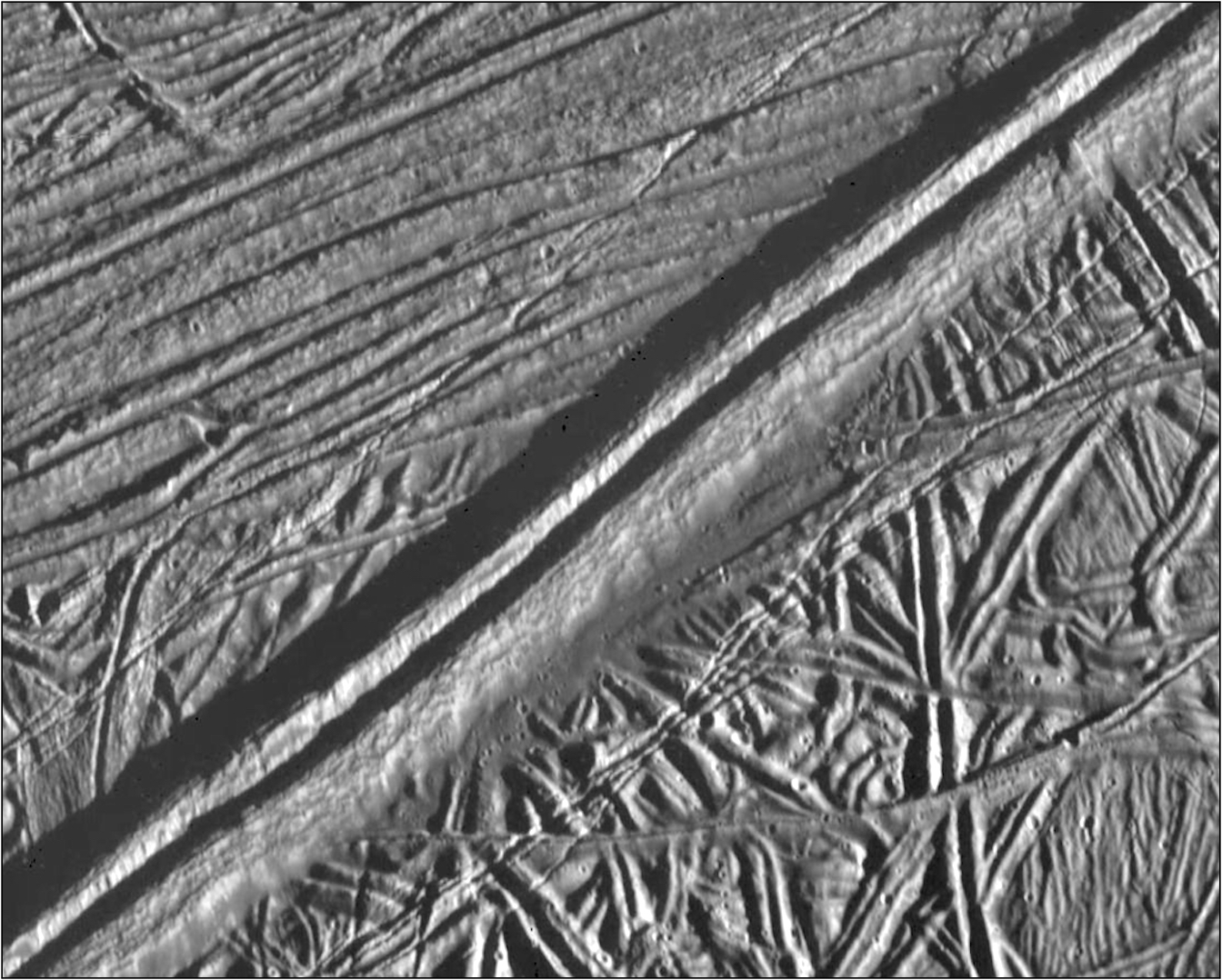
  Aug 4, 2016 The definition of “life” can be ambiguous. Originally published November 16, 2014. The Galileo spacecraft was launched on October 18, 1989 from the Space Shuttle Atlantis, and subsequently entered orbit around Jupiter on December 7, 1995. After eight years in orbit, Galileo was deliberately incinerated by…

Continue reading

How Hot Is It?

  Aug 3, 2016 So hot that the Devil took the day off! When gas and dust collapse the material naturally warms up, radiating thermal energy. Stellar and galactic evolution is commonly thought to proceed according to mechanical action. Galaxies, stars, planets, and stardust itself are said to be the…

Continue reading

Gravitational Waves

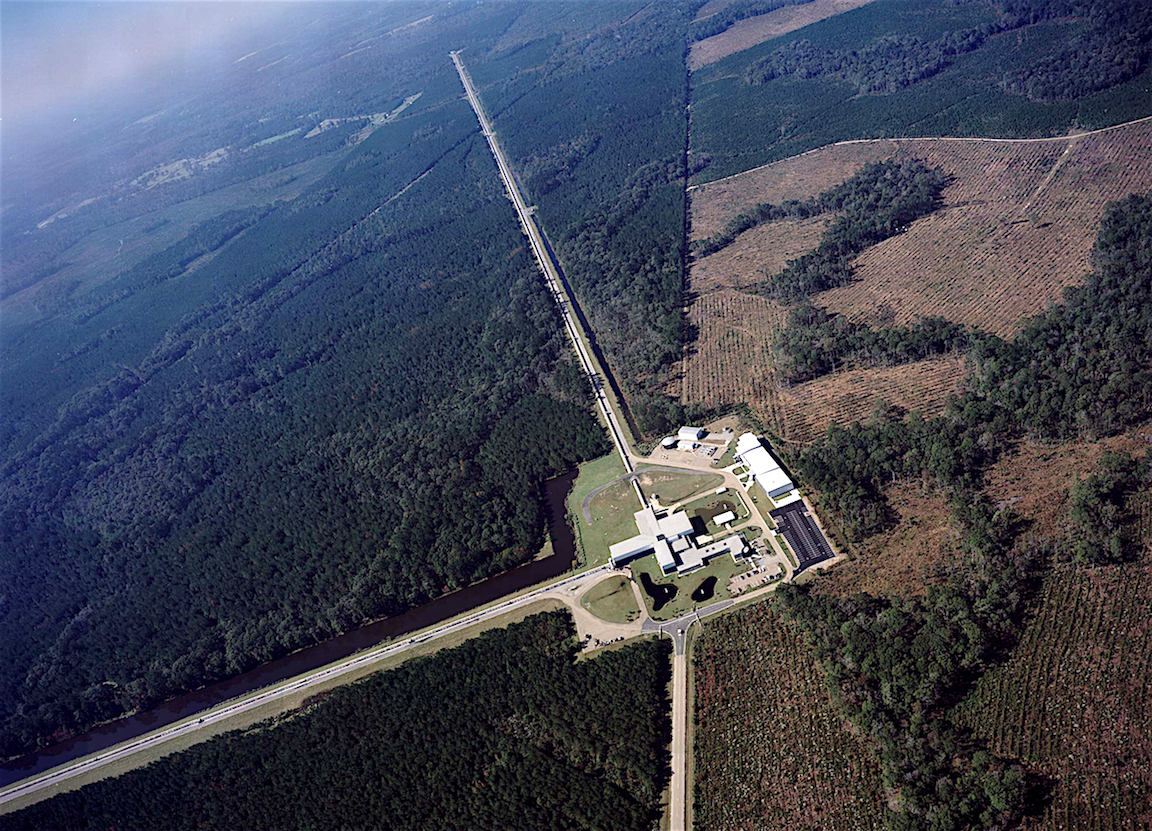
    Aug 2, 2016 Space and time are not a fabric. Originally published on February 12, 2016. According to a recent press release, “… scientists have observed ripples in the fabric of spacetime called gravitational waves…” The observation is said to confirm the general theory of relativity (GR), since…

Continue reading