Galactic Gas

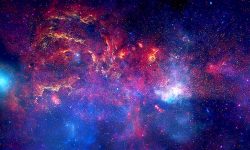
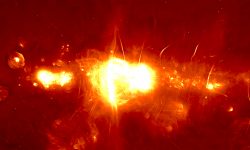
  Aug 2, 2018 Oxygen is abundant in the Universe. Previous Picture of the Day articles point out that planetary nebulae radiate in light frequencies associated with ionized oxygen. Since oxygen is the most common element in galactic structures, after hydrogen and helium, it is not surprising that a remote…
Continue reading

Galactic Filaments

Aug 1, 2018 Galaxies exhibit electric circuits. “A broad and ample road, whose dust is gold, And pavement stars—as starts to thee appear Soon in the galaxy, that milky way Which nightly as a circling zone thou seest Powder’d with stars.” ― John Milton Astronomers cannot see stars (or galaxies)…

Continue reading

Blazars

  Jul 31, 2018 The brightest objects in the Universe are electrical. A previous Picture of the Day discussed the twin lobes of gamma rays extending beyond the Milky Way’s central bulge. The funnel-like formations are each about 65,000 light-years in diameter, and are considered by Electric Universe advocates to…

Continue reading

Medusa

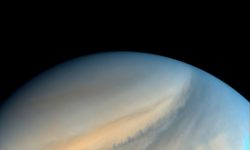
Jul 30, 2018 Goddess-like beauty scarred forever. There are indications that Venus underwent a catastrophic event (or events) sometime in the recent past. Giant cracks extend for hundreds of kilometers, for example. Those fractures are accompanied by “coronae”, with deep channels branching out like carved lightning bolts. Vast caldera with…

Continue reading

Gerald Pollack: Weather and EZ Water — An Intimate Role of Separated Charge | EU2017

EU2017 Gerald Pollack

Among atmospheric scientists, two central features of weather dynamics remain mechanistically uncertain: evaporation and cloud formation. Absent proper understanding, predicting weather patterns remains challenging. Even simple weather-related phenomena elude understanding. For example: (i) Why can clouds suspend themselves above the earth? From the weight of the constituent water droplets, the…

Continue reading

Binaries

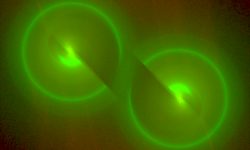
  Jul 26, 2018 Why are stars most often seen in pairs? More than half of all stars observed in the Milky Way have one or more companions, suggesting that something, at least in our galaxy, influences the formation of multiple star systems. Stars are so remote from each other…

Continue reading

Charge Surplus

Jul 25, 2018 Stars are electrically charged. From an early age, children are taught that stars are burning balls of hydrogen gas. Also, that gravitational attraction from a star like the Sun is what holds the planets in their orbits. Fusion fire in their cores is said to take a…

Continue reading

The Strongest Force

  Jul 24, 2018 Electromagnetism drives the cosmos. NASA launched the Herschel Space Observatory into orbit around LaGrange point L2 on May 14, 2009. Since Herschel used liquid helium-cooled infrared detectors built to last about three years, its mission came to an end on April 29, 2013. Herschel’s primary mission…

Continue reading

Plasma Weather

Jul 23, 2018 Solar plasma interacts with Earth’s electromagnetic fields. Recent Picture of the Day articles address many issues that make understanding the Sun exceptionally difficult. The consensus viewpoint about solar activity and the Electric Universe viewpoint are, in many cases, diametrically opposed to each other. In particular, the hypothesis…

Continue reading