Electric Dunes of Titan | Space News

Space News -- Electric Dunes of Titan

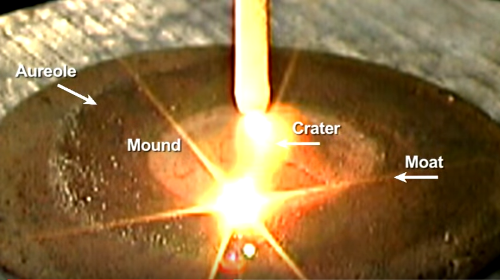
New scientific reports are offering further confirmation of the importance of electrical processes in planetary geology. Scientists studying the mysterious sand dunes of the Saturnian moon Titan are reporting that electrostatic forces may play a significant role in configuring the dunes’ puzzling shapes. A Scientific American article reports the team’s…
Continue reading

Krónos Elektron

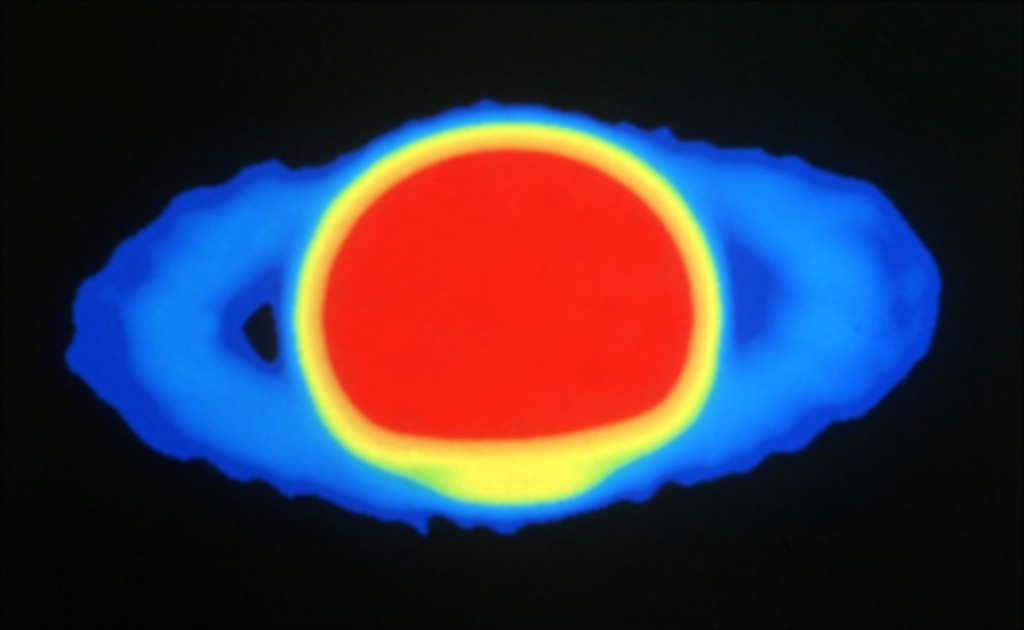
  April 25, 2017 Saturn generates electricity. Saturn is quite large compared to Earth; its mean equatorial diameter is about 121,000 kilometers. However, Saturn rotates so fast (10 hours, 34 minutes) that its polar diameter is 108,700 kilometers. The difference is caused by “flattening” as angular momentum pushes the low-density…

Continue reading

A Brown Study

Apr 24, 2017 Brown dwarf stars could be harbors for life in the cosmos. The James Webb Space Telescope (JWST) is scheduled for launch in October 2018 on a five-year mission. Its goals are to search for the earliest galaxies—meaning that it will look for those with the greatest redshift….

Continue reading

Nature’s Electrode

Nature’s Electrode By Andrew Hall The image above is from NOAA and illustrates the consensus theory of lightning genesis. As you can see, it shows electrons collecting like marbles in a sink, accelerating down a slippery slope into what looks like a drain. A typical cloud-to-ground lightning needs a billion-trillion…

Continue reading

Bubble Layers

  Apr 21, 2017 Spherical shells around stars are signs of electrical activity. More than 70 years ago Dr. Charles Bruce noted that planetary nebulae are similar to electric discharges. He reasoned that their shapes were hourglasses, with central stars obscured by dusty toroids. Since nebular shapes are similar to…

Continue reading

A Box of Plasma Rain

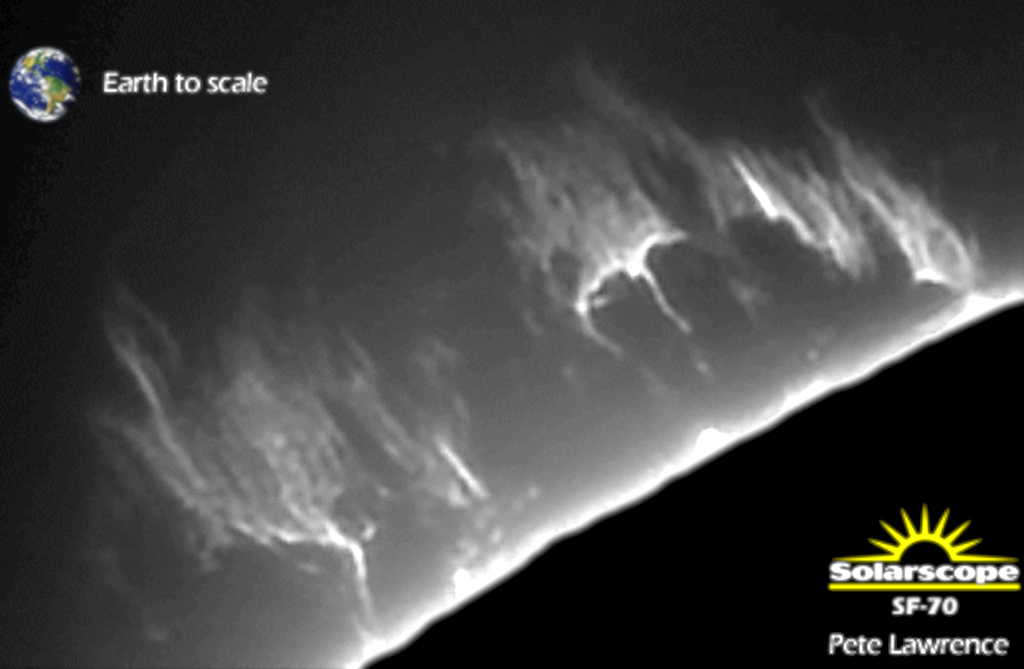
  April 20, 2017 “Walk into splintered sunlight…” NASA launched the Interface Region Imaging Spectrograph (IRIS) on June 28, 2013. Its primary mission includes a study of the solar corona: why is it far hotter than the Sun’s surface, or photosphere? Heliophysicists see formations that resemble “mini-tornadoes” in the Sun’s…

Continue reading