Strange Brew

March 3, 2020 Why don’t globular clusters fly apart? Globular clusters are an example of how plasma is organized and confined into formations that are difficult to explain. Astronomers believe that globular clusters begin as groups of stars from a single birthing event. According to standard theory, gas and dust…

Continue reading

Focused Filaments

March 2, 2020 Plasma is the foundation for all celestial phenomena. Electric Universe advocates argue that a flow of electric charge in plasma generates electromagnetic fields that constrict the plasma. As previous Pictures of the Day point out, that constricted channel is known as a Bennett pinch, or z-pinch. The…

Continue reading

Sun Wind

February 27, 2020 The solar wind is an electrical phenomenon. Plasma discharges are a better model for solar activity than the gravity community likes to accept. Experiments using a positively charged sphere show that a plasma torus forms above the sphere’s circumference. Charged particles couple the sphere’s middle and lower…

Continue reading

Really?

February 26, 2020 What’s “reality”? For science, for the past century or more, it’s “what’s out there”, “the given”. And we get to know it by looking at it. (I say “looking” to mean all sensation.) To get to know it better, we need only to look closer. To that…

Continue reading

Twists and Turns

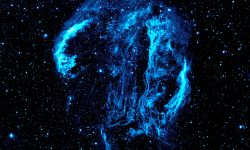
February 25, 2020 Most celestial objects exhibit some kind of filamentation. “Keep your eyes on the stars, and your feet on the ground.”— Theodore Roosevelt Every science journal describes the formation of nebulae in terms of “blowing winds” created by shock waves from exploding stars. Nebulae are thought to be…

Continue reading

Flame Out!

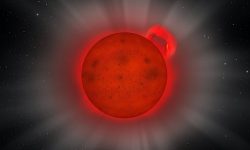
February 24, 2020 What causes stars to expel large quantities of matter? “The lonely sunsets flare forlornDown valleys dreadly desolate;The lonely mountains soar in scornAs still as death, as stern as fate.”— Robert W. Service XMM-Newton was launched on December 10, 1999 from Kourou, French Guiana. At the time, it…

Continue reading

Hold On to Your Hat!

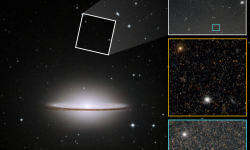
February 21, 2020 The Sombrero galaxy is larger than expected. A significant contribution to plasma cosmology came from Dr. Anthony L. Peratt, a plasma physicist and protégé of the Nobel laureate Hannes Alfvén. Dr. Peratt studied plasma formations in the laboratory for many years, monitoring short-duration z-pinch effects, as well…

Continue reading

Tail Lights

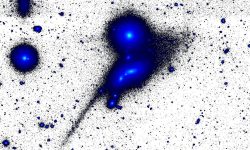
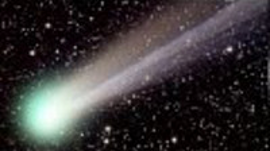
February 20, 2020 Energetic tails are common features in the Universe. Celestial objects such as Centaurus A; hot-bright stars, planets, and comets, exhibit collimated jets or trailing emissions that are difficult to explain. Every new observation requires a new theoretical revision, or an admission of complete bafflement. A group of…

Continue reading