Dark Designs

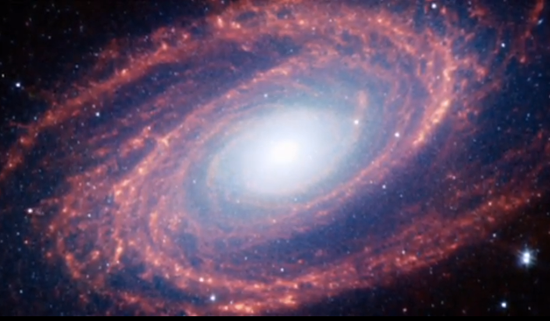
March 20, 2020 Galaxies are electrical entities. A recent press release reiterates the current maxim among astronomers and astrophysicists: “About eighty-five percent of the matter in the universe is in the form of dark matter…” Dark matter is the topic of several Pictures of the Day. It is undetectable by…

Continue reading

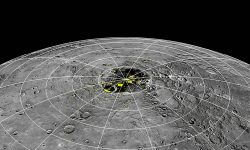
Cold Fire Makes Hot Ice

March 18, 2020 Frozen water on Mercury? NASA launched the BepiColombo mission on October 20, 2018. The mission consists of two satellites: the Mercury Planetary Orbiter (MPO) and the Mercury Magnetospheric Orbiter (MMO). MPO is designed to study Mercury’s composition, while MMO will study Mercury’s magnetosphere. One of BepiColumbo’s tasks…

Continue reading

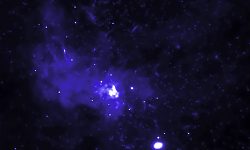
X-Ray Milky Way

March 17, 2020 X-rays from galactic cores are accelerated by electric fields. Rather than accepting electric fields as a source, astronomers prefer to think of “strong winds blowing” out of the galaxy’s core. Often called “Ultra-Luminous X-ray sources” (ULX), they are points across the sky more powerful than a million…

Continue reading

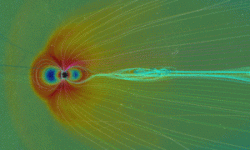
Ordered Chaos

March 16, 2020 The Sun’s activity is almost impossible to model, because of its variability. A recently published animation illustrates the Sun’s electromagnetic field as it twists and folds through its ionized plasma. The “Sun in a bottle” was created in order to understand how an apparently chaotic solar environment…

Continue reading

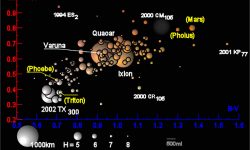
Pint-Sized Planets

March 13, 2020 Dwarf planets are a puzzle. In 1997, astronomers Adam Riess and Saul Perlmutter studied Type 1a supernovae, because their variable rise in luminosity and subsequent decline are considered predictable. That measurement is a way for consensus researchers to determine a supernova’s true brightness or “absolute magnitude“. Calculating…

Continue reading

Electric Moons

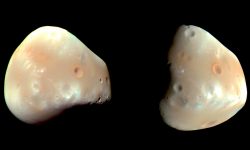
March 12, 2020 The moons of Mars are scarred worlds. The two moons of Mars are called Phobos and Deimos, meaning “fear and “panic”. Phobos is extensively studied by Earth-based telescopes and by satellites in Mars orbit. Deimos, however, is so small that major observations are impossible from Earth. Stickney…

Continue reading

Ultraviolet Nebula

March 11, 2020 What causes gigantic blobs of hydrogen to glow? Over ten years ago, Chinese astronomers from Purple Mountain Observatory, Chinese Academy of Sciences, saw what was later called a “Lyman-alpha blob” (LAB). They recognized that there was something unusual about the observation, because of the gas cloud’s mass….

Continue reading

Fractured Flickers

March 6, 2020 Astronomers think FRBs are created from dying stars. About eight years ago, astronomers discovered an energy signature they called a “Fast Radio Burst”, or FRB. The blast of radio waves lasted five milliseconds, releasing more energy than the Sun puts out in a month. Distance to the…

Continue reading