X-1 Files

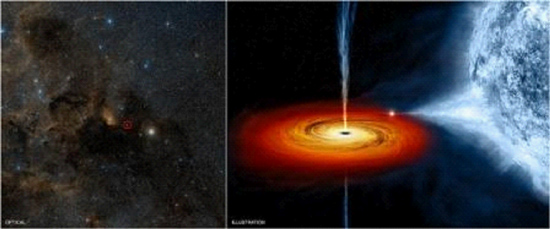
Cygnus X-1

  May 21, 2012 Without a theory of electricity in space, astronomers must explain cosmic lightning with theories of falling gas. To get x-rays from falling gas, the gas must be attracted to a source of gravity with orders-of-magnitude more force than any known density of matter. Nevertheless, with suitable…

Continue reading

Cluster Wires

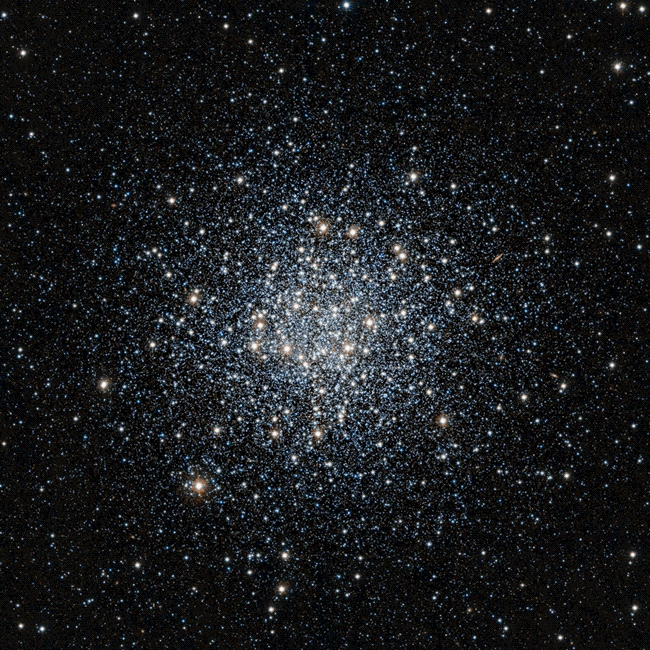
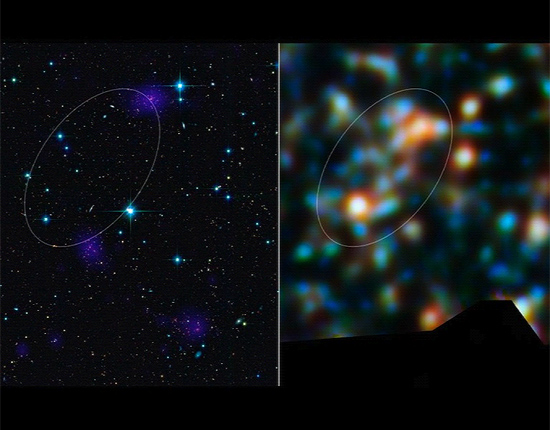
May 18, 2012 A galaxy-wide filament connects two galactic clusters. The Herschel Space Observatory possesses the largest mirror ever launched into space: 3.5 meters in diameter. Herschel entered orbit around LaGrange point L2 (behind Earth in relation to the Sun) in July 2009, so that its extremely sensitive, supercooled infrared…

Continue reading

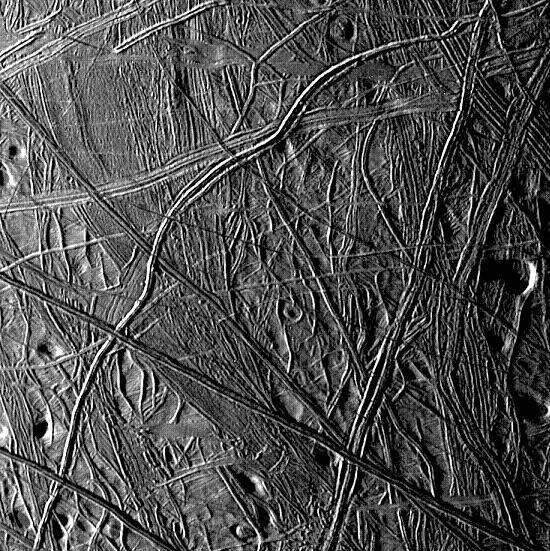
Europa Oceania

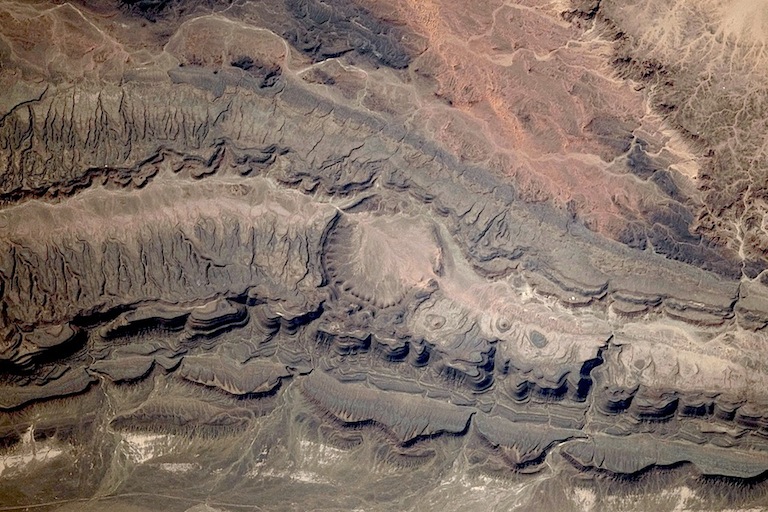
Chaotic terrain on Europa

May 17, 2012 Do the features on Europa indicate subsurface lakes? I care not what the sailors say: All those dreadful thunder-stones, All that storm that blots the day Can but show that Heaven yawns; Great Europa played the fool That changed a lover for a bull. — William Butler…

Continue reading

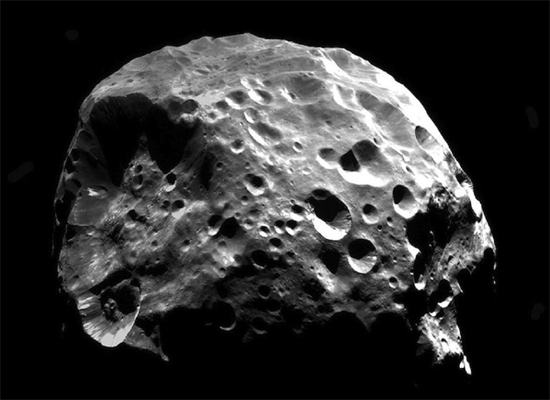
Daughter of Heaven

May 16, 2012 Recent analyses suggest that Saturn’s moon Phoebe resembles a planet. Saturn’s moon Phoebe is comparatively small, roughly 220 kilometers in diameter. Its surface gravity is 0.224m/s^2, compared to the 9m/s^2 on Earth. Phoebe is also as black as night, making it one of the darkest objects in…

Continue reading

The Truth of False Knowledge

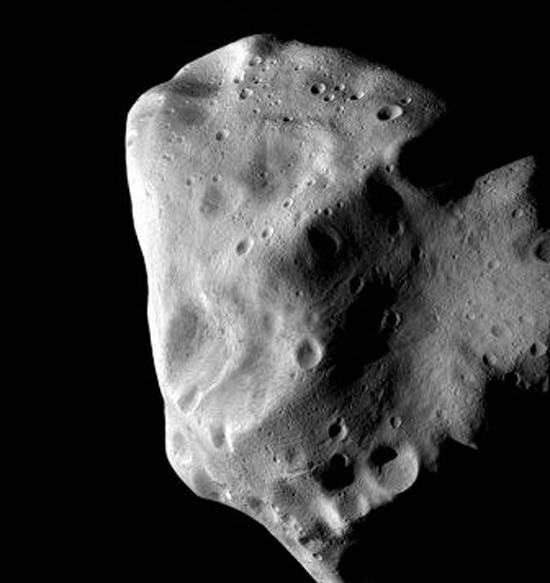
Asteroid Lutetia

  May 15, 2012 The key to modern knowledge is the exclusion of disproof and other possibilities. From the press release (emphasis added): Data from [five instruments] were combined to create the most complete spectrum of an asteroid ever assembled. This spectrum of Lutetia was then compared with that of meteorites found…

Continue reading

Poseidon Aegaeus

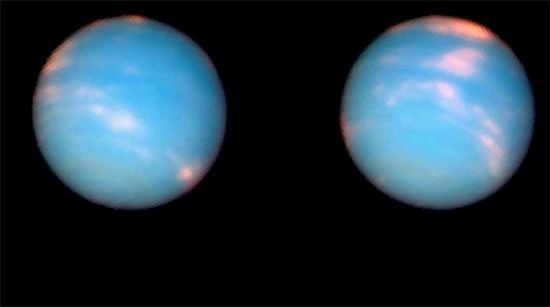
Neptune's clouds in false color

May 10, 2012 Neptune is the Solar System’s most remote planet. What drives its extraordinary winds? The winds on Jupiter average about 400 kilometers per hour, with the fastest streaming around the Great Red Spot at 635 kilometers per hour. On Saturn, wind speeds up to 1800 kilometers per hour have been…

Continue reading

Dione’s Dance

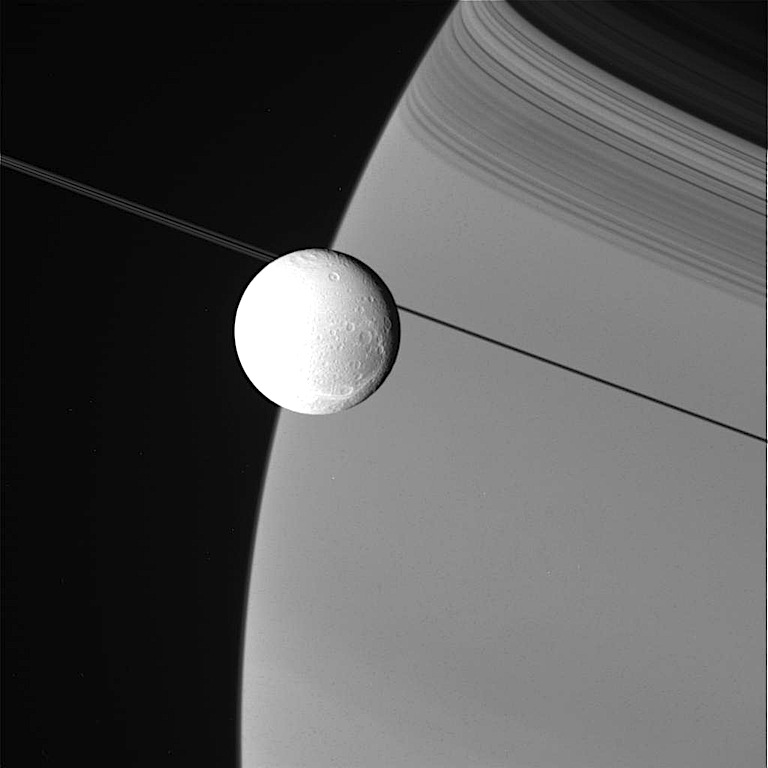
Dione crossing Saturn's ring plane

May 08, 2012 Dione exhibits some unusual features that may indicate electrical forces at work. Recently, the Cassini-Solstice spacecraft made a close flyby of the moon Enceladus. As the Picture of the Day from May 3, 2012 discussed, the bright plumes emanating from the 500 kilometer moon are most likely…

Continue reading