Dark Expansion

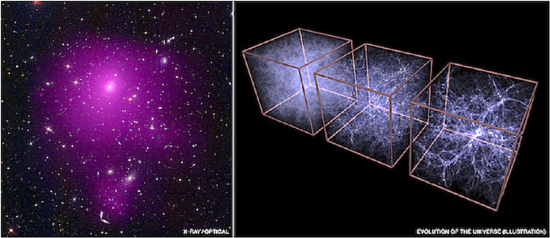
abell 85_universe simulation

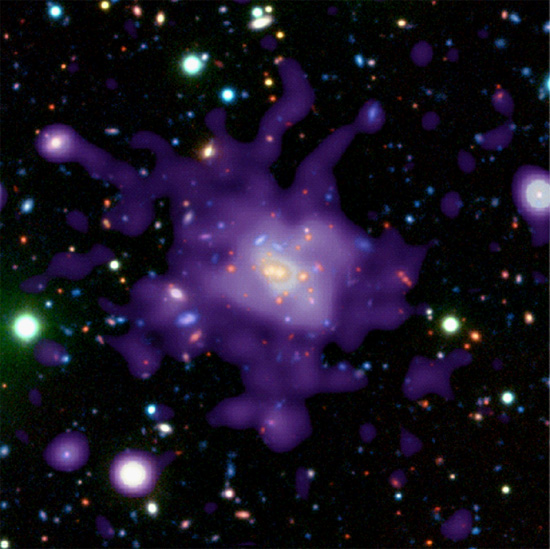
  Dec 23, 2013 Observations better fit the Electric Universe theory. In previous Thunderbolts Picture of the Day articles about the existence of “dark matter” it was noted that it is primarily an add-on, or ad-hoc theory, so that the current gravitational model of the Universe can be preserved. The lack…

Continue reading

Dusty Plasma

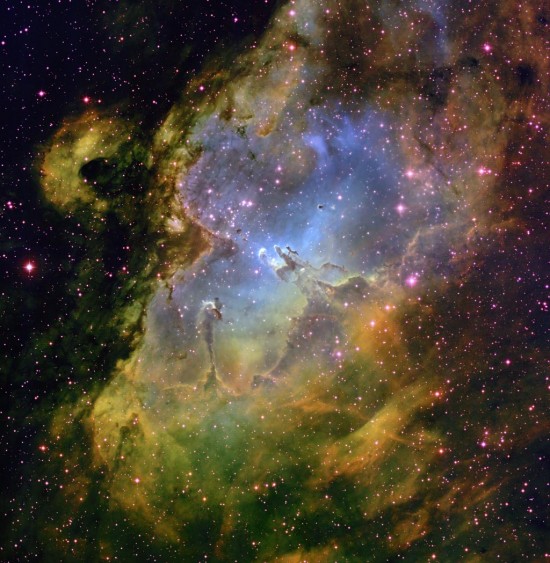
The Eagle Nebula (M16). Credit: T.A.Rector (NRAO/AUI/NSF and NOAO/AURA/NSF) and B.A.Wolpa (NOAO/AURA/NSF)

  Dec 19, 2013 Spiraling filaments suggest electric currents in space. Dust at a temperature near absolute zero shows up in the image above as a blue fog deep in the heart of the Eagle nebula. The Eagle nebula, located in the constellation Serpens approximately 7000 light-years away, is supposedly an active…

Continue reading

Farthest

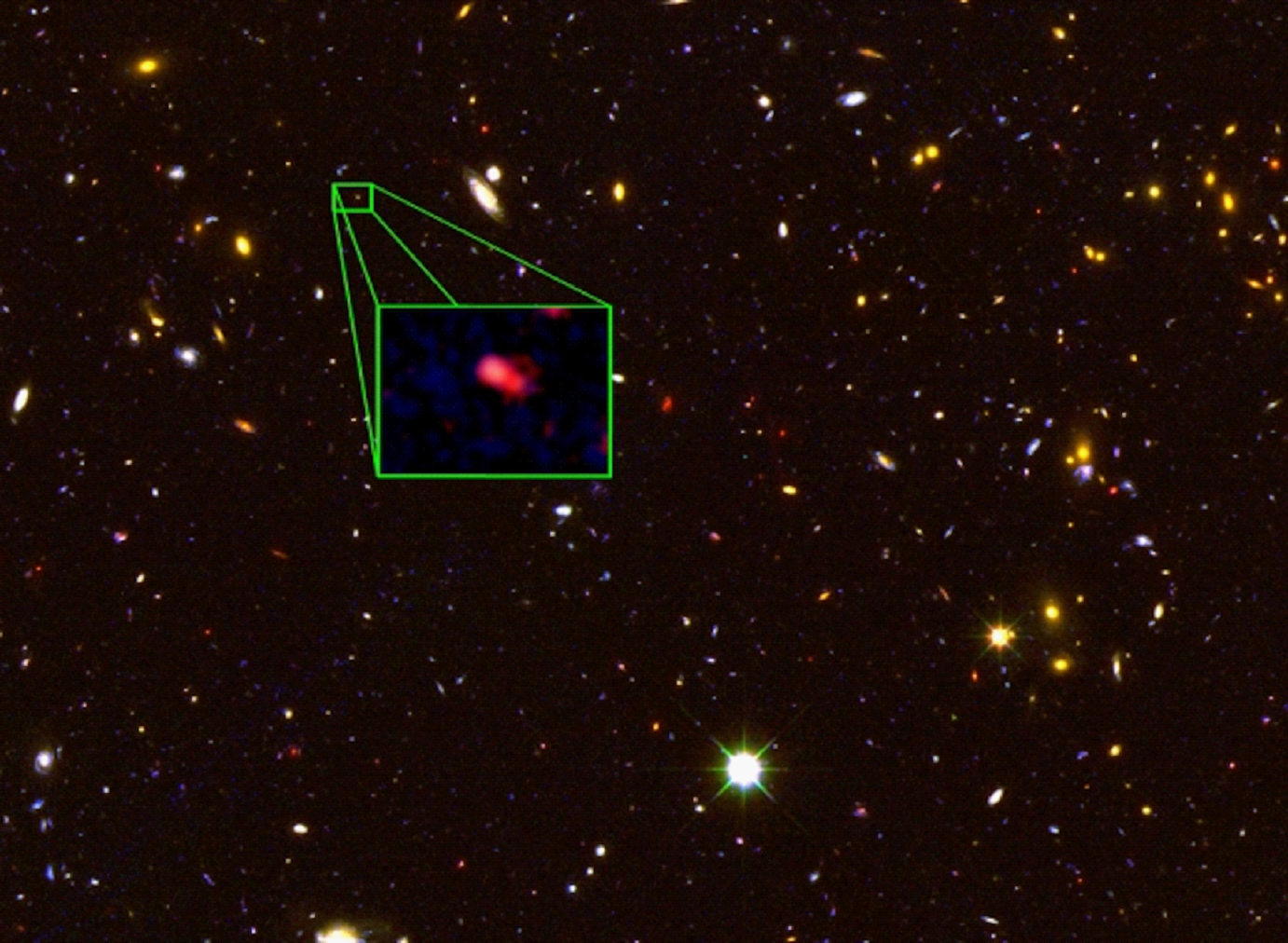
  Dec 18, 2013 The Big Bang theory dominates cosmological theories. A recent press release announced that astronomers using the Hubble Space Telescope and the twin, 10-meter Keck telescopes, have found an object 13.1 billion light-years from Earth, making it “…officially the most distant object ever detected.” Casey Papovich, an…

Continue reading

X Flares

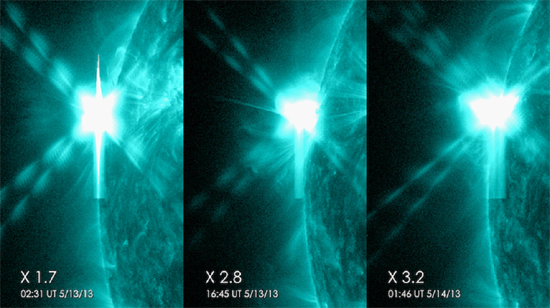
  Dec 16, 2013 An X-2 class solar flare recently missed a direct impact with Earth. Heliophysicists classify solar flares according to their brightness in X-ray wavelengths. C-class flares are the smallest on the scale, with X-ray measurements in the 10^-6 watts per square meter range (W/m^2), while X-class flares…

Continue reading

The Powers of Darkness

  Dec 12, 2013 Was the early Universe powered by “dark matter annihilation”? According to modern cosmologists, the Universe is composed primarily of dark matter. More than 95% of all that exists is unseen and undetectable by the most sensitive instruments yet devised. Many astrophysicists claim that the earliest stellar…

Continue reading

Magnetic Froth

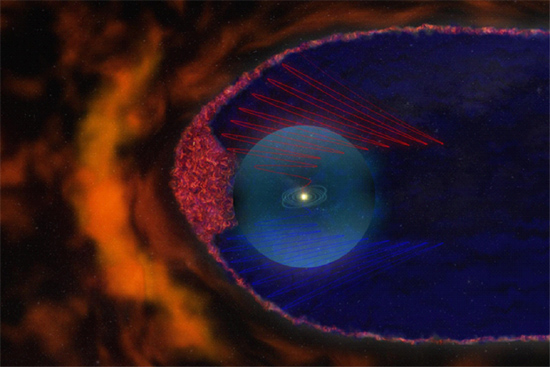
Artist's impression of "magnetic bubbles" surrounding the Solar System

  Dec 11, 2013 “Bubbles” of magnetic energy are said to surround the Sun’s heliosheath. “In all our quest of greatness, like wanton boys, whose pastime is their care, we follow after bubbles, blown in the air.” — John Webster Shortly after the event, astronomer Merav Opher of Boston University’s…

Continue reading