X Flares

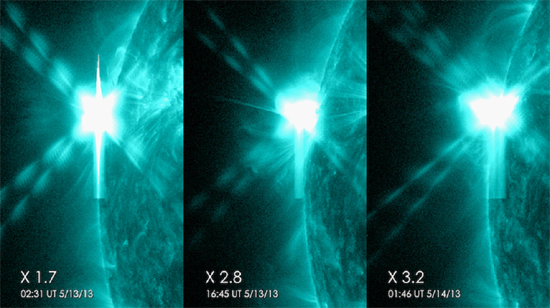
  Jun 05, 2014 An X-2 class solar flare recently missed a direct impact with Earth. Heliophysicists classify solar flares according to their brightness in X-ray wavelengths. C-class flares are the smallest on the scale, with X-ray measurements in the 10^-6 watts per square meter range (W/m^2), while X-class flares can…

Continue reading

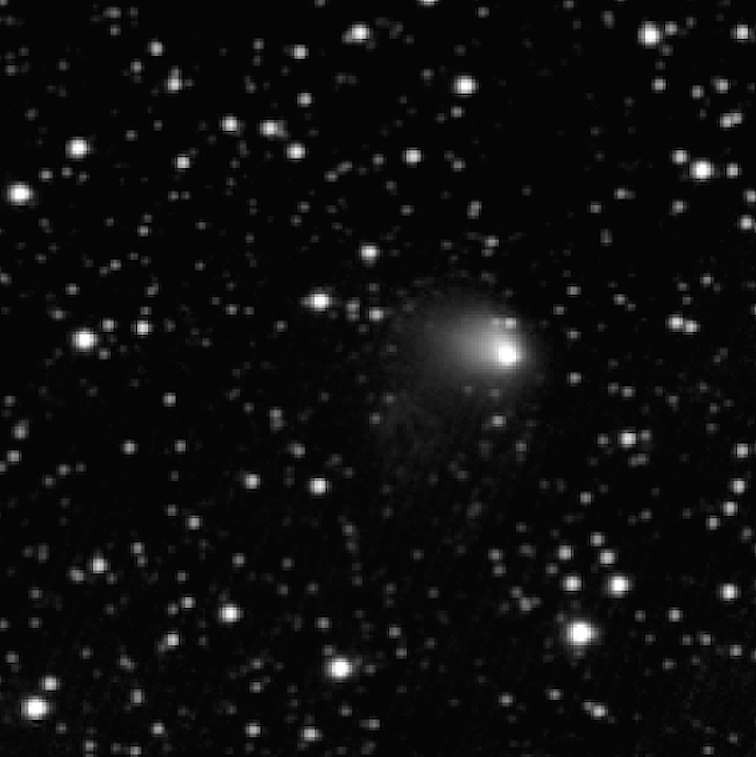
The Comet Awakens

Jun 4, 2014 67P/Churyumov-Gerasimenko recently formed a coma. After almost ten years of travel time, the Rosetta Cometary Probe is preparing itself for orbital insertion around its target, 67P/Churyumov-Gerasimenko, (chur-ee-uh-moff, yer-uh-sim-yenko) or “Chury” for short. In the last few weeks, Chury began to exhibit signs of activity, even though it…

Continue reading

Magnetic Froth

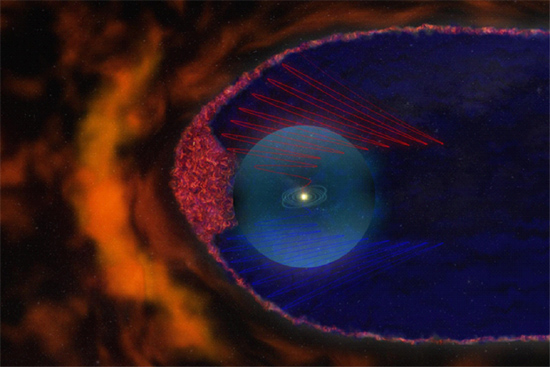
Artist's impression of "magnetic bubbles" surrounding the Solar System

  Jun 03, 2014 “Bubbles” of magnetic energy are said to surround the Sun’s heliosheath. “In all our quest of greatness, like wanton boys, whose pastime is their care, we follow after bubbles, blown in the air.” — John Webster Shortly after the event, astronomer Merav Opher of Boston University’s Voyager team…

Continue reading

Galactic Hexagon

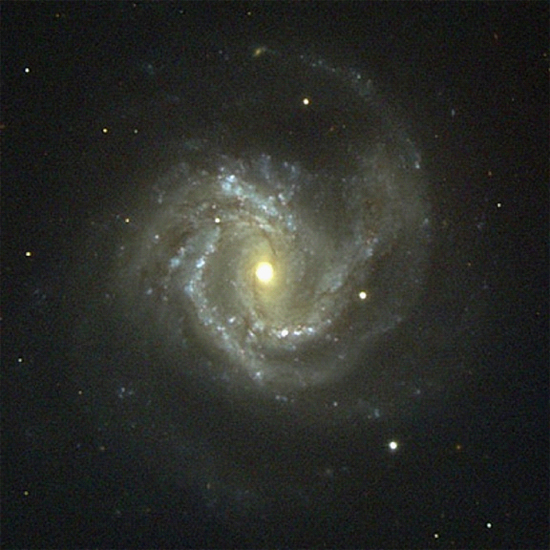
  Jun 02, 2014 Some galaxies exhibit polygonal structures. The term “diocotron instability” is not generally well known. Its use is confined to the field of plasma physics and refers to the distortions that occur when two sheets of plasma flow past each other. It is often confused with the Kelvin-Helmholtz…

Continue reading

Stone Monoliths Part Two

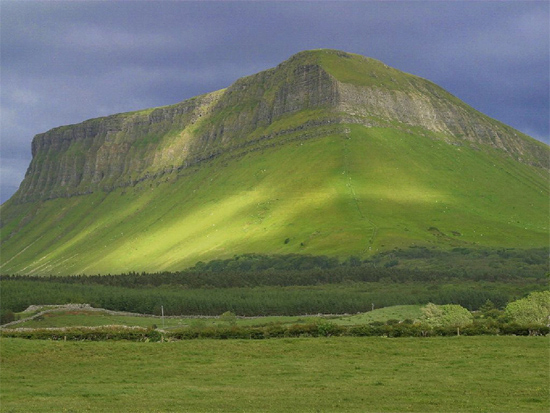
  May 29, 2014 Stones as large as mountains could be physical evidence for interplanetary lightning bolts on Earth. In the last installment about immense solitary stones that are found all over the world, it was noted that several of them in Australia and Europe could be the result of tremendous electric arcs. The magnetic…

Continue reading

Stone Monoliths

  May 27, 2014 On every continent are examples of isolated stone mountains that are not easy to explain. Mount Augustus in Australia is an example of a sandstone monolith that could be the largest of those monoliths that also includes Uluru. Mount Augustus, or Burringurrah to the local Wadjari people, is an…

Continue reading

Solar Waves

  May 26, 2014 What causes the solar wind to accelerate away from the Sun? NASA launched the Wind spacecraft on November 1, 1994, sending it into orbit around the L1 Lagrange point because it is an ideal position for solar observatories. The five Lagrange points represent two stable and…

Continue reading

Lightning in the Wind

  May 23, 2014 Ionized particles from the Sun contribute to electric discharges on Earth Electric Universe theories propose that plasma discharge behavior is a better model for solar activity than most consensus opinions would like to accept. Experiments using a positively charged sphere show that a plasma torus forms above…

Continue reading