Galactic Gas

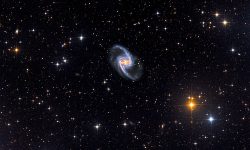
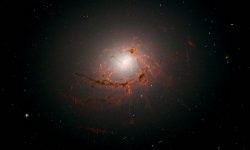
Sep 1, 2017 Oxygen is abundant in the Universe. Previous Picture of the Day articles point out that planetary nebulae radiate in light frequencies associated with ionized oxygen. Since oxygen is the most common element in galactic structures, after hydrogen and helium, it is not surprising that a remote galaxy…

Continue reading

Solar Supreme

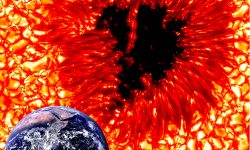
  Aug 31, 2017 Perhaps lightning powers the wind. Weather on Earth is thought to be driven by solar influences on the atmosphere. As Earth rotates beneath the Sun, gases and dust absorb radiation in varying degrees. Heat causes the air to expand and lose density, creating low pressure regions….

Continue reading

Plasma Stars

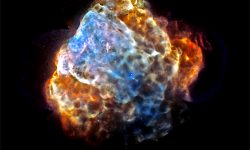
  Aug 29, 2017 What is a supernova? In an Electric Universe, stars do not follow a course through life that conventional understanding demands. Since stars are not balls of gas squeezed by gravity, other physical conditions must be considered. Plasma, for example, is not merely a “hot gas”, it…

Continue reading

Blazars

Aug 28, 2017 The brightest objects in the Universe are electrical. A previous Picture of the Day discussed the twin lobes of gamma rays extending beyond the Milky Way’s central bulge. The funnel-like formations are each about 65,000 light-years in diameter, and are considered by Electric Universe advocates to be…

Continue reading

Binaries

Aug 25, 2017 Why are stars most often seen in pairs? More than half of all stars observed in the Milky Way have one or more companions, suggesting that something, at least in our galaxy, influences the formation of multiple star systems. Stars are so remote from each other that…

Continue reading

NGC 4696

  Aug 24, 2016 Galactic filaments are known to plasma physicists as Birkeland currents. A recent press release details the enigmatic structure of Galaxy NGC 4696. What makes this galaxy so unique is that multiple strands of material extend outward in light-years-long tendrils, enclosing it in a loose cocoon. According to…

Continue reading

The Strongest Force

  Aug 23, 2017 Electromagnetism drives the cosmos. NASA launched the Herschel Space Observatory into orbit around LaGrange point L2 on May 14, 2009. Since Herschel used liquid helium-cooled infrared detectors built to last about three years, its mission came to an end on April 29, 2013. Herschel’s primary mission…

Continue reading

Chicxulub

  Aug 17, 2017 Did a 10-kilometer-wide asteroid strike Earth and excavate a crater? Off the coast of Mexico is what geologists believe to be an impact basin caused by the collision of an asteroid. It is a multi-ringed structure, similar to those mentioned in a previous Picture of the…

Continue reading