Freezing Desert

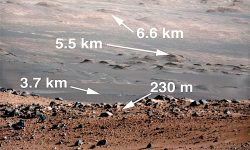
Nov 5, 2018 Mars is devoid of any detectable life. Martian areography bears witness to violent events at some time in the past. Images from the Mars Reconnaissance Orbiter (MRO) reveal scenes of devastation: the North polar terrain, for instance, is six kilometers below the planet’s mean elevation. Burned craters…

Continue reading

Take the Plunge

  Nov 1, 2018 Electrical perspectives. Astronomers recently discovered a galactic filament extending outward from galaxy CGCG254-021 on a scale never before observed: “This ribbon, or X-ray tail, is likely due to gas stripped from the galaxy as it moves through a vast cloud of hot intergalactic gas.” It might…

Continue reading

Blue-White

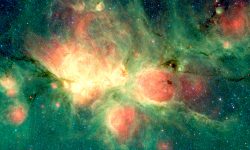
Oct 31, 2018 Most astrophysical models about stars rely on mechanical action. The collapse of cold gas under gravitational influence is thought to be the force that shapes stars. Common viewpoints see stars as collapsed whirlpools of gas and dust heated to fusion temperatures by pressure, alone. Gravity, it is…

Continue reading

Moving Charges

Oct 29, 2018 Astronomers see magnetism but not electricity. Scientists working with dynamos (an abbreviation of the nineteenth century term, electric-dynamo) think they found clues to how stars and galaxies acquire their magnetism. Turbulence in plasmas forms small magnetic fields, but scientists struggle to understand how those small fields coalesce…

Continue reading

Electric Furrows

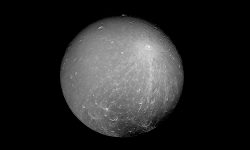
Oct 26, 2018 Images of Saturn’s moon, Dione reveal trenches and cliffs. The Cassini-Huygens mission was launched from Cape Canaveral on October 15, 1997. Few now remember the public outcry against the mission. There were several attempts by citizens groups and the ACLU to stop the launch, because 33 kilograms…

Continue reading

Stellar Oscillator

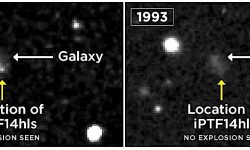
  Oct 25, 2018 Stars are electrical entities. The explosion of a star, otherwise known as a supernova, is a terminal event in stellar evolution—the star used up its fuel, collapsed under its own gravity, and then ejected most of its gaseous envelope because of “core rebound”. At least, that…

Continue reading

Solar Plasma

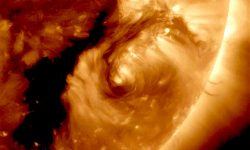
  Oct 23, 2018 The Sun is not a ball of hot gas. The conventional model of how the Sun works relies on thermonuclear processes. Although no direct measurement is possible, temperatures in its core are thought to be more than 15 million Celsius, with compressive strain greater than 340…

Continue reading