Target in Sight

Nov 21, 2018 Osiris-Rex approaches Asteroid Bennu. On September 8, 2016 NASA launched Osiris-Rex on a mission to study the asteroid, 101955 Bennu. The mission objectives include collecting a sample from Bennu and returning it to Earth. Bennu is one of more than 7000 Near Earth Objects (NEO), and, like…
Continue reading

Morning Star

  Nov 20, 2018 Venus is an electrically active world. The European Space Agency’s (ESA) Venus Express was launched from Baikonur Cosmodrome in Kazakhstan on November 9, 2005. The spacecraft entered orbit around Venus on April 11, 2006. One its “surprising” discoveries was electric discharges in the planet’s upper atmosphere….

Continue reading

Luminous Essence

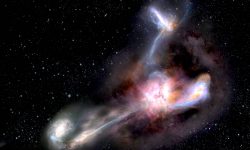
  Nov 19, 2018 Electric filaments energize galaxies. “A colour is a physical object as soon as we consider its dependence, for instance, upon its luminous source, upon other colours, upon temperatures, upon spaces, and so forth.” — Ernst Mach A recent press release talks about cosmic filaments connecting vast…

Continue reading

Cooling Off

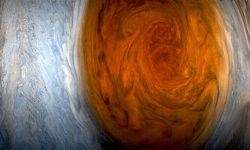
  Nov 15, 2018 Jupiter’s Red Spot is shrinking. For over 300 years, the Great Red Spot has persisted in Jupiter’s atmosphere—longer than telescopes have existed to see it. It is commonly believed to be a cyclonic storm driven by thermal convection from deep inside Jupiter’s atmosphere. How it was…

Continue reading

Concentrated Power

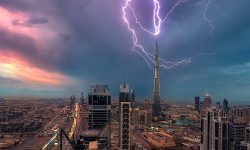
Nov 14, 2018 Lightning is not well understood. Prevailing ideas see circulating water vapor moving up and down through clouds in a process of convection. The condensation theory presupposes that water is heated by the Sun until it evaporates, rising into the air where it collects into clouds, finally cooling…

Continue reading

A Cold Exterior

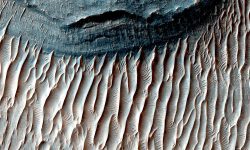
  Nov 12, 2018 One of the most important questions about other planets is whether water is present in any significant amount. Water sustains Earth’s ecology, so there is a presumption among planetary scientists that water is necessary for life to exist on other planets. There are rovers on Mars,…

Continue reading

Large and Small

Nov 12, 2018 Plasma’s behavior is independent of scale. Intense lightning in thunderstorms can interact with charged particles (cosmic rays) coming from space. Given the right conditions, lightning causes giant particle accelerators to form above the clouds. Cosmic rays are sub-atomic particles, mostly protons, that can knock electrons off molecules…

Continue reading

Plasma Braids

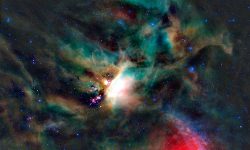
  Nov 8, 2018 Filaments are common in the Milky Way The Herschel Space Observatory was launched on May 14, 2009 into an orbit around LaGrange point L2 (behind Earth in relation to the Sun). Herschel’s supercooled infrared detectors were built to last only three years, so its cooling systems has long since…

Continue reading

Fields and Forces

  Nov 5, 2018 Jupiter’s environment Is electrically active. The Juno spacecraft entered orbit around Jupiter in July 2016 and began collecting data on its atmosphere, as well as its electromagnetic and gravitational fields. Jupiter’s toroidal electromagnetic field is so large that it extends outward beyond Saturn’s orbit. Charged particles…

Continue reading