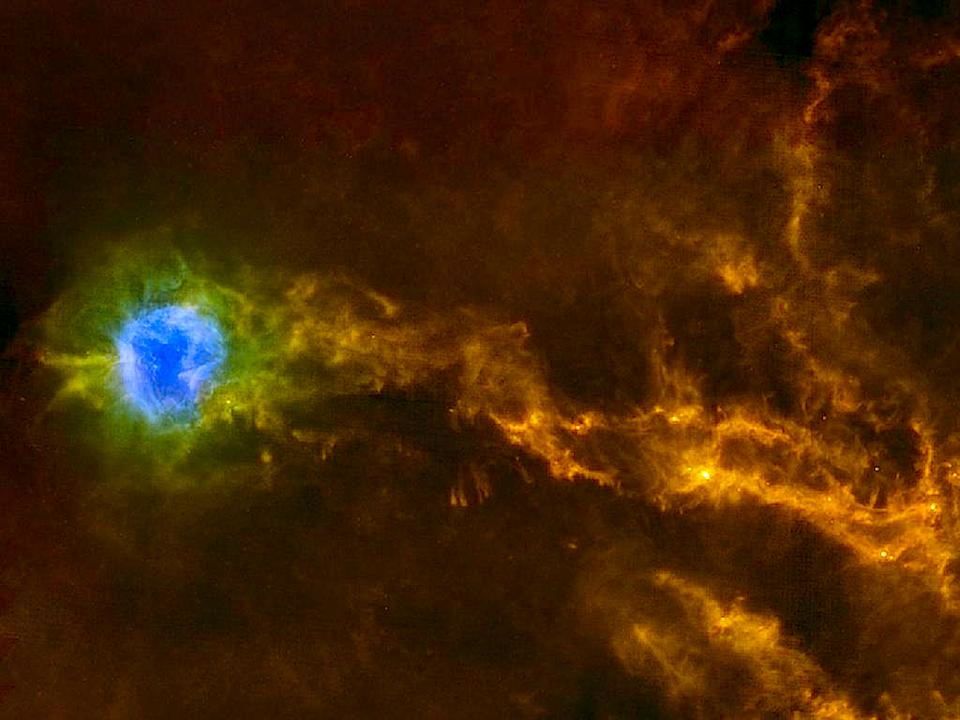
Cosmic Lightning

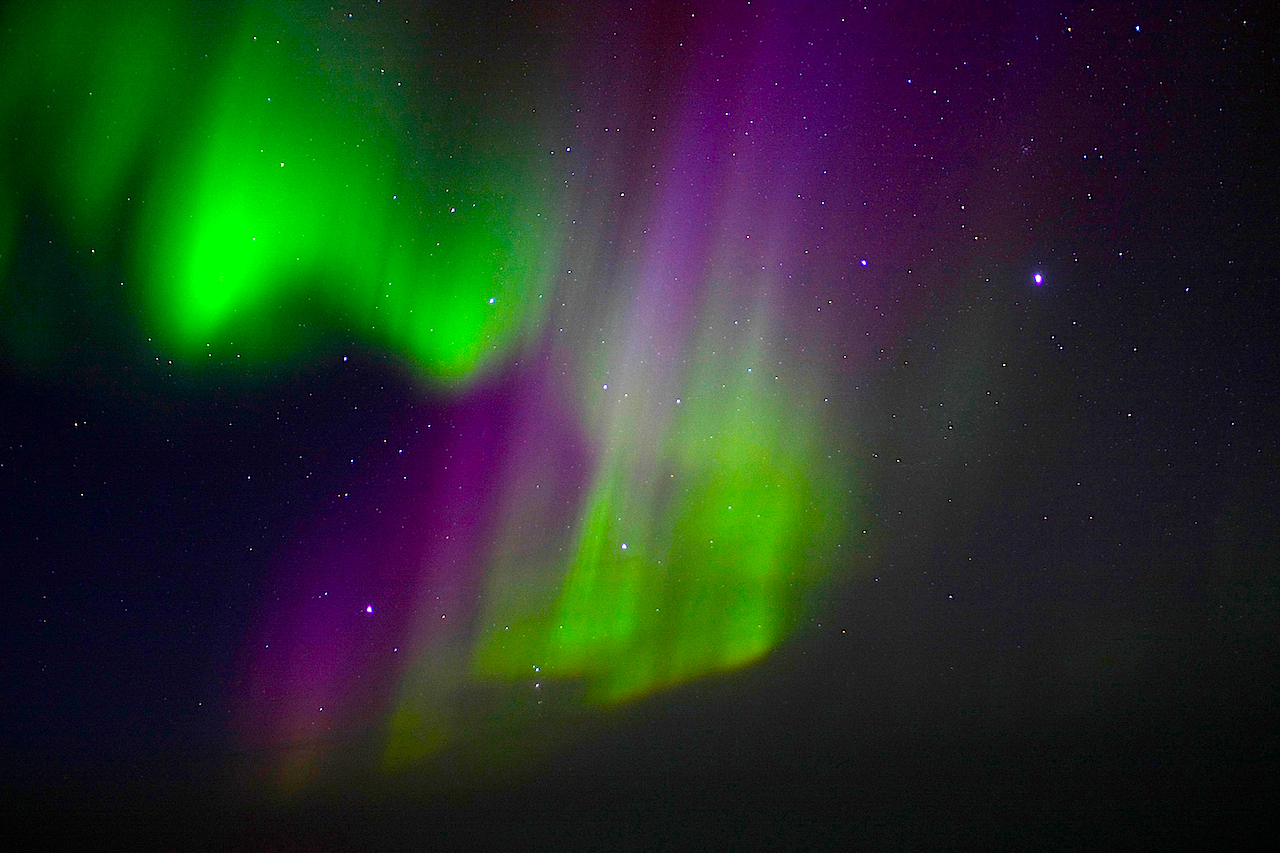
  Original Post December 9, 2014 Many fast, high energy phenomena could be due to something astronomers do not expect. Some things are familiar, even though they are not easily explained. The aurorae at each of Earth’s poles are familiar to most people, although the way they form is not completely…
Continue reading

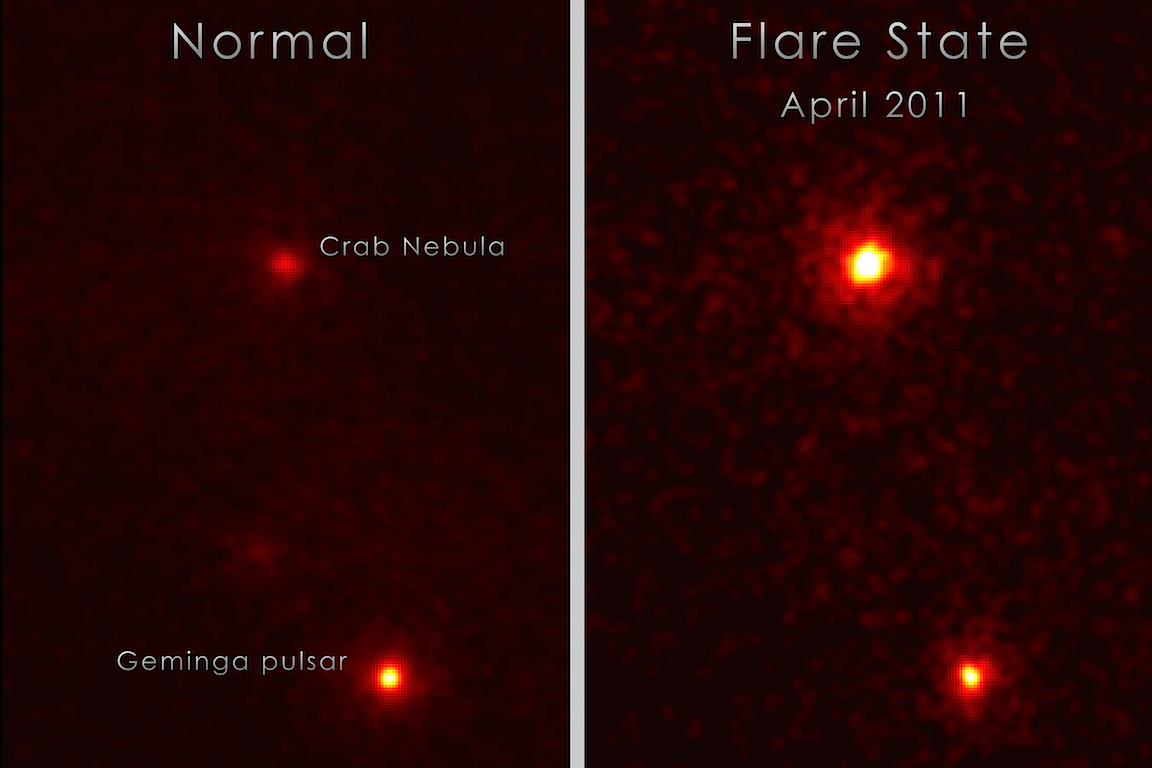
Super Flares

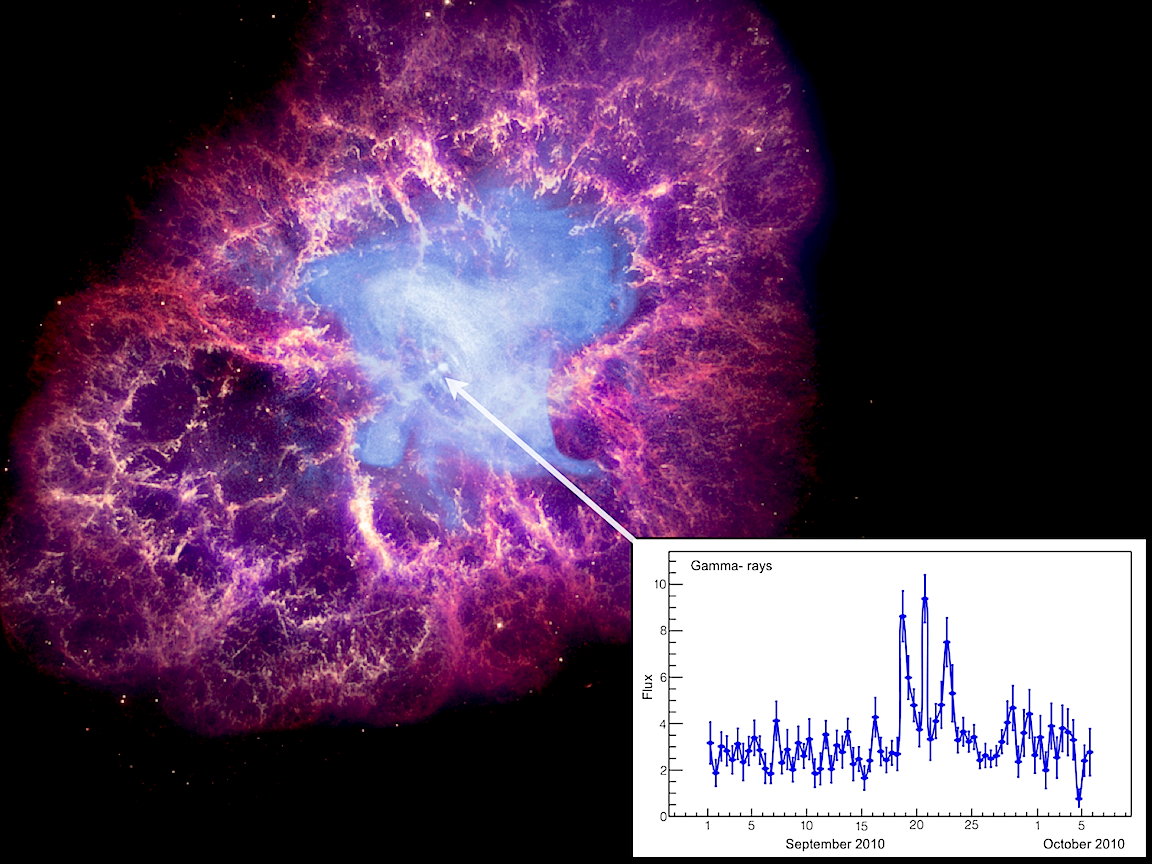
  Original Post October 17, 2014 The Crab Nebula is surprisingly energetic. The Fermi Gamma-ray Space Telescope has detected several unidentified sources of intense gamma-ray emissions that are not seen in any other frequencies. NASA launched the telescope on June 11, 2008. Its primary mission is to detect high frequency…

Continue reading

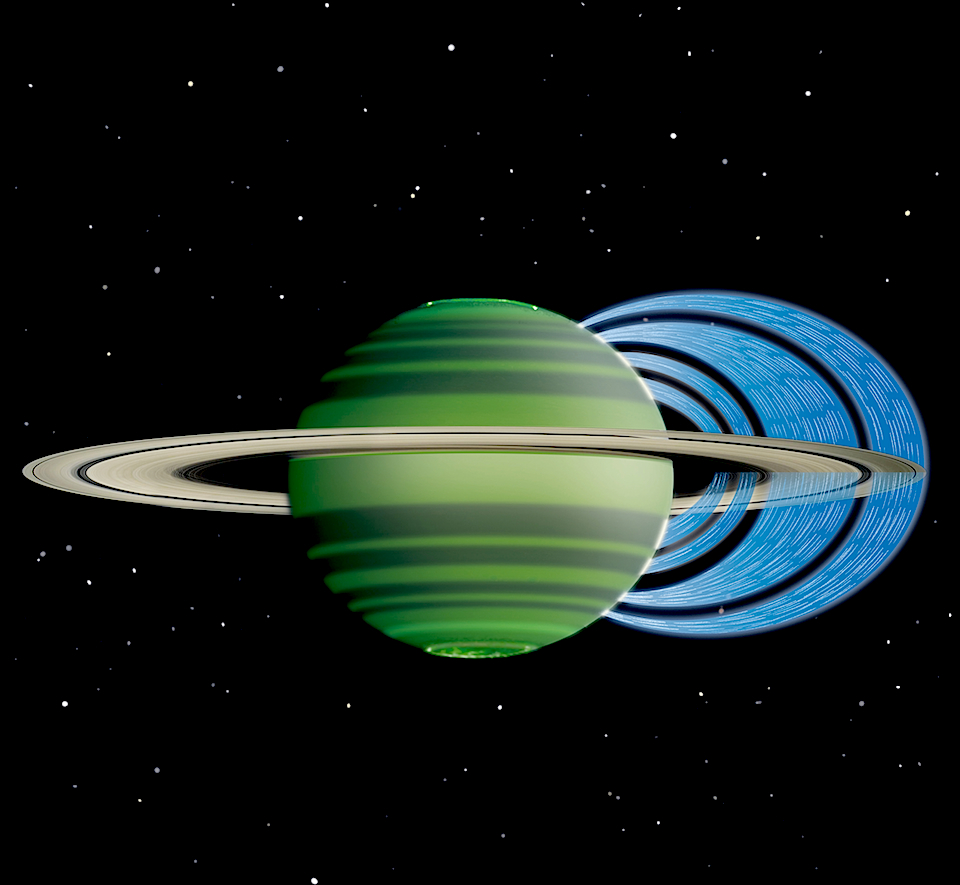
I’m Singeing in the Rain

  Original Post October 7, 2014 Ionic rain from Saturn’s rings. Saturn’s plasmasphere is an electrical environment, causing everything from dark-mode plasma discharges to lightning bolts that flash across the ring plane. When Cassini entered orbit around the giant planet, mission specialists were shocked to discover lightning of immense power, up to a million times more powerful…

Continue reading

Electronic Nebula

  Original Post October 1, 2014 Pulsars are more like oscillating circuits. On July 4, 1054 CE, Chinese astrologers saw a “guest star” near Zeta Tauri in the constellation Taurus. They record that it was bright enough to shine in daylight, but lasted only about a year before fading out….

Continue reading

Star Drive

aurora_australis_h

  Original Post September 10, 2014 Electric Universe theory assumes Earth and the Sun are electrically connected. Previous Picture of the Day articles discuss the linkages between the flow of electric charge through the galaxy, solar electric currents, and terrestrial electric currents. Earth’s environment is also driven by those cosmic…

Continue reading

The Fairy Tale of Time Dilation

The Fairy Tale of Time Dilation by Mathias Hüfner Some time ago I came across an article entitled Quasare bestätigen Zeitdehnung nach Albert Einstein. 1 Because of their strong spectral redshift, time would pass more slowly there. It was written by Andreas Müller, editor-in-chief of Sterne und Weltraum 2 and…

Continue reading

Ski Enceladus

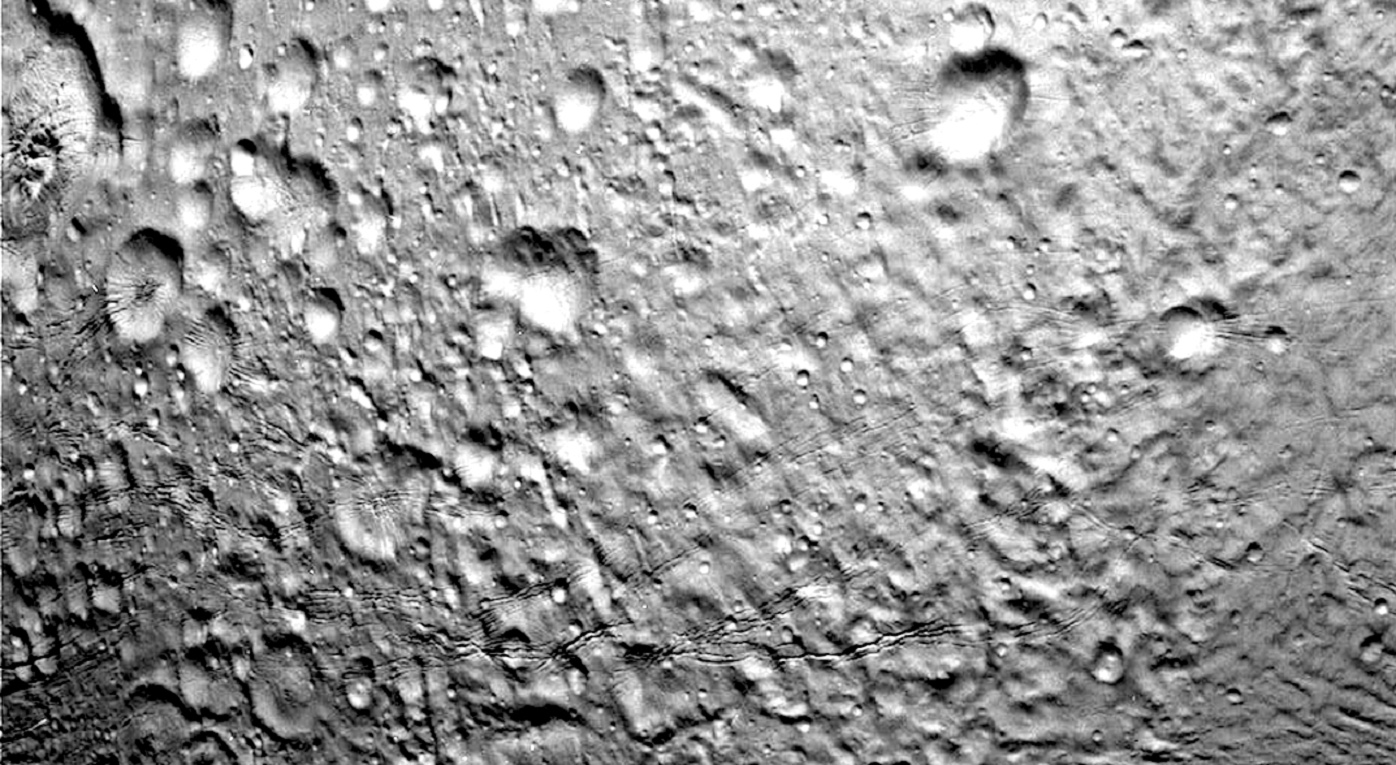
  Original Post August 21, 2014 This small moon is said to be covered with powdery snow. Enceladus was one of the Gigantes, or Titans, who were overthrown by Zeus and his minions. It is perhaps an ironic name, since it is a tiny world only 494 kilometers in diameter. Its…

Continue reading

Merger or Division?

Original Post August 13, 2014 Are colliding galaxies actually separating? Astronomer Halton Arp discovered several relationships between various galaxies, and between galaxies and quasars, that led him to speculate that redshift is not an indicator of recessional speed or of distance to remote celestial objects. Observations of those remote objects…

Continue reading

Stars in the Plasma Focus

  Original Post July 22, 2014 Supernovae are what Hannes Alfvén called them: exploding double layers. The Large Magellanic Cloud (LMC) is relatively small, irregular galaxy approximately 168,000 light-years from Earth. The distance is approximate, because different parallax values are obtained when different measuring sticks are used. Within the LMC is an object…

Continue reading

Plateau du Vercors

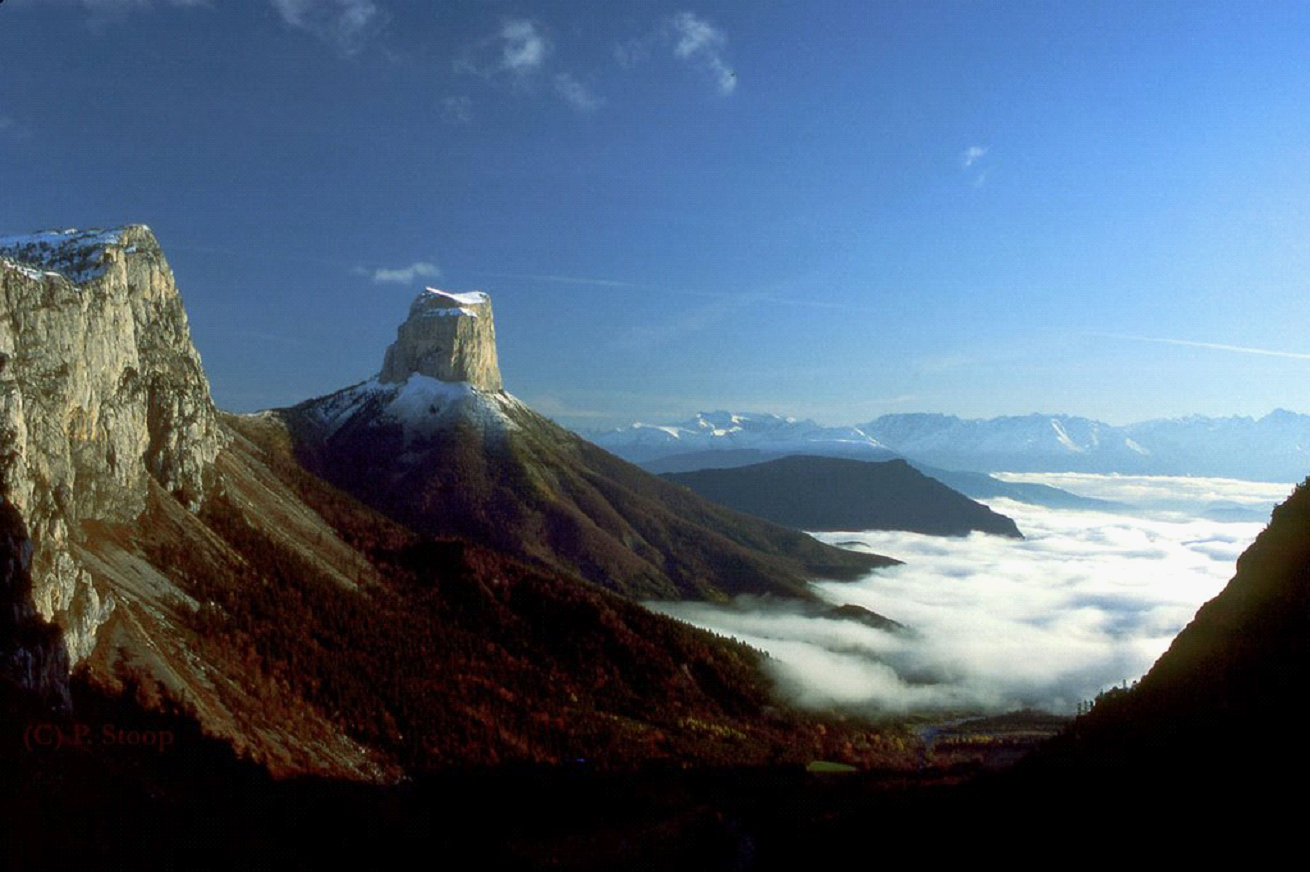
  Original Post July 8, 2014 Aciculate peaks and curvilinear ridges outline giant circular depressions in the French Alps. As previously written, stone monoliths can be found all over the world. There are colossal formations that make up the French Alps, for instance. In particular, Mont Aiguille (Needle Mountain) is similar to the structures…

Continue reading