Medusae Fossae

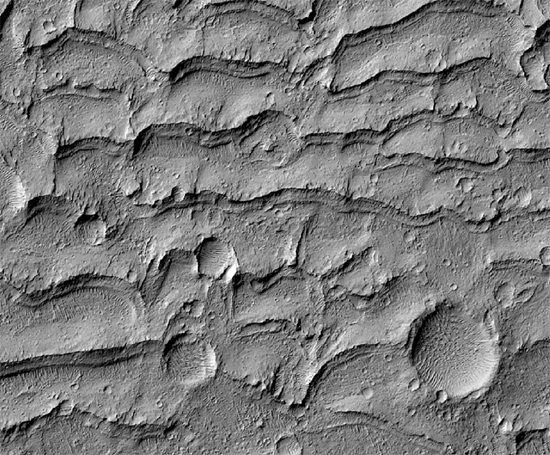
Medusae Fossae on Mars

Original Post May 28, 2012 What carved these landforms? Mars has been the subject of many previous Picture of the Day articles. Since its surface is preserved in a desert-like deep freeze, and appears devoid of water erosion, it is an excellent observational laboratory for Electric Universe concepts. One of…

Continue reading

Zero Mass Particles

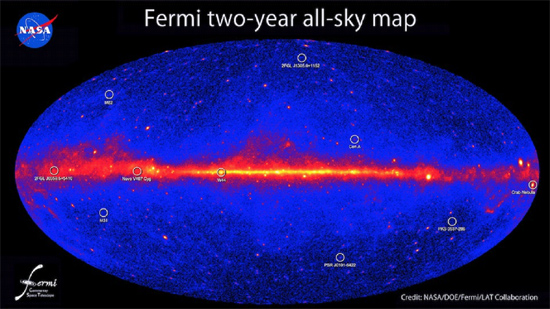
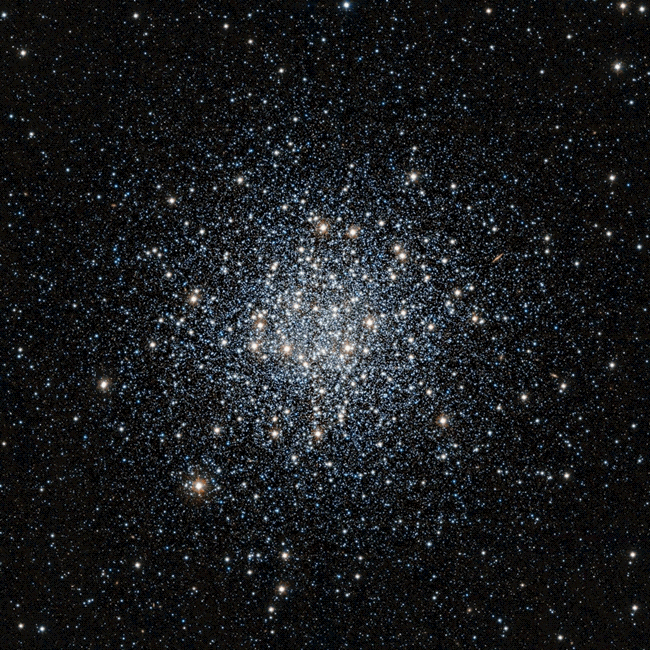
Gamma-ray sources in the sky

Original Post May 24, 2012 Gamma-rays are said to be particles with no mass, yet possessed of extreme momentum. According to this press release, the Fermi Gamma-ray Space Telescope has detected several unidentified sources of intense gamma-ray emissions that are not seen in any other frequencies. NASA launched the telescope…

Continue reading

X-1 Files

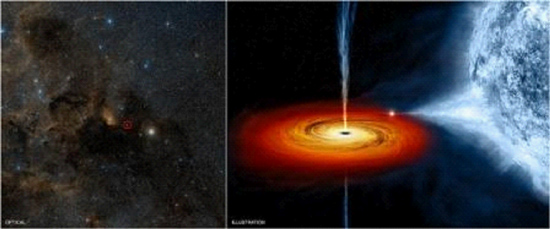
Cygnus X-1

  Original Post May 21, 2012 Without a theory of electricity in space, astronomers must explain cosmic lightning with theories of falling gas. To get x-rays from falling gas, the gas must be attracted to a source of gravity with orders-of-magnitude more force than any known density of matter. Nevertheless,…

Continue reading

Laramie Mountains, Part 1

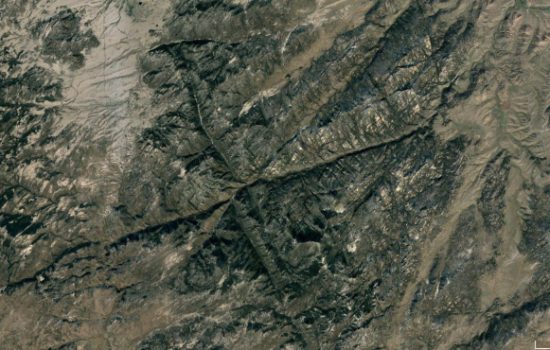
Easter Egg Hunt in Laramie Mountains by Andrew Hall In the final chapter of the Eye of the Storm series, I presented Easter eggs — surprise geologic findings that confirmed a theory or presented astonishing new information about Earth’s electric circuitry. Exploring the Electric Earth is a perpetual egg hunt…

Continue reading

Daughter of Heaven

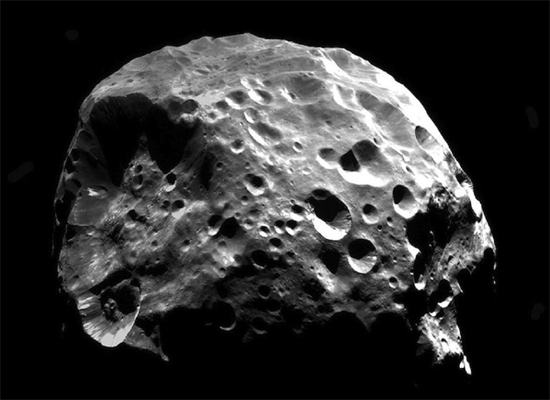
Original Post May 16, 2012 Recent analyses suggest that Saturn’s moon Phoebe resembles a planet. Saturn’s moon Phoebe is comparatively small, roughly 220 kilometers in diameter. Its surface gravity is 0.224m/s^2, compared to the 9m/s^2 on Earth. Phoebe is also as black as night, making it one of the darkest…

Continue reading

Cluster Wires

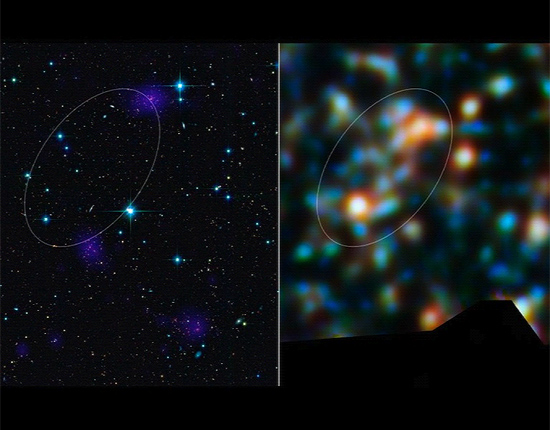
Original Post May 18, 2012 A galaxy-wide filament connects two galactic clusters. The Herschel Space Observatory possesses the largest mirror ever launched into space: 3.5 meters in diameter. Herschel entered orbit around LaGrange point L2 (behind Earth in relation to the Sun) in July 2009, so that its extremely sensitive,…

Continue reading

The Truth of False Knowledge

Asteroid Lutetia

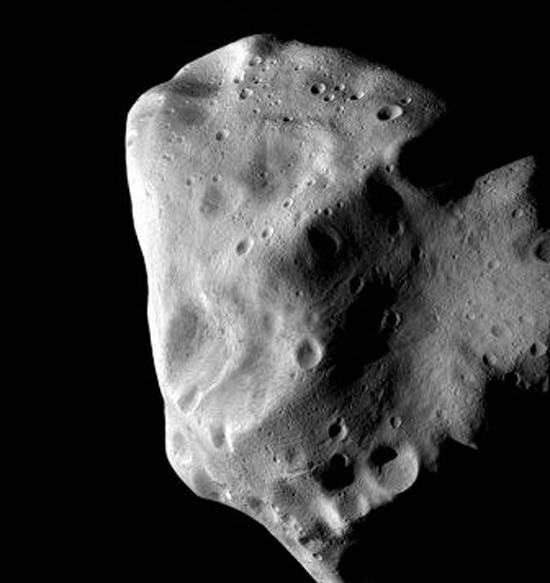
  Original Post May 15, 2012 The key to modern knowledge is the exclusion of disproof and other possibilities. From the press release (emphasis added): Data from [five instruments] were combined to create the most complete spectrum of an asteroid ever assembled. This spectrum of Lutetia was then compared with that of…

Continue reading

Poseidon Aegaeus

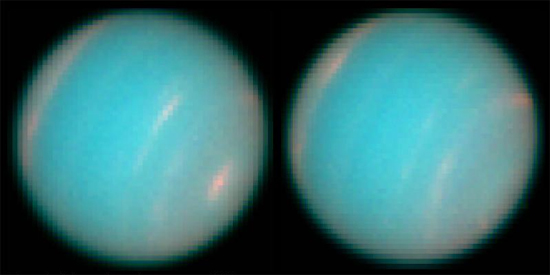
Both hemispheres of Neptune

Original Post May 10, 2012 Neptune is the Solar System’s most remote planet. What drives its extraordinary winds? The winds on Jupiter average about 400 kilometers per hour, with the fastest streaming around the Great Red Spot at 635 kilometers per hour. On Saturn, wind speeds up to 1800 kilometers per hour…

Continue reading