Year: 2017
Not a Drop to Drink
The Kingdom of Frost
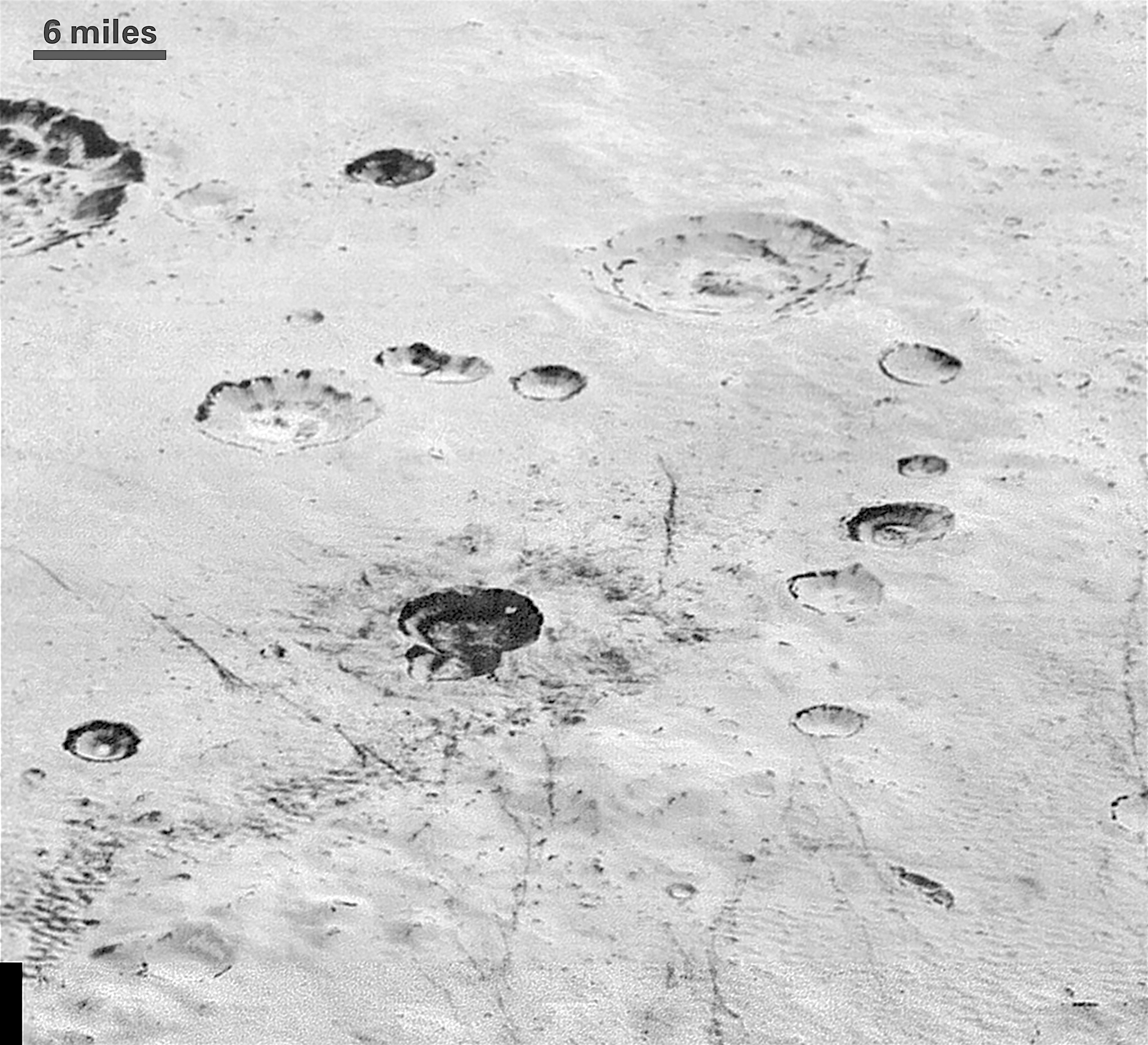
Mar 23, 2017 Pluto’s frigid environment continues to surprise investigators. Clyde W. Tombaugh discovered Pluto on February 18, 1930. Percival Lowell thought there ought to be another celestial body beyond Neptune because something affected their orbital calculations. A gravitational source was seen to “pull” on both Uranus and Neptune. Since…
Spiders From Mars
Mar 22, 2017 Martian formations are similar to those found elsewhere in the Solar System, including Earth. Lichtenberg figures are discussed many times in previous Picture of the Day articles. They are forking shapes that lightning bolts make when they strike Earth or some man-made object. Their unique configuration…
Do Dinosaurs Pose a Gravity Problem? | Space News
In today’s episode, we ask author Ted Holden (“Cosmos in Collision”) to explore the controversial question: Do dinosaurs pose a gravity problem? Scientists tell us that for about 165 million years on planet Earth, fantastic and often giant creatures called dinosaurs ruled our world. Of course, the largest of the…
Flux Ropes
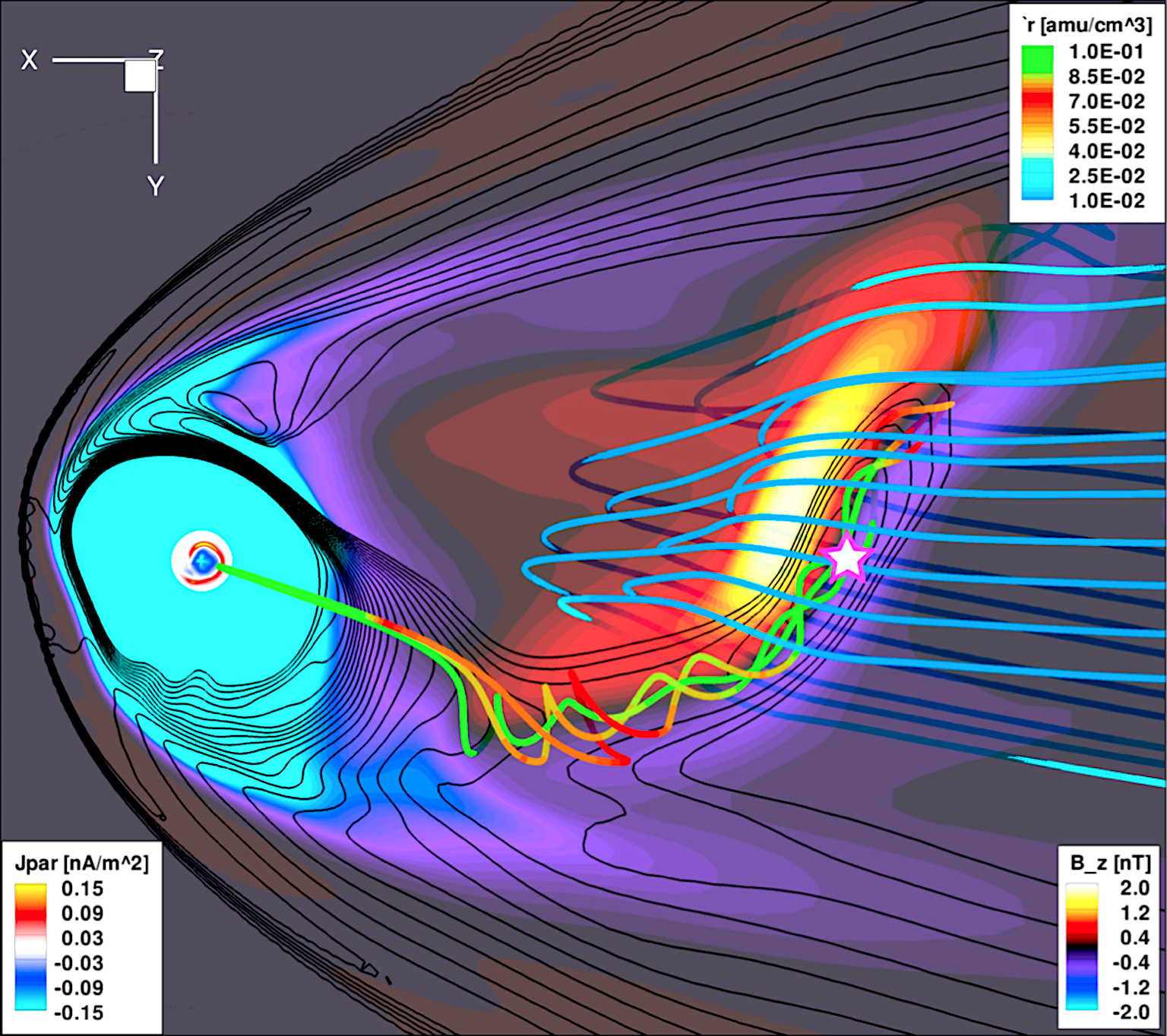
Mar 21, 2017 Electromagnetic filaments connect Saturn with the Sun. The plasmasphere of Saturn is highly energetic, enough so that lightning up to a million times more powerful than anything on this planet was observed. Saturn emits 2.3 times more energy than it receives from the Sun. 90 megawatts of X-rays…
Holy Moly!
Mar 20, 2017 Why do coronal holes accelerate the solar wind? Recently, the Solar Dynamics Observatory recorded a coronal hole as it moved across the Sun’s photosphere, causing a storm of charged particles to blast toward Earth. Heliophysicists believe that coronal holes are regions of “open magnetic fields”. The thermonuclear…
Another “Impossible” Neutron Star | Space News
What is a so-called neutron star? Scientists tell us that the material left over from a supernova explosion of a massive star collapses gravitationally, forming an incredibly small yet massively dense star mostly composed of tightly packed neutrons. A rotating neutron star is said to emit regular pulses of radio…
Dark Flow
Mar 16, 2017 Is the Universe expanding? Edwin Hubble first identified what he thought was the Doppler effect in faint galaxy images. The observation is known today as “redshift”. However, rather than the result of acceleration and distance, it may be that it is an intrinsic property of matter. Astronomer…