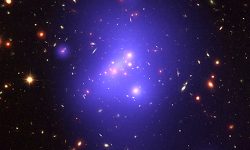
Cluster Crash
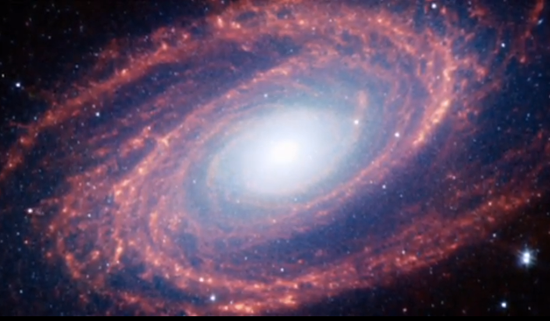
Nov 7, 2017 Do galaxies bump into each other? High temperatures in galaxy clusters are an enigma. Because astronomers have only one force in their bags of tricks—gravity—whenever energetic events are found, like high temperatures in the galaxy cluster shown above, it “must be” caused by a gravity-driven collision…
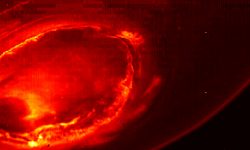
Charged Aurora
Nov 6, 2017 Aurorae on Jupiter are poorly understood by consensus astrophysicists. Jupiter is 142,984 kilometers in diameter at its equator. A day on Jupiter lasts only 9.925 hours. Its rapid rotational velocity means that its equatorial diameter is 9275 kilometers more than the distance between its poles. According…
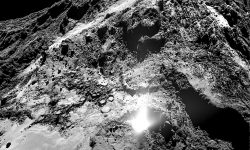
Dust Eruption
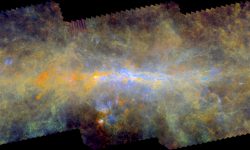
Twisted Topology
Ionized Moon
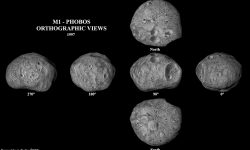
New Moons
Oct 30, 2017 Recent information reveals new dwarf planet features. The Kuiper Belt theory was proposed by astronomers Kenneth Edgeworth and Gerard Kuiper in 1951. Sometimes known as “trans-Neptunian Objects”, scores of Kuiper Belt Objects (KBO) from the size of small moons to the size of small planets are…
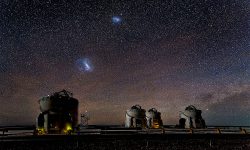
Over a Cloud Bridge
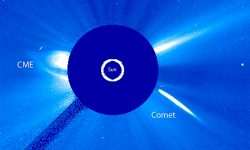
Sun Triggers
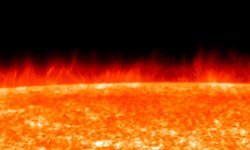
Solar Fibrils
Oct 24, 2017 The Sun is a charged body seeking equilibrium with its surroundings. The electric charge flow into and out of the Sun can sometimes increase to the point where it releases plasma discharges called solar flares. Conventional scientists think that solar flares occur when magnetic loops “reconnect”…