Year: 2019
Donald Scott: Tracking Birkeland Currents in Earth’s Atmosphere | Space News
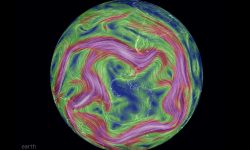
Our planet’s atmosphere is home to extraordinary electrical activity. As we’ve noted, retired professor of electrical engineering Dr. Donald Scott developed a mathematical model of the structure of a Birkeland current, which can be identified visually as counterrotating cylinders. We have suggested that the counterrotation clearly seen at the poles…
Star Power
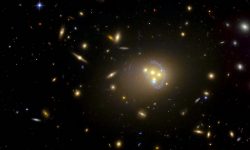
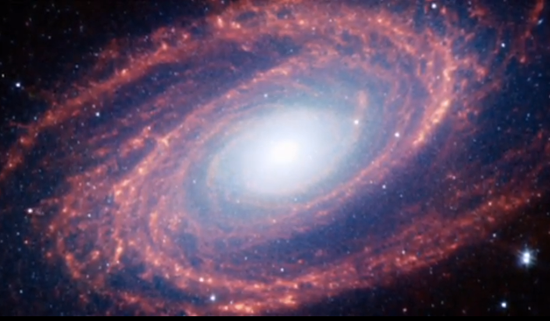
Arp 153
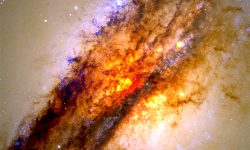
May 9, 2019 Consensus astronomers rely on ideas about gravity and acceleration for stars and galaxies to produce radiation. Particles of dust, along with hydrogen gas are said to “jet” out of galactic nuclei, because a central black hole accelerates them to high velocities. When material in a galactic jet…
Hubble Trouble
May 8, 2019 The Universe is not expanding. “After a ridiculously long time it has finally dawned on me that establishment scientists actually proceed on the belief that theories tell you what is true and not true!”— Halton Arp Astronomers think that galactic recession is occurring, because galaxies received “inflationary…
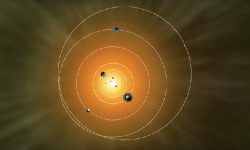
Eugene Bagashov: Planet Nine and Solar System Myths | Space News
Today, physicist Eugene Bagashov explores a longstanding, highly controversial hypothesis in astronomy — the alleged existence of the so-called planet nine in our solar system. Some astronomers have proposed that the gravitational influence of such a planet outside the orbit of Neptune could explain some anomalies, including the odd clustering…
Seeing Through Dirty Lenses
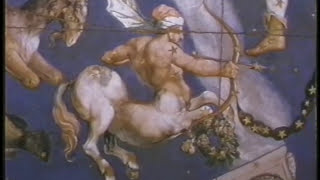
La Dea dell’Amore
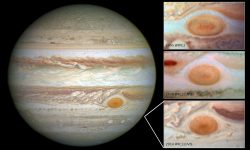
Eye of the Storm, Part 2
The Electric Winds of JupiterBy Andrew Hall Jupiter is our largest neighbor and generates the largest electromagnetic field in the Solar System except for the Sun. It has a thick, turbulent atmosphere with swirling storms producing winds of supersonic speed, and lightning arcs that dwarf the puny sparks we have…
Peter Moddel: What Can Matter Be? A philosophical approach | EU2017
The Electric Universe emphasizes that mass is not to be confused with matter, and it suggests a way of understanding the observed effects of mass. This leaves the question: what then is matter? To recognize matter is to attribute presence to an object. Understanding this process can loosen our grip…