Earth’s Electric Fields

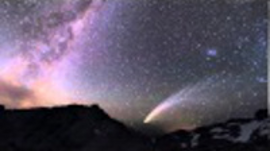
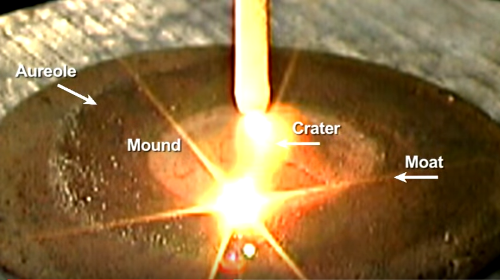
  Oct 2, 2018 Magnetic reconnection does not drive electromagnetic events. Upper regions of Earth’s atmosphere are influenced by solar emissions, because the ionosphere is connected to the Sun by filaments of electric charge. At 150 kilometers altitude, Earth’s electromagnetic field exhibits the greatest conductivity in what is called the…

Continue reading

Bigger

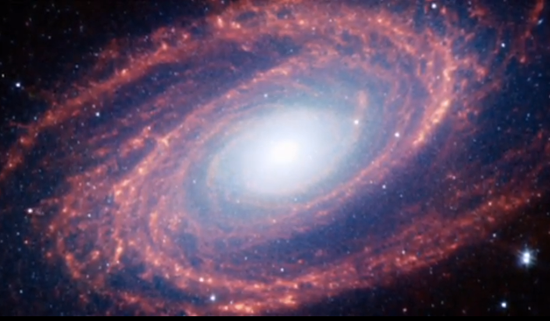
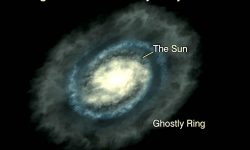
Oct 1, 2018 A ring of gas and stars is said to be orbiting the Milky Way. Galaxies are mysterious. Astronomers are still not sure if they are a rotating collection of individual stars held together by gravity, or if they are a discrete object, behaving as a whole. Consensus…

Continue reading

Recent Arrival

  Sep 27, 2017 Martian meteorites are most likely a few thousand years old, at most. The Martian lithosphere is composed of iron and silicon, although they are primarily bound with oxygen. Silicon dioxide and iron oxides are the main constituents of Martian regolith. The atmospheric density on Mars is…

Continue reading

Gassy Dust

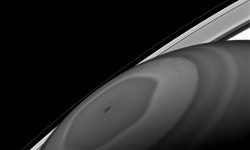
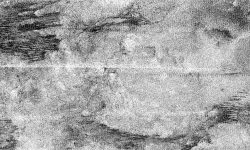
Sep 26, 2018 Methane dust on Titan? NASA launched the Cassini-Huygens mission on October 15, 1997. The six ton orbiter was the largest satellite ever deployed, entering orbit around Saturn on June 30, 2004. Its name was changed twice during its run: Cassini Equinox Mission on July 1, 2008, following…

Continue reading

Dry Sands

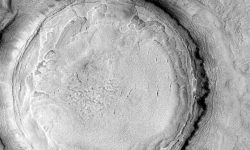
  Sep 25, 2018 The search for water on Mars continues. According to a recent press release, Mars may not possess the large quantities of water-ice that previous observations suggested. Data provided by the Mars Express orbiter points to, “ice-free, porous, windblown sand” and not subsurface ice. Thomas R. Watters,…

Continue reading

Landers Away!

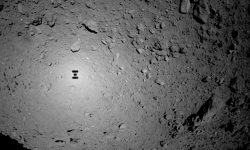
Sep 24, 2018 Five surface instruments are scheduled for Ryugu. The Hyabusa 2 spacecraft is orbiting asteroid 162173 Ryugu, where, on September 21, 2018 it released two landers. Known as MINERVA-II, they “hop” from place-to-place on the surface. Since Ryugu’s gravity field exerts a mere .00012 m/s² acceleration (80,000 times…

Continue reading

Force Multiplier

Sep 21, 2018 Jupiter generates its own power. On August 5, 2011 NASA launched the Juno mission to Jupiter. It is currently analyzing Jupiter’s massive plasmasphere, along with its electromagnetic field. Jupiter radiates more energy in the infrared than it receives from the Sun, so astronomers think that it is…

Continue reading

White and Bright

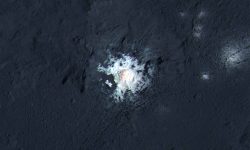
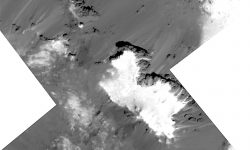
  Sep 20, 2018 Reflective mineral deposits on Ceres. NASA launched the Dawn spacecraft on September 27, 2007. After its observations of the asteroid, Vesta ended on September 5, 2012 Dawn headed toward Ceres. Dawn encountered the largest known asteroid in the Solar System on March 6, 2015. The mission officially ended…

Continue reading