Tilted Haloes

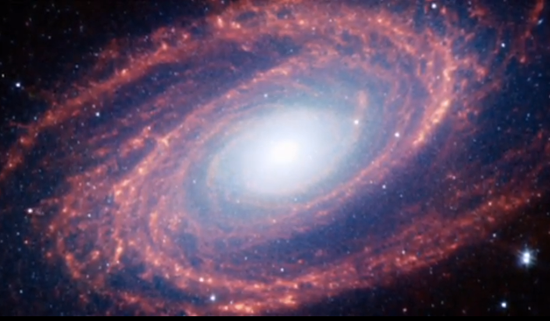
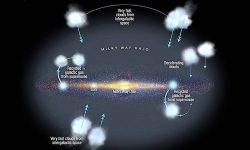
October 21, 2020 Galaxies are electrical in nature. According to a recent press release, the Milky Way galaxy is “…surrounded by a clumpy halo of hot gases that is continually being supplied with material ejected by birthing or dying stars.” Named the circumgalactic medium (CGM), it is where astronomers say…

Continue reading

Plasma Science

October 16, 2020 Astronomers find many celestial phenomena to be unexpected. Many of those phenomena are familiar, even though they are not easily explained. The aurorae at each of Earth’s poles are familiar to most people, although the way they form is not completely understood. Similarly, lightning bolts are familiar…

Continue reading

Langmuir Bursts

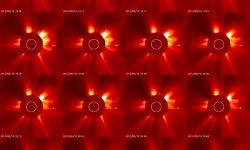
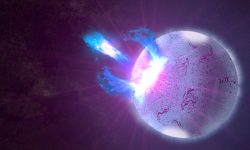
October 15, 2020 What powers coronal mass ejections? According to a recent press release, solar flares are driven by magnetized loops of plasma. The magnetic fields in the “magnetic flux ropes” experience “reconnection events” in which the field lines break and then reconnect, causing explosions of “magnetic energy.” Some of that…

Continue reading

Space Is Not a Thing

October 13, 2020 Stars are born where regions of space accumulate dense electric charge. Stars are concentrations of electricity that result from Birkeland currents and electric charge separation in space. Therefore, conventional models of stellar evolution reveal almost nothing about how stars are born and behave. Red giant stars, as…

Continue reading

Calm Before the Storm

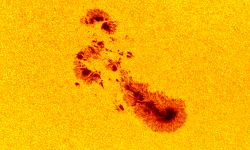
October 12, 2020 Sunspots are mysterious. According to a recent press release, heliophysicists are studying sunspots fields in order to understand how similar phenomena might occur on other stars. Beginning with data from the Solar Dynamics Observatory and the Hinode mission, scientists “smeared” the datapoints into broad images. This gave…

Continue reading

On and Off

October 8, 2020 Stars respond to incoming electric charge flow. According to consensus theory, when a star uses up its hydrogen it contracts because radiation pressure no longer overcomes the gravity pulling its outer layers into its core. As that compression increases, internal pressure rises and heats up the star,…

Continue reading