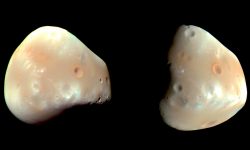
Electric Moons

March 12, 2020 The moons of Mars are scarred worlds. The two moons of Mars are called Phobos and Deimos, meaning “fear and “panic”. Phobos is extensively studied by Earth-based telescopes and by satellites in Mars orbit. Deimos, however, is so small that major observations are impossible from Earth. Stickney…
Continue reading

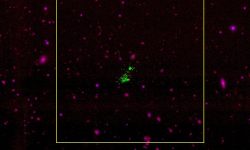
Ultraviolet Nebula

March 11, 2020 What causes gigantic blobs of hydrogen to glow? Over ten years ago, Chinese astronomers from Purple Mountain Observatory, Chinese Academy of Sciences, saw what was later called a “Lyman-alpha blob” (LAB). They recognized that there was something unusual about the observation, because of the gas cloud’s mass….

Continue reading

Wal Thornhill: Supernovas, Neutron Stars and Black Holes “Break the Rules” | Space News

In Part Two of our interview with Wal Thornhill, Chief Science Advisor of The Thunderbolts Project, we explore a number of intriguing space science discoveries, including supernovae, “neutron stars,” “black holes” and “white dwarf” stars which appear to break the expected rules of standard cosmology. Are these “weird” objects really…

Continue reading

Fractured Flickers

March 6, 2020 Astronomers think FRBs are created from dying stars. About eight years ago, astronomers discovered an energy signature they called a “Fast Radio Burst”, or FRB. The blast of radio waves lasted five milliseconds, releasing more energy than the Sun puts out in a month. Distance to the…

Continue reading

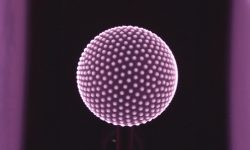
Langmuir’s Bubbles

March 5, 2020 The Sun’s heliosheath is spherical. The Interstellar Medium (ISM), through which the Solar System and all other stars in the galaxy are moving, is primarily composed of hydrogen and helium, with some dust particles that are less than one-tenth of a micron in size, making them smaller…

Continue reading

Strange Brew

March 3, 2020 Why don’t globular clusters fly apart? Globular clusters are an example of how plasma is organized and confined into formations that are difficult to explain. Astronomers believe that globular clusters begin as groups of stars from a single birthing event. According to standard theory, gas and dust…

Continue reading

Focused Filaments

March 2, 2020 Plasma is the foundation for all celestial phenomena. Electric Universe advocates argue that a flow of electric charge in plasma generates electromagnetic fields that constrict the plasma. As previous Pictures of the Day point out, that constricted channel is known as a Bennett pinch, or z-pinch. The…

Continue reading