Sunward Electrons

Plasma and electricity in space. Failure of gravity-only cosmology. Exposing the myths of dark matter, dark energy, black holes, neutron stars, and other mathematical constructs. The electric model of stars. Predictions and confirmations of the electric comet.
User avatar
Brigit
Posts: 1478
Joined: Tue Dec 30, 2008 8:37 pm

Sunward Electrons

Unread post by Brigit » Wed Dec 09, 2020 6:16 pm

In the Electric Universe model, the sun and all stars are electrodes.

Electrode
noun
a conductor, not necessarily metallic, through which a current enters or leaves a nonmetallic medium, as an electrolytic cell, arc generator, vacuum tube, or gaseous discharge tube.

Electrode | Definition of Electrode
1 : a conductor used to establish electrical contact with a nonmetallic part of a circuit. 2 : an element in a semiconductor device (such as a transistor) that emits or collects electrons or holes or controls their movements.

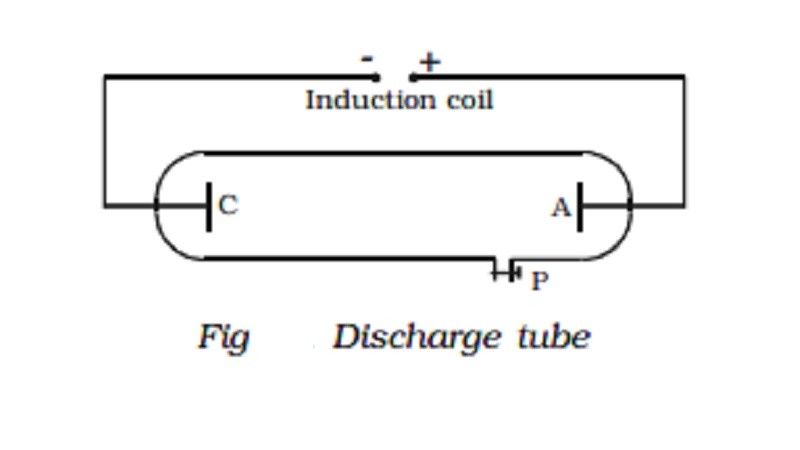
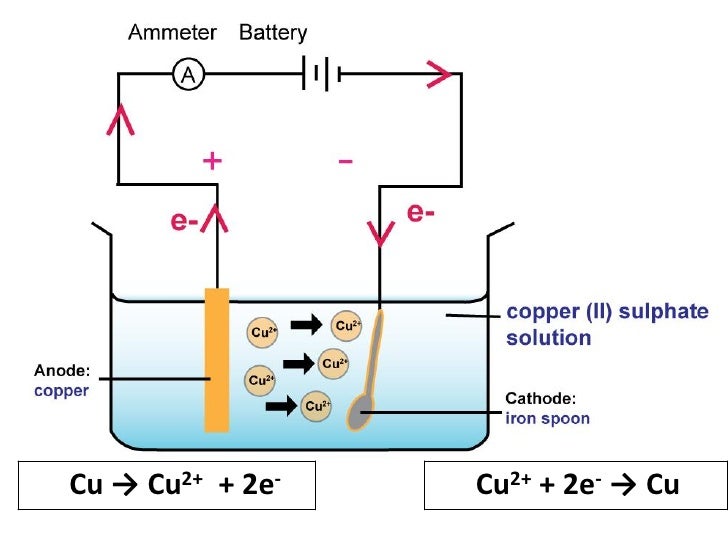
Some examples of the use of electrodes in every day life include electric discharge tubes, the processing of ores in electrolysis, and the deposition of metals in electroplating. For these applications to work, there must be two electrodes of opposite polarity, an anode and a cathode. When a current is applied and the circuit complete, the charged particles migrate between them. You can light up a room or make a silver spoon.
Originally, Ralph Juergens used a gaseous electric discharge tube to describe many features of the electric sun, including the anode tufts. The anode sun model was further developed by Wal Thornhill, and also Donald Scott, to include the "virtual cathode" at the sun's heliopause. This model has been useful in the decades since for interpreting space discoveries, making predictions, and carrying out experiments.
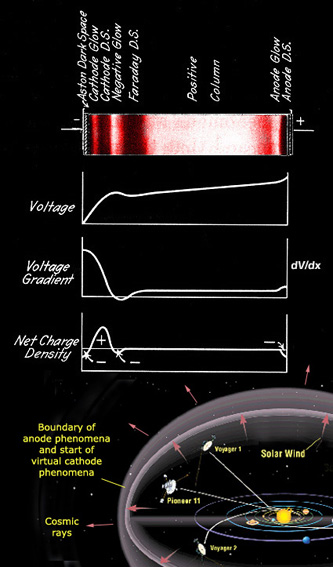
  • Figure 3
    https://www.holoscience.com/wp/wp-conte ... charge.jpg
    "Diagram showing the important electrical features of a glow discharge aligned with the heliosphere and with the Sun as the anode. Note that in a spherically symmetrical corona discharge the cathode glows and extensive positive column glow are absent because the drift current is spread through a huge volume. The heliosphere boundary is a double layer with charge concentrations shown. A reverse electric field is strongest at the point of inflection between the two charge concentrations. Discharge diagram from J. D. Cobine's Gaseous Conductors.
As you can see in the diagram, the heliopause forms the boundary between the sun's electrical atmosphere and the interstellar medium. In the electric sun model, the heliosheath is a plasma double layer. This plasma double layer scavenges charged particles from the interstellar medium and accelerates them sunward. In the case of the electric sun, electrons begin their slow drift from the cathode heliosheath to the anode sun.

This model predicts that there are not only sunward electrons in sufficient numbers within the heliosphere to light the anode sun, but that there are also sunward electrons from the planets to the sun.
"The important thing in all of this, and something which Velikovsky in his usual intuitive way presaged, is that gravity itself is linked to [subatomic] electrostatics. It is not some innate quality associated with matter, unrelated to its electrical structure." ~Wal Thornhill

Higgsy
Posts: 629
Joined: Wed Mar 08, 2017 10:32 pm

Re: Sunward Electrons

Unread post by Higgsy » Wed Dec 09, 2020 8:15 pm

Brigit wrote: Wed Dec 09, 2020 6:16 pm In the Electric Universe model, the sun and all stars are electrodes...
Thank you. But this is not an answer to my question: "Do you or Wal have any idea or model for how that might work within the Sun and where we can find the currents in the solar system necessary to power the Sun electrically to the tune of 10^26W?" In other words, I am looking for evidence of these sunward electrons, a measure of their flux, a mechanism for converting them into radiation at the Sun, a means for preventing negative charge accumulation in the Sun, and calculations that show that all of this adds up to 10^26W.

By the way, have you discussed this with Michael? He doesn't seem to think that the EU model necessarily requires an electrically-powered Sun. He seems to think that the EU model can accomodate a wholly or mostly fusion-powered Sun. Everyone else on this forum, and the EU principals appear to take your view.
"Why would the conservation of charge even matter?" - Cargo

User avatar
JP Michael
Posts: 538
Joined: Sun Oct 27, 2019 4:19 am

Re: Sunward Electrons

Unread post by JP Michael » Wed Dec 09, 2020 10:50 pm

I'm quite partial to Gabriel LaFreniere's Acoustic Thermonuclear Reactor (bottom of page in the link) as a possible internal source of star energy, although much of his theory still relies on traditional hydrogen fusion. It may still be possible that such self-amplifying spherical standing wave resonance in the core of stars (and to a lesser extent, planets) results in core heat signatures.

Negative charge accumulation in the sun itself is easily avoided by the presence of double layers in the solar atmosphere, with the anode at the solar surface and cathode at the heliopause:
Anthony Peratt wrote:In order for charge neutrality to prevail in the layer as a whole, the almost constant charge level of the electrons must be slightly larger than that of the ions. The charge distribution in the layer consists, approximately, of a positive surface charge at the anode surface and a small and uniform negative charge density in the rest of the layer. For a constant current density, the density of the surface charge remains constant and independent of the thickness of the relativistic layer. (Physics of the Plasma Universe, 5.2.4)
I am not convinced this is necessarily the case with the solar circuitry, as Michael Mozina points out elsewhere, because Birkeland's cathode solar model sun explains charged particle movements in the solar system far better than Juergen's anode model. If the heliosphere represents a double layer, the system would be relatively stable, self-regulating and would not need to exhibit charge build up on account of the protecting virtual anode and cathode sheaths which would carry the bulk of the charge, not the anode and cathode themselves (Peratt, 5.5.1). This might possibly be the solar corona region of the sun, where particles are greatly accelerated across the virtual anode/cathode sheath (depending on whether one has a solar anode/cathode sun model).

I dare say that charge accumulation in spherical double layer virtual cathode and anode sheaths remains a highly under-studied phenomenon, and may hold an important key to progressing Brigit's (and EU) argument considerably.

User avatar
paladin17
Posts: 438
Joined: Mon Jul 14, 2014 2:47 pm
Contact:

Re: Sunward Electrons

Unread post by paladin17 » Thu Dec 10, 2020 12:23 pm

Brigit wrote: Wed Dec 09, 2020 6:16 pm Originally, Ralph Juergens used a gaseous electric discharge tube to describe many features of the electric sun, including the anode tufts. The anode sun model was further developed by Wal Thornhill, and also Donald Scott, to include the "virtual cathode" at the sun's heliopause. This model has been useful in the decades since for interpreting space discoveries, making predictions, and carrying out experiments.
Unfortunately, Juergens' model (and, I would assume, all the others following from it) was based upon an ad hoc assumption of constantly decreasing electrical potential of the Galaxy itself (as opposed to Sun and other stars). Without it, it would simply never work. Arguably, it wouldn't work even with it, but for other reasons.
JP Michael wrote: Wed Dec 09, 2020 10:50 pm Negative charge accumulation in the sun itself is easily avoided by the presence of double layers in the solar atmosphere, with the anode at the solar surface and cathode at the heliopause:
But it works both ways: if a double layer is formed due to an excess charge, it would produce its own electric field (in the opposite direction), which would suppress the further charge build-up and eventually would cut the current off entirely.
Consider a charging capacitor in a DC setup as a simplified example: there is a current "through" the capacitor only until it is fully charged (if we neglect the actual exponential law). Then the current in the circuit disappears.
JP Michael wrote: Wed Dec 09, 2020 10:50 pm I dare say that charge accumulation in spherical double layer virtual cathode and anode sheaths remains a highly under-studied phenomenon, and may hold an important key to progressing Brigit's (and EU) argument considerably.
What should be clear though is that the quotes you give from Peratt relate to current-carrying 1-dimensional DLs (basically a DL along an infinite string of current) or DLs in a closed circuit. It should be obvious that topologically our problem (powering the spherical Sun - which represents a "discontinuity" in space - by external current) is noticeably different. It would have been the same only if you somehow inserted one end of a "wire" in the Sun's center and then connected it to the rest of the Galaxy with another end while not crossing the Sun's surface (i.e. through a 4th spatial dimension). Then the circuit would be closed and these problems could be considered on the same level. Though there would still remain a question of what generates the electric potential difference in the first place.

Regarding the charge build-up and plasma screening effects in general, I've previously outlined my vision of the problem in this post.

jacmac
Posts: 934
Joined: Wed Dec 02, 2009 7:36 pm

Re: Sunward Electrons

Unread post by jacmac » Thu Dec 10, 2020 2:39 pm

Brigit:
"Diagram showing the important electrical features of a glow discharge aligned with the heliosphere and with the Sun as the anode. Note that in a spherically symmetrical corona discharge the cathode glows and extensive positive column glow are absent because the drift current is spread through a huge volume. The heliosphere boundary is a double layer with charge concentrations shown.
The yellow text, in figure 3, describes the entire solar system as the anode phenomena.
If that is correct, why does the "discharge" not occur at the heliopause ?
And, why does the EU community largely ignore the importance and function of the chromosphere ?

paladin17:
It should be obvious that topologically our problem (powering the spherical Sun - which represents a "discontinuity" in space - by external current) is noticeably different. It would have been the same only if you somehow inserted one end of a "wire" in the Sun's center and then connected it to the rest of the Galaxy with another end while not crossing the Sun's surface (i.e. through a 4th spatial dimension).
I agree.
This is the basic problem with the electric sun model as generally offered by the EU community.
There is no electric wire to the sun, separate and distinct from the surrounding solar surface and atmosphere, that connects to a galactic power source.
I have suggested an alternative electric plasma model which starts with the ability of plasma to isolate a so called foreign body by constructing a Double Layer around it. This is the double layer in the chromosphere, as described by Dr. Scott that gives us what we call the sun. And, a second double layer at the heliopause which gives us our solar system outer boundary.
I think of our solar system as a CELL like structure with both double layers isolating plasma environments while allowing enough transfer of energy to function.
The use of "anode" and "cathode" terms begs the question of "where is the circuit?

Higgsy
Posts: 629
Joined: Wed Mar 08, 2017 10:32 pm

Re: Sunward Electrons

Unread post by Higgsy » Thu Dec 10, 2020 6:54 pm

JP Michael wrote: Wed Dec 09, 2020 10:50 pm Negative charge accumulation in the sun itself is easily avoided by the presence of double layers in the solar atmosphere, with the anode at the solar surface and cathode at the heliopause:
So you think that by the magic of double layers you can have indefinite current flow for indefinite time without charge accumulation? How does that work?
Anthony Peratt wrote:In order for charge neutrality to prevail in the layer as a whole, the almost constant charge level of the electrons must be slightly larger than that of the ions. The charge distribution in the layer consists, approximately, of a positive surface charge at the anode surface and a small and uniform negative charge density in the rest of the layer. For a constant current density, the density of the surface charge remains constant and independent of the thickness of the relativistic layer. (Physics of the Plasma Universe, 5.2.4)
This is the description of an isolated one dimensional double layer. It says nothing about the sources of current through the layer, the source of the potential, and the reference to the density of surface charge assumes that charge is transported away from the layer by some generic and unspecified mechanism. So this does not in any way easily or otherwise avoid the problem of charge accumulation in the Sun.
If the heliosphere represents a double layer, the system would be relatively stable, self-regulating and would not need to exhibit charge build up on account of the protecting virtual anode and cathode sheaths which would carry the bulk of the charge, not the anode and cathode themselves (Peratt, 5.5.1). This might possibly be the solar corona region of the sun, where particles are greatly accelerated across the virtual anode/cathode sheath (depending on whether one has a solar anode/cathode sun model).
Sorry, but if you have a current flowing across the double layer the charge has got to go somewhere. If you say that the charge flows to the virtual anode/cathode of the double layer and no further (it doesn't, but anyway) then that is where the charge accumulation will occur, unless you have some mechanism for taking the charge away. In Peratt 5.5.1, the circuit is completed (but not shown) by conductors connecting the electrodes to a voltage generator. The total current in the plasma flows through those conductors completing the circuit.
I dare say that charge accumulation in spherical double layer virtual cathode and anode sheaths remains a highly under-studied phenomenon, and may hold an important key to progressing Brigit's (and EU) argument considerably.
Calculating charge accumulation is easy if there is no mechanism for getting rid of the charge, regardless of geometry. Just multiply total current by time and there you have it - the charge at the structure where it accumulates. In the case of the Sun, the time is 1.4 x 10^17 seconds (4.5 billion years) and the current is for the EU advocate to propose.
"Why would the conservation of charge even matter?" - Cargo

Higgsy
Posts: 629
Joined: Wed Mar 08, 2017 10:32 pm

Re: Sunward Electrons

Unread post by Higgsy » Thu Dec 10, 2020 6:58 pm

jacmac wrote: Thu Dec 10, 2020 2:39 pm I have suggested an alternative electric plasma model which starts with the ability of plasma to isolate a so called foreign body by constructing a Double Layer around it. This is the double layer in the chromosphere, as described by Dr. Scott that gives us what we call the sun. And, a second double layer at the heliopause which gives us our solar system outer boundary.
I think of our solar system as a CELL like structure with both double layers isolating plasma environments while allowing enough transfer of energy to function.
The use of "anode" and "cathode" terms begs the question of "where is the circuit?
How does that cell-like structure work? What form does this "transfer of energy" take? How would we test your idea? And how does your idea avoid charge accumulation?
"Why would the conservation of charge even matter?" - Cargo

User avatar
Brigit
Posts: 1478
Joined: Tue Dec 30, 2008 8:37 pm

Re: Sunward Electrons

Unread post by Brigit » Thu Dec 10, 2020 9:39 pm

Of course! Where are my manners?! Terrible. (:
We must first open the case for an electric anode sun by acknowledging that every one else has a different theory.

As JP Michael and others pointed out, there is one in particular very much like the one this thread is exploring, and that is the cathode sun model. So we of course give a proper hat tip to Michael Mozina, who presents a good case for a cathode sun based on Kristian Birkeland's research.
"The important thing in all of this, and something which Velikovsky in his usual intuitive way presaged, is that gravity itself is linked to [subatomic] electrostatics. It is not some innate quality associated with matter, unrelated to its electrical structure." ~Wal Thornhill

Higgsy
Posts: 629
Joined: Wed Mar 08, 2017 10:32 pm

Re: Sunward Electrons

Unread post by Higgsy » Fri Dec 11, 2020 12:59 am

Brigit wrote: Thu Dec 10, 2020 9:39 pm Of course! Where are my manners?! Terrible. (:
We must first open the case for an electric anode sun by acknowledging that every one else has a different theory...
Nice.

When do you think we might get to something substantive along these lines: evidence of these sunward electrons, a measure of their flux, a mechanism for converting them into radiation at the Sun, a means for preventing negative charge accumulation in the Sun, and calculations that show that all of this adds up to 10^26W.
"Why would the conservation of charge even matter?" - Cargo

jacmac
Posts: 934
Joined: Wed Dec 02, 2009 7:36 pm

Re: Sunward Electrons

Unread post by jacmac » Fri Dec 11, 2020 7:08 am

We must first open the case for an electric anode sun by acknowledging that every one else has a different theory...
Ok that's fine. Lets focus on your case for an anode sun.
Brigit:
Electrode
noun
a conductor, not necessarily metallic, through which a current enters or leaves a nonmetallic medium,
One can see how a current might ENTER OR LEAVE at your cathode ( at the heliopause) but please explain how a current might enter or leave through the anode sun, when it is completely surrounded by the cathode ?
For these applications to work, there must be two electrodes of opposite polarity, an anode and a cathode. When a current is applied and the circuit complete.....
applied from where ?
Perhaps the interstellar medium......which surrounds the solar system.
How is the anode sun connected to the interstellar medium when it is completely surrounded by the cathode heliopause ?

Oh, we seem to be back to question one.
This is an EXISTENTIAL QUESTION for any electrode sun model; anode sun or cathode sun.
I have been asking this question for about 7 years...
paladin17 has asked this same question a few posts below.(and no doubt before)
Dr. Scott asked this question: "What is the exact circuit diagram" on page 114 in The Electric Sky published in 2006,
14 years ago.

So....what's your answer ?
Please make your case.
Jack

User avatar
Solar
Posts: 1457
Joined: Mon Mar 17, 2008 10:05 am

Re: Sunward Electrons

Unread post by Solar » Fri Dec 11, 2020 4:10 pm

Perhaps it would be beneficial for forum members new and old to review Bob Johnson’s 2013 conference presentation regarding this subject:

BOB JOHNSON: The Electric Sun Revisited | EU 2013

There is also a second video, languishing at archive.org for some reason, where Mr. Johnson delivers his presentation again, with a few amendments. This second slightly longer video, dated October 25, 2014, is worthwhile for Johnson's further assessments and the Q & A session at the end:
The Electric Universe model of the Sun and the heliospheric electrical circuit is reconsidered in the light of evidence from spacecraft missions and ground-based observations since the time of Juergens and Alfvén. Bob questions the evidence for Juergens' Anode Sun model and suggest some modifications to the model to bring it into line with the new data. The talk is based on Bob’s presentation to the EU conference in 2013, plus the subsequent discussion with members of the Thunderbolts team.- Bob Johnson EU Critique
A third video I've only just found today, and have not yet watched, features another subsequent presentation by Mr. Johnson dated Oct 7, 2017 that involves this topic along with the work of Jergens and C.R. Bruce etc:

The Source of the Sun's Electrical Activity
"Our laws of force tend to be applied in the Newtonian sense in that for every action there is an equal reaction, and yet, in the real world, where many-body gravitational effects or electrodynamic actions prevail, we do not have every action paired with an equal reaction." — Harold Aspden

dren
Posts: 36
Joined: Fri Sep 06, 2019 2:25 pm

Re: Sunward Electrons

Unread post by dren » Fri Dec 11, 2020 5:01 pm

Thanks Solar, I watched the initial one, will follow up with the other two. Quick synopsis:

CFDL in place of anode sun
Plasmoid sun formed by kink in Birkeland Current (think ball lightening)
Energy comes from plasmoid
Sunspots = leaks of electrons
Alfven circuit transfers momentum between corona and heliospheric current sheet
Coronal torus also stores energy
Galactic Birkeland Current drives rotation
Birkeland Current oscillations may cause solar cycle

Since I'm generally relatively new to this compared to most here, I did some searching and looks like there was a thread years ago on v2. http://www.thunderbolts.info/forum/phpB ... a535f61132

User avatar
Brigit
Posts: 1478
Joined: Tue Dec 30, 2008 8:37 pm

Re: Sunward Electrons

Unread post by Brigit » Fri Dec 11, 2020 6:10 pm

To begin with it must be stated up front that it is axiomatic that the universe is 99% plasma, and that these plasmas are self-organizing, meaning that there are plasma structures local to the sun, there are galactic structures, and there intergalactic plasma structures. They are observed to be sustained long term. The plasma structures shine in all frequencies, from radio wave emissions to gamma ray bursts. To dispute these axioms, please start another thread so that we can proceed.

The electrode model of the sun has several requirements. The first step is to look at the virtual cathode which supplies the electrons to the anode sun. The virtual cathode is the heliopause. This is a plasma double layer separating the sun's electrical environment from the interstellar magnetic field. The dimensions of the heliopause have been greatly hinted at by Voyagers 1 and 2.
I say greatly hinted at because plasma has a way of varying in density and not holding still. But let us suppose a perfect sphere as they say. (:

To sum, the radius of the heliosphere is 121.6 AU or 1.13034e+10 miles so that 4πr^2 may be something like A≈1.61×10^21 miles2, all of which interfaces with the ions, particles and dust outside, which must be expressed in particles per cm^3. Now you can do a math problem too, and that is, "Can you fit all of the stars of the Milky Way Galaxy within this sphere?"
"The important thing in all of this, and something which Velikovsky in his usual intuitive way presaged, is that gravity itself is linked to [subatomic] electrostatics. It is not some innate quality associated with matter, unrelated to its electrical structure." ~Wal Thornhill

Higgsy
Posts: 629
Joined: Wed Mar 08, 2017 10:32 pm

Re: Sunward Electrons

Unread post by Higgsy » Sat Dec 12, 2020 12:40 am

Brigit wrote: Fri Dec 11, 2020 6:10 pm To begin with it must be stated up front that it is axiomatic that the universe is 99% plasma...
To sum, the radius of the heliosphere is 121.6 AU or 1.13034e+10 miles so that 4πr^2 may be something like A≈1.61×10^21 miles2, all of which interfaces with the ions, particles and dust outside, which must be expressed in particles per cm^3. Now you can do a math problem too, and that is, "Can you fit all of the stars of the Milky Way Galaxy within this sphere?"
You know what? I have experience of understanding and assessing complex physical models. Much as everyone loves a soap opera, at this rate we're going to be here for months before we get to the point. Do you think it might be possible at all to put forward the model without the dramatic slow reveal? I promise I can keep several concepts in mind at once. So far, four days after I asked the question, we have the proposition that a double layer at the heliopause is the cathode for the electric Sun and the volume of the heliosphere is really big. We could move on a little faster you know.
"Why would the conservation of charge even matter?" - Cargo

User avatar
Cargo
Posts: 769
Joined: Fri Sep 17, 2010 2:02 am

Re: Sunward Electrons

Unread post by Cargo » Sat Dec 12, 2020 5:58 am

Why the rush to bypass agreement on simple concepts before discussing if the complex model is even based on realistic and valid concepts to begin with?

You are so quick to ignore and skip over some really basic intelligent logics of nature. And then you judge with false laws of make-believe physics to distract away everything you missed in your hubris.
interstellar filaments conducted electricity having currents as high as 10 thousand billion amperes
"You know not what. .. Perhaps you no longer trust your feelings,." Michael Clarage
"Charge separation prevents the collapse of stars." Wal Thornhill

Post Reply

Who is online

Users browsing this forum: No registered users and 1 guest