The Debris Path of Saturn's Capture by the Sun

Historic planetary instability and catastrophe. Evidence for electrical scarring on planets and moons. Electrical events in today's solar system. Electric Earth.
User avatar
Brigit
Posts: 1478
Joined: Tue Dec 30, 2008 8:37 pm

The Debris Path of Saturn's Capture by the Sun

Unread post by Brigit » Tue Sep 02, 2025 12:55 am

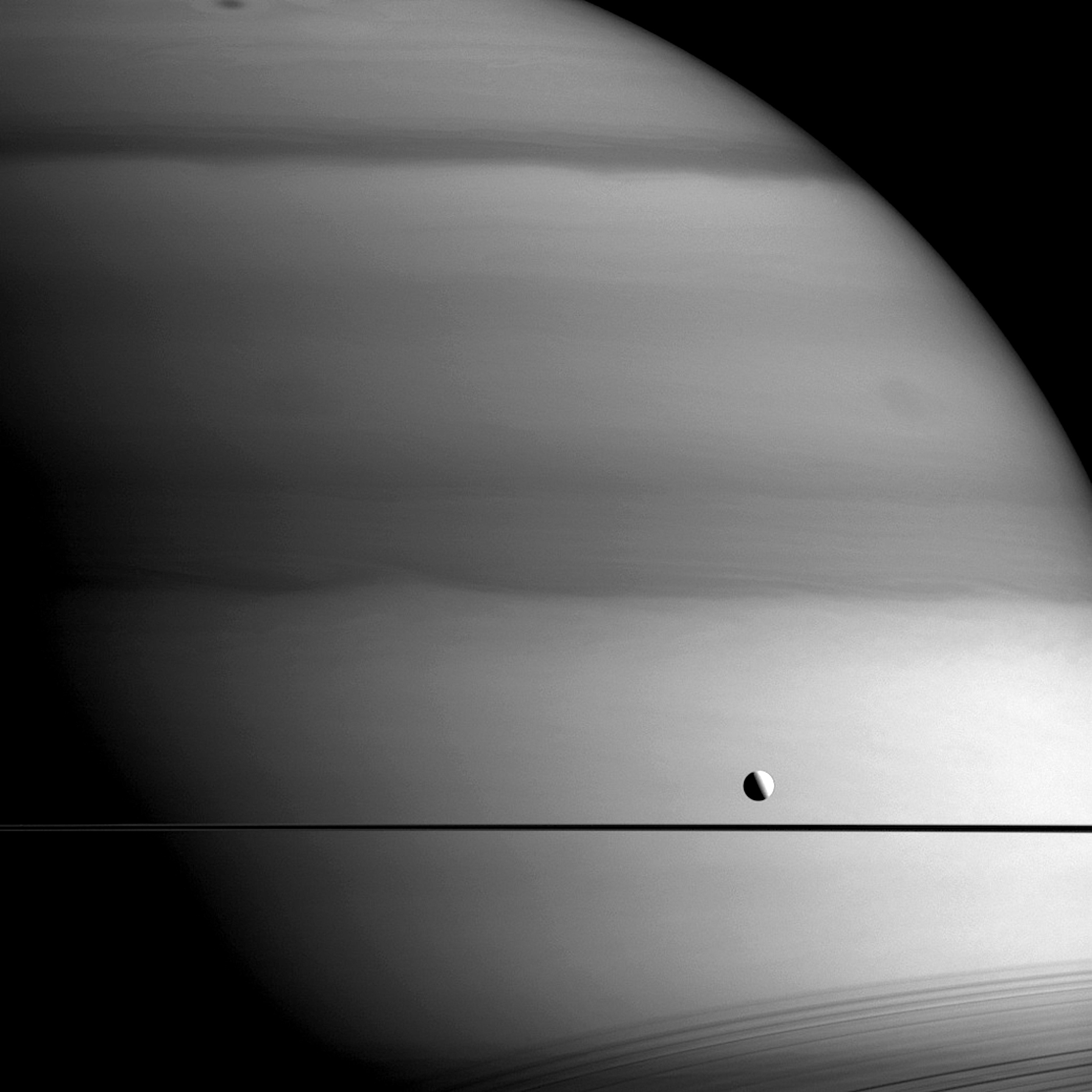
In June of 2004 Wal Thornhill wrote a paper entitled, "Cassini's Homecoming", which describes, from an Electric Universe perspective, the approach of the Cassini spacecraft as it closed in on the beautiful ringed planet, Saturn.

So why was it called a 'homecoming'? In Wal Thornhill's model of the Solar System, Saturn (and indeed most of the gas giants) are recent additions to the Sun's planetary system. That is, Saturn and its entourage of satellites, with the Earth and Mars among them, were captured from outside the Sun's heliosphere in a recent epoch of planetary instability. The Cassini spacecraft was, for that reason, a piece of material -- and of outstanding technological workmanship -- from Earth "coming home" to its original primary sun, Saturn.

Today, brown dwarf stars are known to be the most numerous types of stars in the Milky Way, even outnumbering their brighter sibling stars that shine in visible light. It should no longer be considered such a statistical longshot that a brown dwarf may cross the path of a main sequence star such as our Sun.

In the Electric Universe, because of the Sun's own radial electric field there are several powerful feedback mechanisms which allow for a capture, rather than a flyby. You could say it is axiomatic that captures are common in the Electric Universe. Whereas in a gravitational model, a capture is nearly impossible. This capture, according to principles of the Electric Universe model Dave Talbott, Wal Thornhill, Stephen Smith and others, occurred within human memory.

He wrote:
  • "With that picture of an electric star in mind, the following scenario is proposed, stripped of the volumes of evidence available to support it. The test will be to see how predictive it turns out to be:

    Until recently Saturn was an independent brown dwarf star with its own entourage of close-orbiting small planets. As a small star approaching the Sun, Saturn flickered like a faulty electric light when the two stellar magnetospheres (plasma sheaths) touched. Saturn’s electrical power was usurped by the Sun and its appearance changed dramatically. Such rapid variability in the appearance of stars is well documented.

    Before dimming forever, Saturn would have flared up to relieve the stresses caused by the sudden change in electrical environment. Saturn’s present low internal electrical stress, as indicated by its low apparent mass, suggests ejection activity. But even so, the core of the electric star has not completely cooled — Saturn still radiates more than twice the heat it receives from the Sun. And we have a simple explanation for the origin of Saturn’s mysterious short-lived rings."

Therefore, I would like to suggest that there is, very likely, a debris path which was left by Saturn as it was captured. This path would begin from as far away as the heliosphere, leaving certain physical tracks of its movements as it flared, discharged, streamed ions, and traveled into the Solar System, until it settled into Sun's ecliptic plane. One rocky body that may or may not have been involved in the encounter is the Comet Hale-Bopp, coming as it does from below the Sun, in a crazy-long orbit.

Here is an animation to give the sense of a possible direction taken by Saturn --
Comet Hale–Bopp and its Appearance in 1997
https://www.youtube.com/watch?v=nKCOqcL-nUw
CH: AstroTubo: Celestial Mechanics
Last edited by Brigit on Tue Sep 02, 2025 1:47 am, edited 4 times in total.
"The important thing in all of this, and something which Velikovsky in his usual intuitive way presaged, is that gravity itself is linked to [subatomic] electrostatics. It is not some innate quality associated with matter, unrelated to its electrical structure." ~Wal Thornhill

User avatar
Brigit
Posts: 1478
Joined: Tue Dec 30, 2008 8:37 pm

Re: The Debris Path of Saturn's Capture by the Sun

Unread post by Brigit » Tue Sep 02, 2025 1:13 am

One difficulty with this undertaking is that there are not nearly enough extrasolar planetary systems with their own rocky asteroid belts to compare with our own Solar System.

Nevertheless, even without that seemingly crucial comparison, we may be able to at least dialogue about what is expected from the flaring of a planet like Saturn entering the Sun's heliosphere.

Some evidence may be very unique to Saturn indeed. Interplanetary clouds of water molecules whose origins are with the planet Saturn can be trapped within double layers within the Solar System, for example. And water molecules in space can be detected in infrared wavelengths.

In fact, the Saturn Capture model will continue to be quite "predictive", as Wal Thornhill said, allowing for particular findings within the Solar System to have a simple and coherent Electric Universe interpretation. Including, perhaps, even the debris path of Saturn's capture by the Sun.
"The important thing in all of this, and something which Velikovsky in his usual intuitive way presaged, is that gravity itself is linked to [subatomic] electrostatics. It is not some innate quality associated with matter, unrelated to its electrical structure." ~Wal Thornhill

User avatar
Brigit
Posts: 1478
Joined: Tue Dec 30, 2008 8:37 pm

Re: The Debris Path of Saturn's Capture by the Sun

Unread post by Brigit » Tue Sep 02, 2025 6:28 pm

So how did the Nebular Hypothesis of planetary formation make out for the last 70 years of space exploration?

In 1950 Velikovsky wrote a book called Worlds in Collision in which he put forward evidence that the planets were out of their courses in relatively recent times. This ralleyed many troops and inspired many people to experience and to observe the Space Age from a different vantage point. The planets had been captured. They were not formed where they are currently, as they revolve peacefully around the Sun. In almost all cases, the Nebular Hypothesis proved non-predictive.

Instead, many of the planets are all strongly discharging, radiating more energy than they receive from the sun. Seemingly stronger and faster winds were discovered the further we went into the outer solar system, and electrical storms rage that are many times the size of the Earth. Scarring matched that produced using electrical apparatuses and cometary tails stream out behind the planets. Venus crackles with lightning in its fog and is hot enough to melt led. Rings of ice, dust and rock around the gas giants indicate recent electrical expulsion and their ephemeral nature signify recent activity. These findings were all very amenable to and neatly fit in with the Electric Universe model, and are less than encouraging to the Nebular Hypothesis.


Next, how did the theory that Earth's ocean basins were filled with water delivered by comets fare?

Even worse. Comets visited by spacecraft have all been rocky worlds. "Comets are among the best sources for data about the Electric Universe," as Stephen Smith wrote. In this model, asteroids and comets have been ripped out of planetary surfaces. And so it has been documented and shown over the years by the Thunderbolts Project. The comets and asteroids display features like stratification, dunes, and supersized craters that in conventional terms should have smashed them up. On the other hand, Saturn's rings in many ways chemically match the water found in Earth's oceans.

This is why there is a need for another model of Solar System formation.
"The important thing in all of this, and something which Velikovsky in his usual intuitive way presaged, is that gravity itself is linked to [subatomic] electrostatics. It is not some innate quality associated with matter, unrelated to its electrical structure." ~Wal Thornhill

User avatar
Brigit
Posts: 1478
Joined: Tue Dec 30, 2008 8:37 pm

Re: The Debris Path of Saturn's Capture by the Sun

Unread post by Brigit » Sat Sep 06, 2025 10:17 pm

One possible scenario is that the Brown Dwarf Saturn crossed the Sun's heliosphere and began to discharge as it adjusted to its new electrical environment-- that is, from interstellar space to interplanetary space. It lost some of its gravitational pull also as it began its journey toward the Sun.

In the Electric Universe model, any body moving toward the Sun in the Sun's electric field may exhibit cometary features, even a planet-sized object. So Saturn at some point in the process began to exhibit a cometary plasma sheet, and it is possible that its satellites were also entrained behind it, and were often within this cometary plasma sheet.

The discharges that I think would be unique to Saturn would involve water.

There are several places where an event involving electrical expulsion of water from Saturn may have taken place. I speculate there was more than one. The final blast of water resulted in Saturn's rings.

Clouds of water molecules within our Solar System are therefore expected in the Planetary Capture model.

Would they not have dissipated? Could they have become trapped in place in the Solar System? Yes, and here I speculate that in the Electric Sun model, double layer striations surround the Sun; in other words, I think there are double layers that are near the Sun, but that they extend away from the Sun, as the studies of striations in spherical hydrogen discharges show:

Image

If this is the case, the double layer striations extend out further from the Sun in dark mode. Some double layers surrounding our Sun are spectacular, like the Corona and like the Transition Layer close to the Sun**. But some, possibly, in my opinion, are in dark mode.

It is within these striations in the plasma, in those darker lanes, that the electric field actually goes to zero, forming wells where molecules can be trapped***.

Therefore, clouds of water molecules may have already been detected in our Solar System.

Other types of evidence of Saturn's path of capture by the Sun will include
  • the abovementioned water clouds in the Solar System, especially above and below the ecliptic plane of the Sun;
    "a second plane of comets" around the Sun;
    the mystery of the Zodiacal Lights; and
    possibly even a reinterpretation of the source of the major meteor showers.


**ref: Donald E Scott "Indeed Our Sun is Electric!"
***ref: Lowell Morgan, EU2015
"The important thing in all of this, and something which Velikovsky in his usual intuitive way presaged, is that gravity itself is linked to [subatomic] electrostatics. It is not some innate quality associated with matter, unrelated to its electrical structure." ~Wal Thornhill

User avatar
Brigit
Posts: 1478
Joined: Tue Dec 30, 2008 8:37 pm

The Debris Path of Saturn's Capture by the Sun

Unread post by Brigit » Mon Sep 08, 2025 12:57 am

But first, the Electrical Birth of the Asteroid Belt" by Ray Gallucci

Ray Gallucci: The Electrical Birth of the Asteroid Belt – An Analysis | Space News
The Thunderbolts Project
233K subscribers
https://www.youtube.com/watch?v=eCOTNboQqV8
  • "How and when did the asteroids and comets in our solar system form? For countless decades, astronomers have embraced the story that these small rocky bodies are the primordial leftovers of our solar system’s formation, supposedly from a nebular cloud four and a half billion years ago. Of course, as viewers of this series have long known, science discovery has done little to nothing to support this view. In fact, one of the great surprises of the Space Age is that asteroids and comet nuclei appear remarkably similar – they have complex, rocky and rubble strewn surfaces.

    The Electric Universe has always proposed the “radical” hypothesis that comets, asteroids and meteoroids were torn from planetary surfaces by interplanetary lightning in an epoch of planetary instability. A major piece of this puzzle is the evidence for electrical scarring on planets and moons, and one of the more dramatic examples of such scarring may be the enormous trench Valles Marineris on Mars.

    In this episode, retired nuclear engineer Ray Gallucci offers an independent analysis of the specific role that Mars may have played in creating the asteroid belt."
"The important thing in all of this, and something which Velikovsky in his usual intuitive way presaged, is that gravity itself is linked to [subatomic] electrostatics. It is not some innate quality associated with matter, unrelated to its electrical structure." ~Wal Thornhill

User avatar
Brigit
Posts: 1478
Joined: Tue Dec 30, 2008 8:37 pm

Re: The Debris Path of Saturn's Capture by the Sun

Unread post by Brigit » Fri Oct 03, 2025 11:11 pm

Now, let's cast our minds back to August 2009 when Rens van der Sluijs wrote this Picture of the Day.
  • The Unwavering Truth about the Zodiacal Light
    Aug 10, 2009

    Too often, standard textbooks and dictionaries do not offer a realistic picture of what is known about a given scientific subject. As they tend to suppress anomalous evidence, the illusion of solid proven fact is then allowed to lull the minds of the critical and the curious and slow down the progress of science.

    The zodiacal light is a case in point. This little-known phenomenon is a roughly triangular cone of light, produced by sunlight reflecting off a cloud of minuscule dust particles, of cometary origin, that is scattered across the ecliptic plane. At mid-latitude, the light is often mistaken for a ‘false dawn’, as it is best seen in the east preceding the dawn or in the west following the evening twilight in respectively spring and autumn. As the glow is so faint – 10,000 times weaker than that of a strong aurora – it is not very surprising that, in Europe, the zodiacal light was only discovered in 1683 by the Italian astronomer, Giovanni Cassini (1625-1712), while the classical philosophers do not seem to have known it at all.

    That there is more to the zodiacal light than reflected sunlight follows from a spate of eyewitness accounts of pulsations and other unexpected fluctuations observed in it. Cassini himself had noted intermittent variations in the brightness of the light and concluded after just ten observations that the axis of the zodiacal light rose and sank not with the ecliptic, but with the equator of the sun. The intrepid explorer and pioneer of geomagnetism, Alexander, baron von Humboldt (1769-1859), witnessed similar perturbations during his travels in South America:

    “I have occasionally been astonished, in the tropical climates of South America, to observe the variable intensity of the zodiacal light. As I passed the nights, during many months, in the open air, on the shores of rivers and on llanos, I enjoyed ample opportunities of carefully examining this phenomenon. When the zodiacal light had been most intense, I have observed that it would be perceptibly weakened for a few minutes, until it again suddenly shone forth in full brilliancy. In some few instances I have thought that I could perceive – not exactly a reddish coloration, nor the lower portion darkened in an arc-like form, nor even a scintillation, as Mairan affirms he has observed – but a kind of flickering and wavering of the light. Must we suppose that changes are actually in progress in the nebulous ring?”

    Until today, dithering scientists have not addressed the question in unison, but a number of inquisitive scholars did at least acknowledge the challenge. Kristian Birkeland, Norway's most famous auroral researcher, was gripped by the problem. Birkeland was confident he had witnessed oscillations in the zodiacal light and was eager to measure these, prompting his impulsive departure to Sudan to study the phenomenon. Birkeland’s suspicion was that the pulsation in “the intensity and shape of the light … surely testifies to an electric origin …” Indeed, it would have to be “akin to the pulsation which is sometimes seen in auroral lights and the oscillations in terrestrial magnetism.”

    Birkeland buttressed this impression with the testimony of George Jones (1800-1870), a chaplain of the United States Navy who had had a marked interest in the zodiacal light. On one occasion, Jones reported “a swelling out, laterally and upwards, of the zodiacal light, with an increase of brightness in the light itself; then in a few minutes, a shrinking back of the boundaries, and a dimming of the light; the latter to such a degree as to appear, at times, as if it was quite dying away; and so back and forth for about three quarters of an hour …”

    Birkeland accepted that a substantial constituent of the zodiacal light was due to reflected sunlight, yet also reasoned that some of the light is produced in the same way as the aurorae – by an excitation of particles. Unfortunately, although his terrella experiments seemed to support this hypothesis, he was never able to measure the oscillations.

    Naked-eye observations of pulsations, fast moving waves, a temporary invisibility and unexpected ‘parallaxes’ in the zodiacal light continued to be made, sometimes on timescales of a few days. In 1990, the zodiacal light was seen to brighten following a fairly vigorous auroral display. This led at least one modern researcher, the late Neil Bone (1959-2009), to admit that “the diffuse glow of the zodiacal light…, produced mainly by reflection of sunlight from myriads of small particles in the inner solar system does have some association with auroral effects.”

    Clearly, the mystery of the zodiacal light has not yet been fathomed and there is much to be learned. In modern terms, does Birkeland’s proposed explanation in terms of ‘corpuscular rays’ or streams of electrons emitted from the equatorial plane of the sun translate to a direct influence of the solar wind on the zodiacal dust? In that case, space scientists ought not to vacillate, as, before long, so little dust will be left that the zodiacal light itself, unless replenished, will become a thing of the past. Though it may still be long before the dust settles on the scientific debate, now is the time to act and obtain the measurements Birkeland had so much desired to make.

    Contributed by Rens Van der Sluijs
    www.mythopedia.info


Rather than the dust being from Mars or cometary tails, as is debated by scientists, perhaps the Zodiacal Lights are not replenished at all. Perhaps they are fading debris from a recent event.

It is speculative, but may eventually serve to be part of a broader picture of recent events involving the capture of several planets in our inner solar system.
"The important thing in all of this, and something which Velikovsky in his usual intuitive way presaged, is that gravity itself is linked to [subatomic] electrostatics. It is not some innate quality associated with matter, unrelated to its electrical structure." ~Wal Thornhill

User avatar
Brigit
Posts: 1478
Joined: Tue Dec 30, 2008 8:37 pm

Re: The Debris Path of Saturn's Capture by the Sun

Unread post by Brigit » Sun Oct 05, 2025 11:42 pm

Well that was an amazing PotD by Marinus Van der Sluijs.

I did a survey of 7 historical articles on the Zodiacal Light. They all say that it is best explained by sunlight reflected from the extremely tenuous cloud of particles, and that it widens toward the sun. Many of the articles mention the Gegenschien. The Gegenschien is "the counterglow, a faint illumination of the sky in the region opposite the sun, which may generally be seen by a trained eye when all the conditions are favorable." ~Br1959.

Here is a beautiful composite image, which shows the Constellations overlayed on the Zodiacal Light (where it gets its name):
  • https://en.wikipedia.org/wiki/Zodiacal_ ... 2225c).jpg
    Image: "Two false dawns, gegenschein (middle) and the rest of the zodiacal band of light and zodiac marked (visually crossed by the Milky Way), in this composite image of the night sky above the northern and southern hemisphere"
This means that the trail of dust leads up to the Earth, and also past the Earth. Could this mean the Earth was somehow involved in its formation?

And also, the "dust" of the Zodaical Lights has been confirmed to reflect sunlight. Yet as the above article by RVdS describes, these brighten and oscillate in ways that are seemingly connected to auroral lights. So I think it is safe to say they are involved in the electrical connection between Sun and Earth. But I also looked up what JWST has on the subject. It turns out that JWST is having to subtract the infrared of the Zodiacal Light from its data. Could some of this fine particulate cloud be shining in infrared because it is partly water molecules?

I don't know. But I didn't want to just whistle past the electrical nature of the Light and its IR radiation.
"The important thing in all of this, and something which Velikovsky in his usual intuitive way presaged, is that gravity itself is linked to [subatomic] electrostatics. It is not some innate quality associated with matter, unrelated to its electrical structure." ~Wal Thornhill

User avatar
Brigit
Posts: 1478
Joined: Tue Dec 30, 2008 8:37 pm

Re: The Debris Path of Saturn's Capture by the Sun

Unread post by Brigit » Mon Oct 06, 2025 12:56 am

The Zodiacal Light has been observed by Pioneer 10 & 11, by IRAS, COBE and ISO, and by Juno.

Here is an EPIC release on Juno's path and observations of the dust.

https://youtu.be/ve0jLXEzFXE
dur 1:45

It seems to be the source of the idea that the Zodiacal Light is composed of Martian dust from its frequent global electrical storms (in its exceedingly thin atmosphere).

The video appears to represent the structure and thickness (side-on) of the dust. So awesome.

Mars and Earth went into place.
"The important thing in all of this, and something which Velikovsky in his usual intuitive way presaged, is that gravity itself is linked to [subatomic] electrostatics. It is not some innate quality associated with matter, unrelated to its electrical structure." ~Wal Thornhill

User avatar
Brigit
Posts: 1478
Joined: Tue Dec 30, 2008 8:37 pm

Re: The Debris Path of Saturn's Capture by the Sun

Unread post by Brigit » Mon Oct 06, 2025 6:51 pm

Here is one of Stephen Smith's PotDs from 2020. While it does not mention the Zodiacal Light in particular, there are some statements about what could be expected to be found in the make-up of the dust in our local Solar System, if it was the scene of recent electrical interactions involving Saturn and Mars.


  • Martian Mysteries
    • https://www.thunderbolts.info/wp/wp-con ... 6-1041.jpg
      This image of Saturn was taken in a wavelength that is absorbed by methane. Dark areas are regions with thicker clouds, where light has to travel through more methane. Credit: NASA/JPL-Caltech/Space Science Institute.
    What brought methane to the Red Planet?

    According to a recent press release, measurements taken by NASA’s Curiosity rover show a “higher than expected” amount of methane in the Martian regolith. Planetary scientists believe that methane is important, since one way it forms is through biological processes. Methane gas is quickly reformed on Earth, breaking down into carbon dioxide and water vapor, so it will survive for a longer time in the low oxygen atmosphere of Mars. Researchers speculate that Martian methane might be contained in underground pockets that could be extremely old.

    Curiosity found “the largest amount of methane ever measured during the mission”, but it is not equipped to identify the source. As far as mission members can tell, it might come from anywhere on the planet. Paul Mahaffy of NASA’s Goddard Spaceflight Center wrote:

    “With our current measurements, we have no way of telling if the methane source is biology or geology, or even ancient or modern.”

    A recent Picture of the Day discussed the detection of methane from Martian orbit, although, in general, they did not detect any methane in the atmosphere other than a brief spike of about 15 parts per billion by volume. NASA believes that the methane detection was due to “relatively weak geologic processes” releasing gas trapped beneath the surface, although how it got there is not understood.

    Electric Universe advocates think that the Solar System was the scene of catastrophic events in the recent past. Those destructive phenomena are theorized by some to mean that Mars and Venus interacted with each other and with Earth, and that Saturn could have been involved with the three planets. There is a detectable amount of methane in Saturn’s atmosphere, so it is possible that hydrogen, helium, methane and carbon dioxide in the atmospheres of several Solar System bodies came from Saturn: massive clouds of ionized gas and dust probably inundated nearby space at one time. Those catastrophes are thought to date from around 5000 years ago.

    Some regions of Mars are so choked with dust that orbital instruments cannot derive a spectrogram. That means that no one knows what is under the dust. Since there is no way to know what it is, the speculation is that it might be layers of volcanic deposits, sediments from an ocean that vanished billions of years ago, or “compacted wind-blown soils” containing methane that is occasionally disturbed by marsquakes.

    The survival of methane in Martian regolith could mean that the surface of Mars is not very old, in geological terms.
    It will be instructive over the next few decades to see if the quantity of methane declines.

    Stephen Smith


So there we have it: "There is a detectable amount of methane in Saturn’s atmosphere, so it is possible that hydrogen, helium, methane and carbon dioxide in the atmospheres of several Solar System bodies came from Saturn: massive clouds of ionized gas and dust probably inundated nearby space at one time."

The Zodaical Light could be composed of hydrogen, helium, methane (which breaks down in UV), carbon dioxide and massive clouds of ionized dust. (And possibly saltwater molecules.)

The fact that the dust is ionized by electrical processes after being ripped from atmospheres and surfaces of planets would go a long way toward explaining the fact that the dust cloud actually has structure -- and can shimmer, brighten, and dim, as Kristian Birkeland was intrigued to note in his lifetime. It' replenishment is not necessary if it is a young dust cloud.
"The important thing in all of this, and something which Velikovsky in his usual intuitive way presaged, is that gravity itself is linked to [subatomic] electrostatics. It is not some innate quality associated with matter, unrelated to its electrical structure." ~Wal Thornhill

User avatar
Brigit
Posts: 1478
Joined: Tue Dec 30, 2008 8:37 pm

Re: The Debris Path of Saturn's Capture by the Sun

Unread post by Brigit » Thu Oct 16, 2025 7:51 pm

The National Analytical Observatory of Japan announced a surprising alignment of long-period comets in 2020. These long-period comets are concentrated in an orbit that travels above and below the sun in what they call the "empty ecliptic."

Stephen Smith reported:


    • https://www.thunderbolts.info/wp/wp-con ... 50x367.jpg
      Image: “Artist’s impression of the distribution of long-period comets. The converging lines represent the paths of the comets. The ecliptic plane is shown in yellow and the empty ecliptic is shown in blue. The background grid represents the plane of the Galactic disk.” (Credit: NAOJ).
    "The announcement from the National Analytical Observatory of Japan shows that the alignment of long period comets indicates another orbital plane within the Solar System that is different from the one along which the planets move.

    Arika Higuchi, an assistant professor at the University of Occupational and Environmental Health in Japan showed that when gravity from the Milky Way is taken into account (among other factors), “…the aphelia of long-period comets tend to collect around two planes. First the well-known ecliptic, but also a second ’empty ecliptic’. The ecliptic is inclined with respect to the disk of the Milky Way by about 60 degrees.” "

    https://www.thunderbolts.info/wp/2020/0 ... entricity/

In the Electric Universe model, the Solar System was not congealed from a dusty disk of gas and dust surrounding the sun over the course of billions of years. The Solar System is instead assembled from planetary and stellar objects from outside of the Sun's heliosphere. These bodies were captured both electrically and gravitationally.

The asteroids and comets of our Solar System, in the planetary capture model, are all rocky debris ripped out from the crusts of planets in interplanetary electric discharges. In the case of the most recent capture of Saturn with its satellites, it is possible these events left a trail of debris which can still be observed today. The second plane of cometary orbits could be an indication of Saturn's recent capture.
"The important thing in all of this, and something which Velikovsky in his usual intuitive way presaged, is that gravity itself is linked to [subatomic] electrostatics. It is not some innate quality associated with matter, unrelated to its electrical structure." ~Wal Thornhill

User avatar
Brigit
Posts: 1478
Joined: Tue Dec 30, 2008 8:37 pm

Re: The Debris Path of Saturn's Capture by the Sun

Unread post by Brigit » Thu Oct 23, 2025 11:41 pm

And one of the most incredible outcomes of the Electric Universe model of Planetary Capture is that many many asteroids, Centaurs, comets, moons and TransNeptunian objects could be made of sedimentary rock, because they were electrically machined out of planetary surfaces just recently!
"The important thing in all of this, and something which Velikovsky in his usual intuitive way presaged, is that gravity itself is linked to [subatomic] electrostatics. It is not some innate quality associated with matter, unrelated to its electrical structure." ~Wal Thornhill

User avatar
Brigit
Posts: 1478
Joined: Tue Dec 30, 2008 8:37 pm

The Debris Path of Saturn's Capture by the Sun

Unread post by Brigit » Tue Oct 28, 2025 12:32 am

In standard cosmology, the asteroids and comets are mainly leftovers from cold and primordial conditions within the Solar System. They are often claimed as the ancient leftovers from planetary formation, lost outliers from gravitational processes, that didn't quite "fall in" to place.

But in reality, the space age journeys to actual space rocks kept presenting a picture of comets and asteroids that --
one, could never, ever have filled the ocean basins of Earth with water;
two, had high temperature minerals; and
three, could include fragile volatiles like carbonaceous materials that require a "watery world."

The idea that many asteroids and comets could actually be made of sedimentary rock is even worse for the Nebular Hypothesis. Yet, that comets and asteroids that have been torn out of planetary surfaces in a recent epoch -- and in many cases could be comprised of sedimentary rock -- is an incredible outcome of the Electric Universe model of comets and asteroids. It has so much to support it. But it will have to wait.
"The important thing in all of this, and something which Velikovsky in his usual intuitive way presaged, is that gravity itself is linked to [subatomic] electrostatics. It is not some innate quality associated with matter, unrelated to its electrical structure." ~Wal Thornhill

User avatar
Brigit
Posts: 1478
Joined: Tue Dec 30, 2008 8:37 pm

Re: The Debris Path of Saturn's Capture by the Sun

Unread post by Brigit » Tue Oct 28, 2025 4:16 pm

That should be,

The idea that many asteroids and comets could actually be made of sedimentary rock is even worse for the Nebular Hypothesis. And yet, that comets and asteroids which have been torn out of planetary surfaces in a recent epoch could be comprised of sedimentary rock is an incredible outcome of the Electric Universe model of comets and asteroids. It has so much to support it. But it will have to be set aside for now.
"The important thing in all of this, and something which Velikovsky in his usual intuitive way presaged, is that gravity itself is linked to [subatomic] electrostatics. It is not some innate quality associated with matter, unrelated to its electrical structure." ~Wal Thornhill

User avatar
Brigit
Posts: 1478
Joined: Tue Dec 30, 2008 8:37 pm

The Debris Path of Saturn's Capture by the Sun

Unread post by Brigit » Tue Oct 28, 2025 4:42 pm

In "Wal Thornhill: Gravitational Accretion Bites the Dust," Stuart Talbott introduced a then-current scientific report about a failure to be able to simulate or model gravitational accretion:
  • "Welcome to Space News from the Electric Universe, brought to you by The Thunderbolts Project™ at Thunderbolts.info.

    New scientific reports provide yet another devastating blow to the standard theory of planet formation.

    In recent years, we've reported on a stunning series of discoveries
    that completely confound the more than two-and-a-half-centuries-old Nebular Hypothesis.
    The Electric Universe theory has always proposed that planets do not form from accretion
    in gravitationally collapsing nebular clouds.
    Rather, The Thunderbolts Project's chief science advisor Wal Thornhill has always proposed two mechanisms of planet formation.

    One is the formation of planets by the electromagnetic z-pinch effect
    along the same filaments where stars are now known to form.
    And other planets are later ejected from the cores of the gas giants.

    The accretion hypothesis has failed both experimentally and observationally.
    As noted in a recent news report,
    • 'According to the traditional story of the origin of the solar system,
      the planets formed slowly from accretion,
      as particles in the circumstellar disk clumped together to great pebbles,
      then slightly larger spheres, on and on until they reached their current size.
      But when scientists try to re-create this story with computer models, it breaks down.
      Rather than growing, these incipient planets tend to splinter after reaching pebble size.'"


The filamentary nature of the plasma universe has been observed and written about since the time of Hannes Alfven (1908-1995). It was well into the space age when the Herschel Telescope at last revealed stars forming along the length of plasma filaments in molecular clouds. This was just as the Nobel-prize winning plasma physicist Alfven had forecast would be the case.
"The important thing in all of this, and something which Velikovsky in his usual intuitive way presaged, is that gravity itself is linked to [subatomic] electrostatics. It is not some innate quality associated with matter, unrelated to its electrical structure." ~Wal Thornhill

User avatar
Brigit
Posts: 1478
Joined: Tue Dec 30, 2008 8:37 pm

The Debris Path of Saturn's Capture by the Sun

Unread post by Brigit » Tue Oct 28, 2025 5:15 pm

Wal Thornhill: Gravitational Accretion Bites the Dust | Space News
https://www.youtube.com/watch?v=Mjn-QT7Ze-8
CH: Thunderbolts Project
dur. 8:25

The introduction continues,
  • "In our Electric Universe, it is not a coincidence that stars tend to form in groups
    along spectacular snake-like filaments.

    Standard theory had originally proposed that massive stars would form in individual proto-stellar clouds.

    But consider these images of a stellar nursery in the aptly named Snake Nebula
    where a number of stars are forming along the filament and the stars themselves break up along a cylinder.

    This is in stark contrast to gravitational theory which predicts that a center of mass exists toward which all of the surrounding material in the cloud tends to move and to congregate to eventually form a star.

    What's more, just as a fatal deficit of matter is observed in the disks about stars to form a typical number of planets,
    scientists studying the Snake Nebula found that the material needed to be drawn in to form massive stars
    is far less than gravitational models predict."
Wal Thornhill states,
  • "It's been found that protostars and young stars
    are more likely to be found in binary pairs
    strung at intervals along a filament inside a molecular cloud."
  • "This raises the real issue that astrophysicists don't understand
    how either the filaments or the stars are formed,
    something that plasma cosmologists have shown for half a century or more."
  • "The problem is that astrophysicists are using a gravitational accretion model
    based on the concept of a center of mass
    which doesn't lend itself to preferentially producing pairs of stars.
    Meanwhile, the plasma cosmology model is electromagnetically-
    driven by a linear twisted pair of Birkeland current filaments.
    It's an inherently binary phenomenon."
  • "In the Electric Universe, stars and planets are formed along the Birkeland current filament
    by a powerful and long-range 1/√r electromagnetic scavenging force
    acting on the diffused dust and gas in a molecular cloud.
    This compares to the puny short-range 1/r² gravitational force
    which cannot form a filament anyway.
    On the basis that nature doesn't do anything the hard way,
    gravity just isn't the answer!"
"The important thing in all of this, and something which Velikovsky in his usual intuitive way presaged, is that gravity itself is linked to [subatomic] electrostatics. It is not some innate quality associated with matter, unrelated to its electrical structure." ~Wal Thornhill

Post Reply

Who is online

Users browsing this forum: No registered users and 3 guests