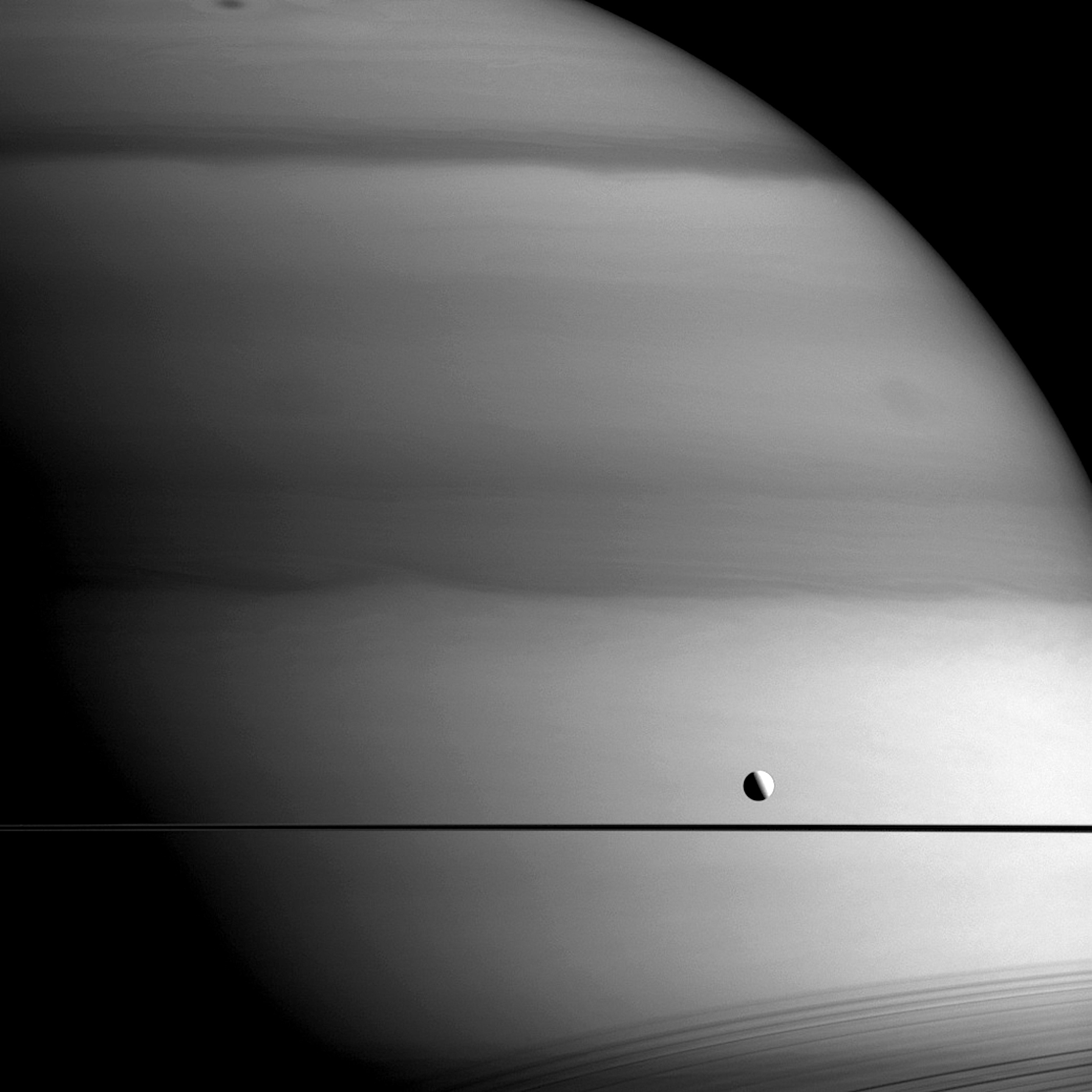
So why was it called a 'homecoming'? In Wal Thornhill's model of the Solar System, Saturn (and indeed most of the gas giants) are recent additions to the Sun's planetary system. That is, Saturn and its entourage of satellites, with the Earth and Mars among them, were captured from outside the Sun's heliosphere in a recent epoch of planetary instability. The Cassini spacecraft was, for that reason, a piece of material -- and of outstanding technological workmanship -- from Earth "coming home" to its original primary sun, Saturn.
Today, brown dwarf stars are known to be the most numerous types of stars in the Milky Way, even outnumbering their brighter sibling stars that shine in visible light. It should no longer be considered such a statistical longshot that a brown dwarf may cross the path of a main sequence star such as our Sun.
In the Electric Universe, because of the Sun's own radial electric field there are several powerful feedback mechanisms which allow for a capture, rather than a flyby. You could say it is axiomatic that captures are common in the Electric Universe. Whereas in a gravitational model, a capture is nearly impossible. This capture, according to principles of the Electric Universe model Dave Talbott, Wal Thornhill, Stephen Smith and others, occurred within human memory.
He wrote:
- "With that picture of an electric star in mind, the following scenario is proposed, stripped of the volumes of evidence available to support it. The test will be to see how predictive it turns out to be:
Until recently Saturn was an independent brown dwarf star with its own entourage of close-orbiting small planets. As a small star approaching the Sun, Saturn flickered like a faulty electric light when the two stellar magnetospheres (plasma sheaths) touched. Saturn’s electrical power was usurped by the Sun and its appearance changed dramatically. Such rapid variability in the appearance of stars is well documented.
Before dimming forever, Saturn would have flared up to relieve the stresses caused by the sudden change in electrical environment. Saturn’s present low internal electrical stress, as indicated by its low apparent mass, suggests ejection activity. But even so, the core of the electric star has not completely cooled — Saturn still radiates more than twice the heat it receives from the Sun. And we have a simple explanation for the origin of Saturn’s mysterious short-lived rings."
Therefore, I would like to suggest that there is, very likely, a debris path which was left by Saturn as it was captured. This path would begin from as far away as the heliosphere, leaving certain physical tracks of its movements as it flared, discharged, streamed ions, and traveled into the Solar System, until it settled into Sun's ecliptic plane. One rocky body that may or may not have been involved in the encounter is the Comet Hale-Bopp, coming as it does from below the Sun, in a crazy-long orbit.
Here is an animation to give the sense of a possible direction taken by Saturn --
Comet Hale–Bopp and its Appearance in 1997
https://www.youtube.com/watch?v=nKCOqcL-nUw
CH: AstroTubo: Celestial Mechanics