D.Talbott: Dendritic Ridges & an Innovative Experiment Prize

Historic planetary instability and catastrophe. Evidence for electrical scarring on planets and moons. Electrical events in today's solar system. Electric Earth.
User avatar
Brigit
Posts: 1478
Joined: Tue Dec 30, 2008 8:37 pm

D.Talbott: Dendritic Ridges & an Innovative Experiment Prize

Unread post by Brigit » Wed Oct 29, 2025 7:47 pm

Even before "Space News from the Electric Universe" brought weekly productions on Events in the Space Age, back in the early days, it was Dave Talbott who founded the channel Thunderbolts Project and used the new platform to publish on the electric scarring of the planet Mars.

In late 2010 and early 2011 The Thunderbolts Project presented "Symbols of an Alien Sky Episode 2: The Lightning-Scarred Planet Mars" in three 15-20-minute episodes.
  • "Is it possible to identify the events that shaped the surface of the planet Mars
    ...a planet of vast but unrecognized landscapes,
    vista after vista eluding every attempt to explain them?
    Scientists labor to solve the mysteries through textbook theory,
    but if as we have claimed the cause was electrical,
    they will never get the expected answers."

    ~Dave Talbott
These are beautiful explorations of the images being returned from Mars by Rovers and Satellites in orbit around the Red Planet. It's especially poignant in these days of computer-overfabricated images. The grit and sand are real, the rocky cliffs dizzyingly high, and the undulating forms rise and fall between sharply cut Lichtenburg figures, all enhanced and stitched together from genuine camera and radar images of the surface of Mars.

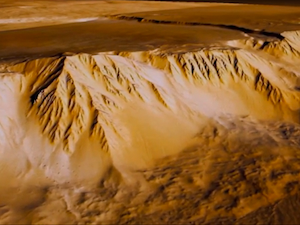
Dave Talbott devotes a great deal of attention to the mysterious, smaller Lichtenburg Figures in their unlikely positions: they run vertically from the edges of, and down the sides of, the Valles Marineras Canyon. They are also found running vertically down the sides of the towering Olympus Mons.
"The important thing in all of this, and something which Velikovsky in his usual intuitive way presaged, is that gravity itself is linked to [subatomic] electrostatics. It is not some innate quality associated with matter, unrelated to its electrical structure." ~Wal Thornhill

User avatar
Brigit
Posts: 1478
Joined: Tue Dec 30, 2008 8:37 pm

D.Talbott: Dendritic Ridges & an Innovative Experiment Prize

Unread post by Brigit » Wed Oct 29, 2025 8:09 pm

This was a call for experiments and papers from 2013:
  • Solving the Mystery of Dendritic Ridges
    The Thunderbolts ProjectTM is proud to announce its first Innovative Experiment PrizeTM : dendritic ridge systems created by electric discharge. Three cash prizes will be awarded: Gold-$6000; Silver-$3000; and Bronze-$1000.
    In the planetary science of the Electric Universe, the priority must be on experimental verification. For The Thunderbolts ProjectTM, dendritic ridge formation by electric discharge tops the present scientific agenda. We believe it’s time for a definitive experiment to test the electrical interpretation.

    Background Dendritic ridges stand out emphatically across the surface of the planet Mars. These sharply sculpted ridge formations occur on surface features said to have been created by vastly different geologic processes. They can be seen along the great chasm of Valles Marineris, on both the scarp and the “caldera” walls of Olympus Mons, along the cliffs of towering mesas, on the great blocks of the “fractured terrain” of Noctis Labyrinthus, extending down the walls of winding channels or rilles, and even on the margins of giant craters.

    Always the tree-like patterns point down from the summits of the cliffs. But why do they consistently appear between the distinctive scallops carved along the cliff walls?

    No formative process in the lexicon of planetary science can produce these distinctive features. But raised “Lichtenberg” formations (dendritic ridges) can be produced electrically. Therefore, an electrical interpretation of the Martian features is eminently suited for experimental verification.

    In a former phase of solar system evolution, was the planet Mars immersed in electric discharge? If an electrical experiment can answer a question left unanswered by billion-dollar space programs, the results will mean more than just a good theory. One compelling experiment could change not only our understanding of the Martian past but our understanding of Earth history as well. The implications would not stop there.

    Dendritic Ridges–An Electrical Interpretation
    In 1777, Georg Christoph Lichtenberg demonstrated the lightning-like dendritic patterns taken by dust on non-conductive surfaces subjected to electric sparks. In honor of his contribution, these electrical patterns came to be named “Lichtenberg Figures.”

    Lichtenberg experimented with variations in the observable effects of electric sparks to surfaces of different characteristics, including positively and negatively charged materials. Thanks to him and his successors, it is now known that dusty surfaces can display the effects of gaseous electrical discharge streamers or leaders along insulating materials, also called dielectrics. Read More>>>>

    Caveats and Complementary Notes
    Dendritic or “tree-like” patterns typical of lightning and electric discharge are common throughout the natural world. Many of these are poorly understood. The most fully acknowledged instance geographically is the branching ravine pattern of fluid erosion. But the subject of the Dendritic Ridge Experiment displays the opposite characteristic: material gathered into sharply sculpted, elevated terrain. Read more>>>

    The Dendritic Ridge Experiment
    CAUTION: Working with electric discharge experiments requires both knowledge and systematic precautions. No greater mistake could be made than to take up such work without proper knowledge and training.
    The intent of the experiment is to produce a compelling demonstration of dendritic ridge systems similar to formations appearing on the planet Mars. Lichtenberg’s work needs to be more directly applied to planetary surfaces. Dendritic ridges on Mars will serve as the model to be replicated. Think three-dimensionally of the surface configuration that, in the course of the experiment, could maximize the match to the Martian prototype.

    Entries will be judged in order of priority:

    Quality of the experiment itself — 50%;
    Quality of video and/or photographic record — 20%:
    Quality of experimental description — 15%;
    Quality of written interpretation — 15%.

    Submitting the Experiment
    Details
    Applications will be accepted beginning November 15, 2013.
    Deadline for submissions will be February 15, 2014 at 11:59 pm.
    Any submissions received after that date and time will not be considered.
"The important thing in all of this, and something which Velikovsky in his usual intuitive way presaged, is that gravity itself is linked to [subatomic] electrostatics. It is not some innate quality associated with matter, unrelated to its electrical structure." ~Wal Thornhill

User avatar
Brigit
Posts: 1478
Joined: Tue Dec 30, 2008 8:37 pm

An All-Electric Orogeny

Unread post by Brigit » Mon Feb 16, 2026 10:20 pm

An All-Electric Orogeny

It has always been the approach of the Electric Universe to appeal to and to use as reference not only electrical experiments and plasma laboratory results, but also industrial manufacturing and methods of plasma deposition and removal of materials. When these have not yet been carried out, events in the Solar System often prove as a hard physical example of Electric Universe phenomena.

In fact, beginning with the craters on planets, moons and comets, through testing of the Earth's aurorae, to the SAFIRE experimental Electric Sun, and up to the pinwheel forms of galaxies, the Electric Universe takes its foundation and keeps its scientific basis in replicable, physical experiments.

The Electric Universe model, when interpreting Earth's geology, is no exception to this desire to have a firm footing in experiment.

So what about an All-Electric Mountain Formation Theory?

Now taking a page from the history of the Electric Universe, here (again!) is a description of the dendritic ridges running down the sides of the Valles Marineras valley on Mars.
  • Dendritic Ridges–An Electrical Interpretation
    "In 1777, Georg Christoph Lichtenberg demonstrated the lightning-like dendritic patterns taken by dust on non-conductive surfaces subjected to electric sparks. In honor of his contribution, these electrical patterns came to be named “Lichtenberg Figures.”

    Lichtenberg experimented with variations in the observable effects of electric sparks to surfaces of different characteristics, including positively and negatively charged materials. Thanks to him and his successors, it is now known that dusty surfaces can display the effects of gaseous electrical discharge streamers or leaders along insulating materials, also called dielectrics."

    Caveats and Complementary Notes
    "Dendritic or “tree-like” patterns typical of lightning and electric discharge are common throughout the natural world. Many of these are poorly understood. The most fully acknowledged instance geographically is the branching ravine pattern of fluid erosion. But the subject of the Dendritic Ridge Experiment displays the opposite characteristic: material gathered into sharply sculpted, elevated terrain."
"The important thing in all of this, and something which Velikovsky in his usual intuitive way presaged, is that gravity itself is linked to [subatomic] electrostatics. It is not some innate quality associated with matter, unrelated to its electrical structure." ~Wal Thornhill

Maol
Posts: 611
Joined: Fri Mar 11, 2011 8:40 pm

Re: D.Talbott: Dendritic Ridges & an Innovative Experiment Prize

Unread post by Maol » Tue Feb 17, 2026 3:10 am

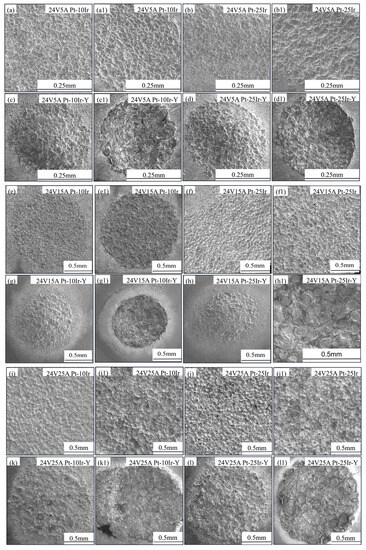
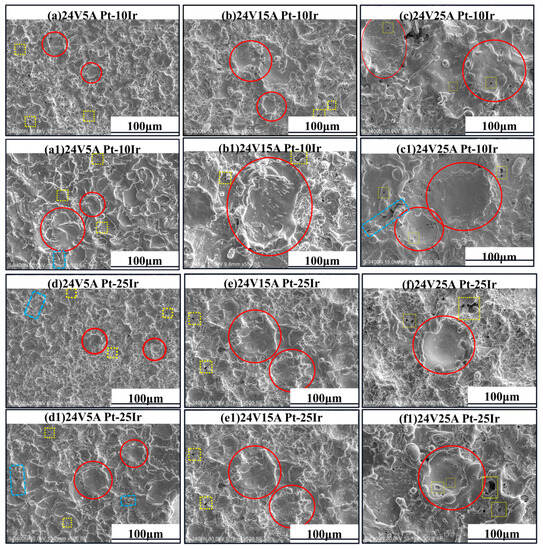
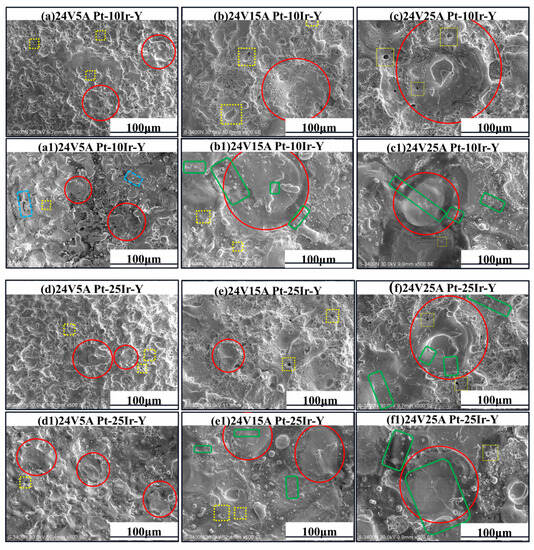
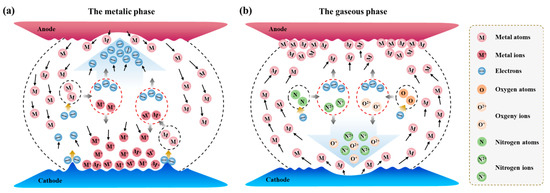
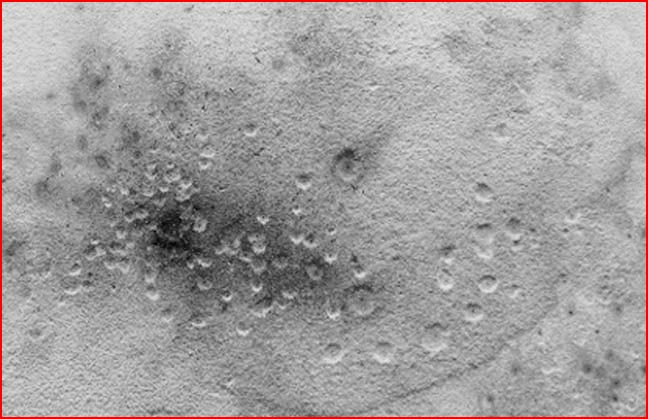
The images below are microscopic photos of electrical contacts showing the erosion and metal transfer resulting from the arc which occurs as the contacts open. The appearance is different due to different materials and electrical voltage and amperage values, and probably influenced by the capacitance and inductance of the particular electrical circuit.

The link is to the research paper which provides details and other pictures, and describes the mechanism by which the the arc melts the metals and the metal vapor becomes ions which respond to the electrical polarity to erode and deposit from anode to cathode and visa versa. Interesting reading.

This contact erosion occurs to the ignition contact points in automobiles manufactured before electronic ignitions were developed for mass production in the early 1970s, as anyone has seen when replacing the ignition contact points in an old car .

https://www.mdpi.com/2075-4701/13/9/1589

Image


Image

Image

User avatar
Brigit
Posts: 1478
Joined: Tue Dec 30, 2008 8:37 pm

D.Talbott: Dendritic Ridges & an Innovative Experiment Prize

Unread post by Brigit » Tue Feb 17, 2026 8:16 pm

Maol says, "Break-Arc Erosion and Material Transfer Behavior
of Pt–Ir and Pt–Ir–Y Electrical Contact Materials
under Different Currents"

I really enjoyed that paper, Maol! Thanks.

So -- What if someone was on the outside looking in? What are we saying? What does this test of contact materials on electrodes with break-arcs have to do with Geology? Are we saying that there have been close planetary encounters, and that in these planetary encounters within historical times, the rocky bodies involved are always charged with respect to one another, making up an anode and a cathode?

Yes, and also that all discharging electrodes must be in a closed circuit. That is what this means.

How can that be? The Solar System is embedded within a plasma filament. Plasma gathers in sheets of opposite charges and it also forms filaments. The plasma filaments are twisted pairs like a novelty plasma ball.

When you put your finger on the novelty plasma ball, the bright plasma filament which carries a current prefers your finger and attaches to it. Now you are a part of the circuit. This is what happens within the Solar System between charged bodies in a plasma medium.

What is neat about this paper is that it discusses the deposition and the erosion of materials from one electrode to another. Cathodes do not always erode, and anodes do not always gain deposited materials. This is a perfect picture of planetary geology in the Electric Universe.
So that is a lot of variables in electric scarring between charged bodies in the Solar System -- differences in materials, strengths of electrical currents, and whether its an anode or a cathode in each encounter.
"The important thing in all of this, and something which Velikovsky in his usual intuitive way presaged, is that gravity itself is linked to [subatomic] electrostatics. It is not some innate quality associated with matter, unrelated to its electrical structure." ~Wal Thornhill

Maol
Posts: 611
Joined: Fri Mar 11, 2011 8:40 pm

Re: D.Talbott: Dendritic Ridges & an Innovative Experiment Prize

Unread post by Maol » Thu Feb 19, 2026 9:21 am

Brigit wrote: Tue Feb 17, 2026 8:16 pm Maol says, "Break-Arc Erosion and Material Transfer Behavior
of Pt–Ir and Pt–Ir–Y Electrical Contact Materials
under Different Currents"

I really enjoyed that paper, Maol! Thanks.
You are welcome. It is a good example of how the similar evidence of electromagnetic phenomena scale up to the infinite and down to microscopic. Examined with a microscope the surface of pitted ignition contacts points looks like the far side of the Moon.
Yes, and also that all discharging electrodes must be in a closed circuit. That is what this means.
I don't agree with the "must be in a closed circuit" premise. I suggest "may or may not be in a closed circuit."

The auto ignition contacts are an example of spark discharge in a closed circuit, but when you accumulate a static charge walking on a wool rug and a spark jumps when touching a doorknob, or when you get shocked as you touch your car on a dry day, you and the object you touch are not part of a closed circuit, in fact you and the object must be isolated to develop sufficient static charges with a large enough voltage offset to result in the arc discharging between yourself and the object.

When you rub a balloon on your wool shirt to generate a static charge with which it will stick to the ceiling, you, your shirt, the balloon and the ceiling are not parts of a closed circuit, and that they are isolated is why the static charge can be generated with sufficient voltage potential to result in attraction between the balloon and the ceiling.

User avatar
Brigit
Posts: 1478
Joined: Tue Dec 30, 2008 8:37 pm

Re: D.Talbott: Dendritic Ridges & an Innovative Experiment Prize

Unread post by Brigit » Thu Feb 19, 2026 4:53 pm

Maol says, "I don't agree with the "must be in a closed circuit" premise. I suggest "may or may not be in a closed circuit.""

Okay, I got you. You are right, I have to go with that!

For the odd interloper like a Tunguska or that Russian meteor in Feb 2013, that is more like sparks from petting the kitty cat. One of you has way fewer electrons than the other. Because of the drop, the spark jumps to equalize the charge difference. Now the kitty is mad and they never find the bolide that discharged above Tunguska, because it was electrically disintegrated, and it was the return stroke to the charged object that made the low point in the topography (lake?). Just a spark from Earth to the meteorite.

But for the planetary bodies surrounding a primary star, these all are charged with respect to their primary and wrt eachother. The anodes and cathodes are supplied with a constant current, within a plasmasphere, connected by twisting filaments (previously pictured like the novelty plasma ball). Anodic and cathodic scarring of all the planets, moons and comets, including the Earth, are analogous to, and testable by, scarring made by electrodes. Electrodes must be in a circuit. Even when you weld something you are closing the circuit by attaching the other electrode to the work surface.
"The important thing in all of this, and something which Velikovsky in his usual intuitive way presaged, is that gravity itself is linked to [subatomic] electrostatics. It is not some innate quality associated with matter, unrelated to its electrical structure." ~Wal Thornhill

User avatar
Brigit
Posts: 1478
Joined: Tue Dec 30, 2008 8:37 pm

D.Talbott: Dendritic Ridges & an Innovative Experiment Prize

Unread post by Brigit » Sat Feb 21, 2026 9:33 pm

Maol says, "You are welcome. It is a good example of how the similar evidence of electromagnetic phenomena scale up to the infinite and down to microscopic. Examined with a microscope the surface of pitted ignition contacts points looks like the far side of the Moon."

Very exciting and awesome example. Of course you can get all of the enigmatic features of craters by zapping various mineral materials.
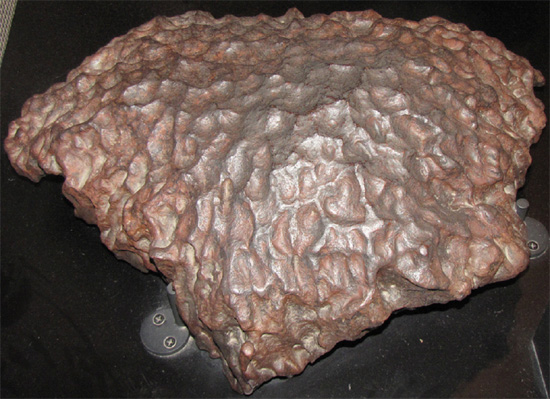
Using metals, however, can also show great results of electric scarring. I found this neat iron meteorite from Henbury Australia from one of Rens van der Sluijs' Picture of the Day articles. And if you compare the images it gives away the clear effects of electrical erosion on the meteorite, as it hurtled through space and then through Earth's atmosphere:
It looks a lot like the microscopic images from your paper. From the metal contacts, to the Henbury meteorite, to the scarring on the moon, they are all electrical. As Stephen Smith used to get up every single morning to say,
  • "Plasma's behavior is independent of scale."
"The important thing in all of this, and something which Velikovsky in his usual intuitive way presaged, is that gravity itself is linked to [subatomic] electrostatics. It is not some innate quality associated with matter, unrelated to its electrical structure." ~Wal Thornhill

Post Reply

Who is online

Users browsing this forum: No registered users and 4 guests