Here is a list of radio frequency detector crystals used for making crystal set radios.
https://hpfriedrichs.com/radioroom/crys ... -06-11.pdf
Obviously, depending on their content in local soils where the food is grown or use as food additives, many of these metal oxides and sulfides are found in the food we eat.
For example, Titanium dioxide is a common food additive to make white frostings "whiter", so if you consume commercial pastries with white frosting you are very likely ingesting TiO2.
So, this begs the question, "Do these radio frequency receptive elemental compounds act to tune broadband or perhaps specific radio frequency reception in living things?"
Planetary Catastrophe: Julian Jaynes & the Breakdown of the Bicameral Mind
-
Maol
- Posts: 611
- Joined: Fri Mar 11, 2011 8:40 pm
-
Brigit

- Posts: 1478
- Joined: Tue Dec 30, 2008 8:37 pm
Re: Planetary Catastrophe: Julian Jaynes & the Breakdown of the Bicameral Mind
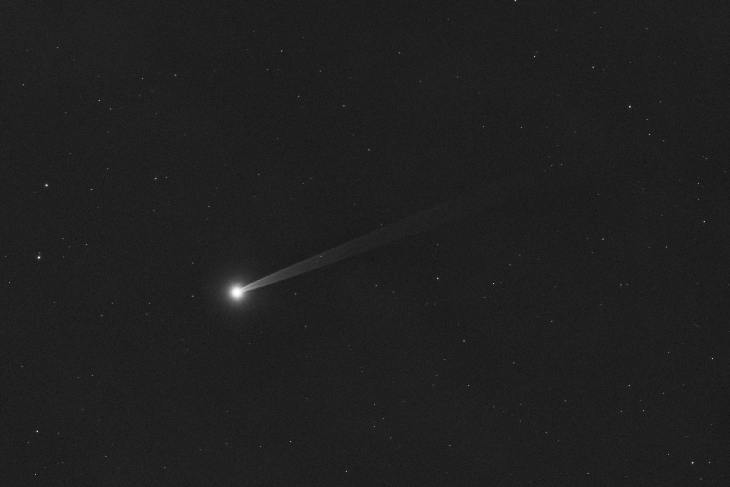
The oddities of the planet Mercury are many. It has a 7 degree inclination, a very long day, and an abundant presence of volatiles along with a thin atmosphere, neither of which are possible according to the Nebular Hypothesis; there is a rumor of possible auroras, and it has very long cometary tail. The tail of Mercury is visible right now ! Nice ! :
Then there is Mercury and Einstein. It was argued that the eccentricity of the planet Mercury's orbit did not fit Newtonian gravitational calculations and that the theory of General Relativity offered the mathematical basis for the observations.
However, the Capture Model of the Solar System offers a far superior alternative explanation of Mercury's mysteries -- which have been written about extensively by Wal Thornhill and the Thunderbolts Project, as the Space Age unfolded.
(It may also be that Mercury is still in the process of becoming phase-locked with the Sun, in my view.)
Dr. Immanuel Velikovsky wrote about the planet Mercury's recent arrival, which I will share here.
- THE SODIUM TAIL OF MERCURY: The biggest comet in the Solar System is actually a planet. It’s Mercury. On Dec. 3rd, Steven Bellavia photographed Mercury's magnificent tail from Surry, Virginia:
"This 24 million kilometer plume of gas is being ejected from Mercury due to the sun, very much like a comet," says Bellavia.
First predicted in the 1980s, Mercury’s tail was discovered in 2001. Its source is Mercury’s super-thin atmosphere. Mercury is so close to the sun, pressure from sunlight pushes atoms out of the atmosphere and into space. The most important atom is sodium, which strongly scatters sunlight and gives the tail a yellow hue. Bellavia used a narrowband filter to capture the bright yellow sodium light at 589nm.
Mercury's tail waxes and wanes in brightness as it orbits the sun. ~spaceweather com
Then there is Mercury and Einstein. It was argued that the eccentricity of the planet Mercury's orbit did not fit Newtonian gravitational calculations and that the theory of General Relativity offered the mathematical basis for the observations.
However, the Capture Model of the Solar System offers a far superior alternative explanation of Mercury's mysteries -- which have been written about extensively by Wal Thornhill and the Thunderbolts Project, as the Space Age unfolded.
(It may also be that Mercury is still in the process of becoming phase-locked with the Sun, in my view.)
Dr. Immanuel Velikovsky wrote about the planet Mercury's recent arrival, which I will share here.
"The important thing in all of this, and something which Velikovsky in his usual intuitive way presaged, is that gravity itself is linked to [subatomic] electrostatics. It is not some innate quality associated with matter, unrelated to its electrical structure." ~Wal Thornhill
-
Brigit
- Posts: 1478
- Joined: Tue Dec 30, 2008 8:37 pm
Planetary Catastrophe: Julian Jaynes & the Breakdown of the Bicameral Mind
Mercury
"It can be assumed with a fair amount of probability that the planet that caused the disturbances described above [on this thread, as well!] was the planet Mercury, the Greek Hermes, the Babylonian Nebo."
"To each of the planets is ascribed a world age, and the ages of the other planets—Moon, Saturn, Jupiter, Venus, and Mars—are well discernible; the dominion of Mercury must be looked for in one of the world ages, and one of the world cataclysms was apparently ascribed to this lesser planet. Mercury was a feared god long before Mars (Nergal) became one. A
"As the name of Mount Sinai refers to Sin, the Moon, so the name of Mount Nebo in Moab where Moses died was called already in that early time by the name of the planet Mercury. Later in the seventh and sixth centuries before the present era, this god was much venerated, especially by the Chaldeans and other peoples of Mesopotamia, as the names of Nabopolassar and his son Nebuchadnezzar prove."
"In earlier times Mercury was known to the Sumerians as Enki."
"Equally pronounced was the position of Thoth, the planet Mercury of the Egyptian pantheon, the theophoric part of the name Thutmose."
"...It is characteristic that in many astronomical texts Mercury, the Greek Hermes, the Babylonian Nebo, the Egyptian Thoth, is portrayed as the planet-god which had in his dominion the physiological capacity of memory in man, as well as that of speech. According to Augustine,
"Among the satellites that presently orbit each of the giant planets are bodies comparable in size to Mercury, or even larger. Abraham Rockenbach, whose De Cometis Tractatus Novus Methodicus we had occasion to quote when investigating the causes of the Deluge, included in his treatise also the following entry:
(cont'd)
"It can be assumed with a fair amount of probability that the planet that caused the disturbances described above [on this thread, as well!] was the planet Mercury, the Greek Hermes, the Babylonian Nebo."
"To each of the planets is ascribed a world age, and the ages of the other planets—Moon, Saturn, Jupiter, Venus, and Mars—are well discernible; the dominion of Mercury must be looked for in one of the world ages, and one of the world cataclysms was apparently ascribed to this lesser planet. Mercury was a feared god long before Mars (Nergal) became one. A
"As the name of Mount Sinai refers to Sin, the Moon, so the name of Mount Nebo in Moab where Moses died was called already in that early time by the name of the planet Mercury. Later in the seventh and sixth centuries before the present era, this god was much venerated, especially by the Chaldeans and other peoples of Mesopotamia, as the names of Nabopolassar and his son Nebuchadnezzar prove."
"In earlier times Mercury was known to the Sumerians as Enki."
"Equally pronounced was the position of Thoth, the planet Mercury of the Egyptian pantheon, the theophoric part of the name Thutmose."
"...It is characteristic that in many astronomical texts Mercury, the Greek Hermes, the Babylonian Nebo, the Egyptian Thoth, is portrayed as the planet-god which had in his dominion the physiological capacity of memory in man, as well as that of speech. According to Augustine,
- 'speech is Mercury.'"
- 'lived without town or laws, speaking one tongue under the rule of Jove. But after Mercury explained the languages of men (whence he is called hermeneutes, "interpreter," for Mercury in Greek is called Hermes; he, too, divided the nations) then discord arose among mortals. . . .'
"Among the satellites that presently orbit each of the giant planets are bodies comparable in size to Mercury, or even larger. Abraham Rockenbach, whose De Cometis Tractatus Novus Methodicus we had occasion to quote when investigating the causes of the Deluge, included in his treatise also the following entry:
- 'In the year of the world one thousand nine hundred and forty-four, two hundred and eighty-eight years after the Deluge, a comet was seen in Egypt of the nature of Saturn, in the vicinity of Cairo, in the constellation of Capricorn, and within the space of sixty-five days it traversed three signs in the sky. Confusions of languages and dispersals of peoples followed. On this the text of the eleventh chapter of Genesis speaks in more detail.'"
(cont'd)
"The important thing in all of this, and something which Velikovsky in his usual intuitive way presaged, is that gravity itself is linked to [subatomic] electrostatics. It is not some innate quality associated with matter, unrelated to its electrical structure." ~Wal Thornhill
-
Brigit
- Posts: 1478
- Joined: Tue Dec 30, 2008 8:37 pm
Planetary Catastrophe: Julian Jaynes & the Breakdown of the Bicameral Mind
Velikovsky, having laid out a bit of mytho-historical background, continues to delight and shock, with several possibilities for the recent arrival of Mercury to its present orbit, within human memory:
- From the annals of modern astronomy we know of cases when a comet traveling on an elongated orbit was “caught” by the planet Jupiter, by which is meant the change of the cometary orbit to one of a short period, with the sun in the focus of its orbit.
It is possible to reconstruct the planetary disturbances of that age with some approximation. In my understanding Mercury was once a satellite of Jupiter, or possibly of Saturn.
In the course of the events which followed Saturn’s interaction with Jupiter and its subsequent disruption, Mercury was pushed from its orbit and was directed to the sun by Jupiter.
It could, however, have been a comet and the entwined snakes of the caduceus may memorialize the appearance it had when seen by the inhabitants of the Earth. At some point a contact occurred between the magnetospheres of Mercury and the Earth, described in the traditions of various nations. (15)
That the Earth was once a satellite of a giant planet is nothing more than a surmise; we dealt with it only as with a hypothetical construction, requiring further elucidation. But with a greater show of support derived from the mythological and folkloristic sources we have tried to demonstrate on the case of Mercury that once it had been a satellite of one of the giant planets and was “directed” by Jupiter closer to the sun. (16)
The claim therefore is that Mercury has traveled on its present orbit for only some five or six thousand years. This view conflicts with both the nebular and the tidal theories of the origin of the planetary family, and with the assumption that the planets have occupied the same orbits for billions of years.
"The important thing in all of this, and something which Velikovsky in his usual intuitive way presaged, is that gravity itself is linked to [subatomic] electrostatics. It is not some innate quality associated with matter, unrelated to its electrical structure." ~Wal Thornhill
-
Brigit
- Posts: 1478
- Joined: Tue Dec 30, 2008 8:37 pm
Re: Planetary Catastrophe: Julian Jaynes & the Breakdown of the Bicameral Mind
Now within the Capture Model, Mercury has not been on its present orbit for more than five or six thousand years. It has a 7 degree inclination from the ecliptic and its orbit takes it from .31 AU to .47 AU at perihelion and aphelion. It is even looking cometary, just now, with all of the volatiles and the thin atmosphere discharging and trailing behind it. These all indicate recent activity, and are a perplexity for the Nebular Hypothesis.
Velikovsky in his unpublished work gives several possible origins of the planet Mercury. It could have been an interloping comet or a former satellite of one of the gas giants.
But the mental effects of the close encounter between Mercury with the Earth Velikovsky hinted at here:
Velikovsky in his unpublished work gives several possible origins of the planet Mercury. It could have been an interloping comet or a former satellite of one of the gas giants.
But the mental effects of the close encounter between Mercury with the Earth Velikovsky hinted at here:
- "At some point a contact occurred between the magnetospheres of Mercury and the Earth, described in the traditions of various nations."
"The important thing in all of this, and something which Velikovsky in his usual intuitive way presaged, is that gravity itself is linked to [subatomic] electrostatics. It is not some innate quality associated with matter, unrelated to its electrical structure." ~Wal Thornhill
-
Brigit
- Posts: 1478
- Joined: Tue Dec 30, 2008 8:37 pm
Re: Planetary Catastrophe: Julian Jaynes & the Breakdown of the Bicameral Mind
Inre:
This rapidly oscillating magnetic field on a global scale may have been one of the extraordinary events commemorated in so many legends across the world. Not all, but most surviving system of legends express a time when communication as well as the understanding of language itself was profoundly altered.
- Velikovsky in his unpublished work gives several possible origins of the planet Mercury. It could have been an interloping comet or a former satellite of one of the gas giants.
But the mental effects of the close encounter between Mercury with the Earth Velikovsky hinted at here:- "At some point a contact occurred between the magnetospheres of Mercury and the Earth, described in the traditions of various nations."
- Wikipedia: Transcranial magnetic stimulation (TMS) is a noninvasive neurostimulation technique in which a changing magnetic field is used to induce an electric current in a targeted area of the brain through electromagnetic induction. A device called a stimulator generates electric pulses that are delivered to a magnetic coil placed against the scalp. The resulting magnetic field penetrates the skull and induces a secondary electric current in the underlying brain tissue, modulating neural activity.[1][2]
This rapidly oscillating magnetic field on a global scale may have been one of the extraordinary events commemorated in so many legends across the world. Not all, but most surviving system of legends express a time when communication as well as the understanding of language itself was profoundly altered.
"The important thing in all of this, and something which Velikovsky in his usual intuitive way presaged, is that gravity itself is linked to [subatomic] electrostatics. It is not some innate quality associated with matter, unrelated to its electrical structure." ~Wal Thornhill
-
tholden
- Posts: 1017
- Joined: Thu Jul 03, 2008 1:02 am
Re: Planetary Catastrophe: Julian Jaynes & the Breakdown of the Bicameral Mind
Jaynes was limiting his field of view to a time period from around Exodus tto the Trojan war; he needed to be looking at the true Antediluvian period.
https://youtu.be/XYv5rB62qHk
https://youtu.be/XYv5rB62qHk
-
Brigit
- Posts: 1478
- Joined: Tue Dec 30, 2008 8:37 pm
Planetary Catastrophe: Julian Jaynes & the Breakdown of the Bicameral Mind
tholden -- Thanks for the link to your interview, and also, for drawing our attention to the channel "Greg Jay" !
"The important thing in all of this, and something which Velikovsky in his usual intuitive way presaged, is that gravity itself is linked to [subatomic] electrostatics. It is not some innate quality associated with matter, unrelated to its electrical structure." ~Wal Thornhill
-
Brigit
- Posts: 1478
- Joined: Tue Dec 30, 2008 8:37 pm
Re: Planetary Catastrophe: Julian Jaynes & the Breakdown of the Bicameral Mind
There is another possible electric universe solution to the Mercury anomalies.
It may be an object that recently fissioned from the Sun.
In favor of this idea is the non-circularity of its orbit. It's highly eliptical in its journey around the Sun. Another point in favor of the recent addition of Mercury to the Sun's family is its 7 degree inclination to the ecliptic, which matches the Sun's tilt to the ecliptic.
Just an idea.
Written on a post card.
It may be an object that recently fissioned from the Sun.
In favor of this idea is the non-circularity of its orbit. It's highly eliptical in its journey around the Sun. Another point in favor of the recent addition of Mercury to the Sun's family is its 7 degree inclination to the ecliptic, which matches the Sun's tilt to the ecliptic.
Just an idea.
Written on a post card.
"The important thing in all of this, and something which Velikovsky in his usual intuitive way presaged, is that gravity itself is linked to [subatomic] electrostatics. It is not some innate quality associated with matter, unrelated to its electrical structure." ~Wal Thornhill
-
Brigit
- Posts: 1478
- Joined: Tue Dec 30, 2008 8:37 pm
Planetary Catastrophe: Julian Jaynes & the Breakdown of the Bicameral Mind
The reason I mentioned Mercury's close-yet-elliptical orbit around the Sun is basically related to and because of the findings of the Kepler mission to find exoplanets. The planets found by Kepler were mostly enormous gas giants, with close orbits, sometimes whipping around their star in a matter of days. In other cases these gas giants had completely unexpected polar orbits.
These findings fit very neatly with the Electric Universe model of stellar fissioning. The electrical stress upon a star may cause it to fission so that a positively charged body may fission from the star's core. There is a stream of materials and plasma discharges between the bodies as they separate, and this may bring the body back into a closer orbit after having been ejected. Gravitational forces are adjusted as adjustments in charge take place.
In this way, Mercury can be compared with exoplanets closely orbiting their parent stars, in my view. In the Electric Universe publications however, Mercury has a recent capture history (possibly from one of the gas giants), as does our own Moon.
I want to share a Thunderbolts Picture of the Day called "Close Cousins," which compares the Moon and the planet Mercury:
"Could Mercury and the Moon be more closely related than previously thought?"
These findings fit very neatly with the Electric Universe model of stellar fissioning. The electrical stress upon a star may cause it to fission so that a positively charged body may fission from the star's core. There is a stream of materials and plasma discharges between the bodies as they separate, and this may bring the body back into a closer orbit after having been ejected. Gravitational forces are adjusted as adjustments in charge take place.
In this way, Mercury can be compared with exoplanets closely orbiting their parent stars, in my view. In the Electric Universe publications however, Mercury has a recent capture history (possibly from one of the gas giants), as does our own Moon.
I want to share a Thunderbolts Picture of the Day called "Close Cousins," which compares the Moon and the planet Mercury:
"Could Mercury and the Moon be more closely related than previously thought?"
"The important thing in all of this, and something which Velikovsky in his usual intuitive way presaged, is that gravity itself is linked to [subatomic] electrostatics. It is not some innate quality associated with matter, unrelated to its electrical structure." ~Wal Thornhill
-
Brigit
- Posts: 1478
- Joined: Tue Dec 30, 2008 8:37 pm
Planetary Catastrophe: Julian Jaynes & the Breakdown of the Bicameral Mind
- Close Cousins
- https://www.thunderbolts.info/wp/wp-con ... -Juana.jpg
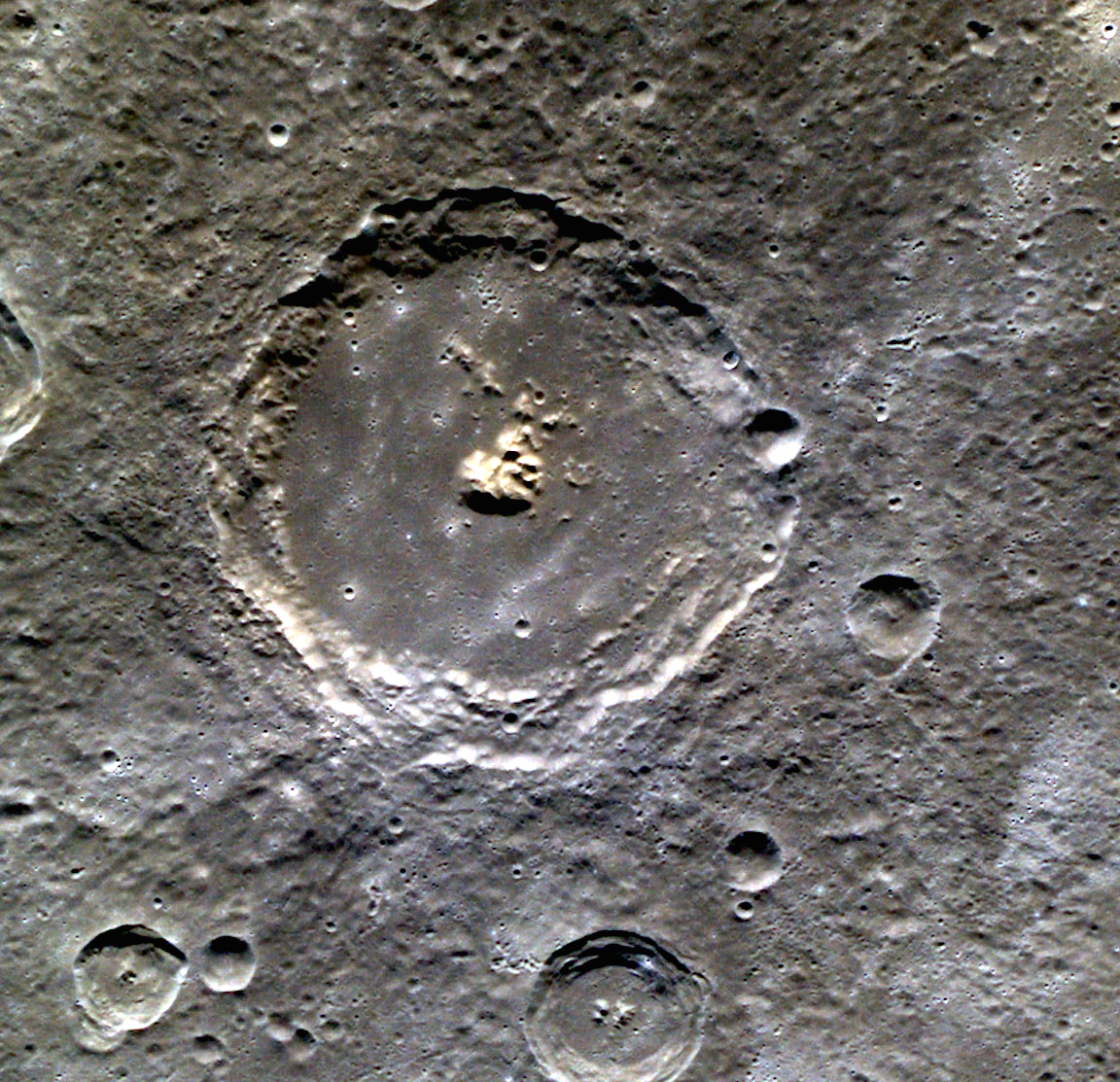
image: "Sor Juana crater, about 94 kilometers in diameter. NASA/Johns Hopkins University Applied Physics Laboratory/Carnegie Institution of Washington"
On March 18, 2011 the MESSENGER spacecraft (Mercury Surface, Space Environment, Geochemistry and Ranging) entered orbit around the planet Mercury. The last time a spacecraft explored Mercury was Mariner 10 during its tour of it and Venus. Mariner 10 flew near Mercury in 1974 – March 29, September 21 and then again on March 16, 1975. However, because there was no orbital insertion, only about 45% of the surface was mapped by the onboard instruments. Because MESSENGER has been orbiting Mercury for more than three years, other mysteries about Mercury, unanswered for the last 34 years, might be answered.
Mercury is intriguing to space scientists because it provides them with a number of “processes that have yet to be understood”. Crater chains and melted pits extend from depressions that can be over 60 kilometers wide. Flat bottoms and vertical sidewalls are signs that they were created by electric arcs and not from meteor impacts on the surface.
Mercury’s story is probably one of extremes. Its surface is heavily scarred, with steep-walled canyons, scarps that rise up several kilometers, and craters that penetrate the crust for several kilometers below the mean elevation. The difference in elevation between lowlands and highlands exceeds eight kilometers in some regions. Mercury resembles the Moon more than any other rocky body. The Moon is 3475 kilometers in diameter, while Mercury is 4880 kilometers; it appears that they both experienced catastrophes at some time in the past that left them with nearly identical topography.
In a previous Picture of the Day about the crater Aristarchus, it was noted that its surroundings exhibit many characteristics associated with electrical events: melted craters, elongated craters, and crater chains. Planetary scientists prefer to imagine that those features are the result of “fallback ejecta” from whatever space rock created Aristarchus “millions of years ago.” However, the braided nature of the craters leading to the crater’s rim, as well as the terraces within it, belie the impact hypothesis.
The surface of Mercury is usually said to be an example of meteorites bombardment. However, the signs of electricity in action are more prevalent than the signs of shockwaves through the strata. Most of the debris on the surface of Mercury appears to be chunks of fallback material that was blown out by the explosive energies of plasma discharges. Ordinarily, as in the image at the top of the page, the craters have little if any ejecta surrounding them. The crater field shown above is generally lacking in boulders or smaller breccias.
Mercury possesses a weak magnetic field, one with a surface strength about 1% of Earth. It is offset from the polar axis by almost 500 kilometers. Since Mercury’s radius is 2440 kilometers, that results in nearly a 20% radial offset. Although Mercury is thought to have a molten outer core, no one knows if it is working to generate its magnetic field like Earth or if the field is part of the crust, like Mars. No one understands why a molten core should even exist on Mercury, since the planet appears cold and dead. The molten interior should have cooled off eons ago.
Another theory suggests that Mercury’s slow rotation keeps the magnetic field in a weakened state. Mercury rotates in 59 Earth days, making it the planet with the slowest rotation next to Venus. It is more likely that the problematic “dynamo theory” of planetary magnetism is wrong. According to Electric Universe physicist Wal Thornhill, a slowly rotating charged body will produce a weak dipole magnetic field. A magnetometer on the satellite should help to resolve Mercury’s anomalous magnetic field conditions.
NASA scientists often refer to what they find on other planets as “mysterious”, with long years of research ahead. The reason for the confusion is one of reverse application: Earth should not be used to explain the Solar System. The geological patterns found elsewhere deserve alternative viewpoints."
Stephen Smith - https://www.thunderbolts.info/wp/wp-con ... -Juana.jpg
"The important thing in all of this, and something which Velikovsky in his usual intuitive way presaged, is that gravity itself is linked to [subatomic] electrostatics. It is not some innate quality associated with matter, unrelated to its electrical structure." ~Wal Thornhill
Who is online
Users browsing this forum: No registered users and 3 guests