Here's an interesting canyon in Southwest Idaho with some pretty impressive electrical characteristics:
http://maps.google.com/maps?hl=en&ll=42 ... 11&vpsrc=6
Be sure to zoom in and out, and to follow along all th branches of the canyon.
If you choose the "terrain" option, you will see that West in Oregon there are similar canyons, and that if you keep zooming in, you see more, smaller canyons that look like lightning strikes.
Possible electrical scars on Planet Earth...
-
Lloyd
- Posts: 4433
- Joined: Fri Apr 04, 2008 2:54 pm
Re: Southwest Idaho USA
* If you zoom in on the river bed, in places it looks like transverse dunes that are often seen in Mars canyons.
-
GaryN

- Posts: 2668
- Joined: Tue Apr 01, 2008 8:18 pm
- Location: Sooke, BC, Canada
Re: Possible electrical scars on Planet Earth...
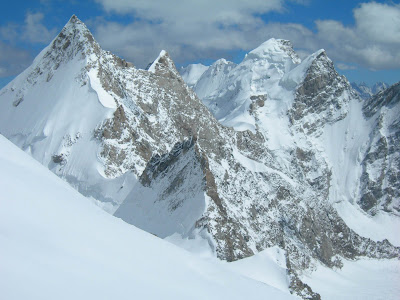
How Did Antarctica's Mysterious Ice-Covered Mountains Get There?
http://www.popularmechanics.com/science ... =pm_latest
The Gamburtsev Mountains in Antarctica are a chain of peaks the size of the Alps, but totally buried in ice. New data collection reveals how they might have gotten where they are.
http://www.popularmechanics.com/science ... =pm_latest
In order to change an existing paradigm you do not struggle to try and change the problematic model. You create a new model and make the old one obsolete. -Buckminster Fuller
-
seasmith
- Posts: 2815
- Joined: Thu Mar 27, 2008 6:59 pm
Re: Possible electrical scars on Planet Earth...

But there is a big rift, and massive extrusion along a center fault, so maybe not the topical EDM arc strike at work.The big problem for geologists is this: The Gamburtsev mountains appear to be relatively young—they bear jagged peaks that haven't yet been worn down by erosion. Other mountain ranges that look like that are geological infants: the craggy Himalayas, for instance, are still in the process of being formed. But scientists know of no geological events in Antarctica’s recent history that could have created the Gamburtsevs. There are no continental plates in the area, for example, that could have squeezed together to push up mountains, which is how the Himalayas were
Might one expect another form of electrical action there at the pole? whatever,
there is clearly excess pressure inside.
http://www.popularmechanics.com/science ... =pm_latest
-
GaryN
- Posts: 2668
- Joined: Tue Apr 01, 2008 8:18 pm
- Location: Sooke, BC, Canada
Re: Possible electrical scars on Planet Earth...
That's the $64 Million question. The conventional view, I think, is that magma pushed upBut there is a big rift, and massive extrusion along a center fault, so maybe not the topical EDM arc strike at work.
through a rift, but if there were to be a large current flow into the Earth that flowed
down a thin crack or fault, then it would cause the heating, melting and widening of the
crack. I do believe that a plasma flow, rather than discharge machining, would
lead to a pulling up of the material, into those peaks. I'd like to examine them to look
for vitrification of those peaks or along the ridges, that would be my determination method.
And if they are not vitrified, then the fact that such geometric shapes are seen on Mars and
the Moon suggest to me a current flow and melting or softening, with pulsing. I think
starbiter Michael considers the inflow of a dusty plasma too, from on or off-world sources,
and I'd certainly not discount that scenario.
I dont see the need for excess pressure if material is being pulled out, notMight one expect another form of electrical action there at the pole? whatever,
there is clearly excess pressure inside.
pushed out, but if there was indeed resistance heating underground then there
would be expansion and pressure. I'm just thinking of the Tiger Stripe rifts
on Enceladus, is material being pulled or pushed?

In order to change an existing paradigm you do not struggle to try and change the problematic model. You create a new model and make the old one obsolete. -Buckminster Fuller
-
seasmith
- Posts: 2815
- Joined: Thu Mar 27, 2008 6:59 pm
Re: Possible electrical scars on Planet Earth...
GaryN,
Please...
No need for that "conventional " condemnation here.
The point of the post is to suggest an alternative EU explanation, relative to energy flows at planetary poles, in contradistinction to common arc-strikes.
There is obvious Rifting with faulting (cracking?) and with orogeny, as mapped by satellites; just as there is at the Horn of Africa, The Range & Basin area of western US, deep-sea spread zones and other places on Earth.
I'm not prepared to compare Enceladus to Earth because we just do not have enough data.
It is also highly likely that there Is some form of force/pressure (residual?) inside the skin of Earth because (those) Mountains are still growing and Rifts are still expanding !
[ever have a flesh wound on say a knuckle, and every time you flex it the dermis spreads, cracks and more stuff comes out the crack ?]
mr. conventional
Please...
No need for that "conventional " condemnation here.
The point of the post is to suggest an alternative EU explanation, relative to energy flows at planetary poles, in contradistinction to common arc-strikes.
There is obvious Rifting with faulting (cracking?) and with orogeny, as mapped by satellites; just as there is at the Horn of Africa, The Range & Basin area of western US, deep-sea spread zones and other places on Earth.
I'm not prepared to compare Enceladus to Earth because we just do not have enough data.
That is exactly the thing about terrestrial polar regions: EM energy flows in one end and out the other, and maybe both ways. It seems reasonable to me that if another massively charged body made near approach to the earth that, besides a lot of peripheral sparking, there would also be very energetic interactions between relative magnetospheres, of a~ Polar nature.I dont see the need for excess pressure if material is being pulled out, not
pushed out, but if there was indeed resistance heating underground then there
would be expansion and pressure. I'm just thinking of the Tiger Stripe rifts
on Enceladus, is material being pulled or pushed?
It is also highly likely that there Is some form of force/pressure (residual?) inside the skin of Earth because (those) Mountains are still growing and Rifts are still expanding !
[ever have a flesh wound on say a knuckle, and every time you flex it the dermis spreads, cracks and more stuff comes out the crack ?]
mr. conventional
-
ElecGeekMom
- Posts: 328
- Joined: Tue May 27, 2008 9:01 am
Re: Chimney Rock Nebraska
http://maps.google.com/maps?hl=en&q=Chi ... CCQQ_AUoAg
If this doesn't look like EU forces did it, then nothing does....
If this doesn't look like EU forces did it, then nothing does....
-
starbiter

- Posts: 1445
- Joined: Mon Mar 17, 2008 9:11 am
- Location: Antelope CA
- Contact:
Re: Possible electrical scars on Planet Earth...
Hello EGM: Interesting place. Thanks
http://maps.google.com/maps?hl=en&ll=41 ... 9,78.107,0
http://en.wikipedia.org/wiki/Chimney_Ro ... toric_Site
My seat of the pants guess would be mountain tops to the South, sticking up through slurry runoff. In between sloshes there must have been volcanic dust. If dust is zapped in the air it might resemble volcanic dust. Much of the runoff was washed away. To a depth equal to the bottom of the formation. The formation may have been hit by a thunderbolt converting the soft runoff to rock. The charge seems to have spread out as it traveled down.
http://maps.google.com/maps?f=q&source= ... 4&t=p&z=13
The river to the North would have supplied the water with current to remove the fresh soft slurry. The whole area would have been submerged due to the change of Earth's rotation or axis, and or release of the equatorial bulge. As the flood retreated the water current would be extreme.
This is a giant fulgurite, IMHO. It would be great to actually be there. My thinking might change.
michael
http://maps.google.com/maps?hl=en&ll=41 ... 9,78.107,0
http://en.wikipedia.org/wiki/Chimney_Ro ... toric_Site
My seat of the pants guess would be mountain tops to the South, sticking up through slurry runoff. In between sloshes there must have been volcanic dust. If dust is zapped in the air it might resemble volcanic dust. Much of the runoff was washed away. To a depth equal to the bottom of the formation. The formation may have been hit by a thunderbolt converting the soft runoff to rock. The charge seems to have spread out as it traveled down.
http://maps.google.com/maps?f=q&source= ... 4&t=p&z=13
The river to the North would have supplied the water with current to remove the fresh soft slurry. The whole area would have been submerged due to the change of Earth's rotation or axis, and or release of the equatorial bulge. As the flood retreated the water current would be extreme.
This is a giant fulgurite, IMHO. It would be great to actually be there. My thinking might change.
michael
I Ching #49 The Image
Fire in the lake: the image of REVOLUTION
Thus the superior man
Sets the calender in order
And makes the seasons clear
www.EU-geology.com
http://www.michaelsteinbacher.com
Fire in the lake: the image of REVOLUTION
Thus the superior man
Sets the calender in order
And makes the seasons clear
www.EU-geology.com
http://www.michaelsteinbacher.com
-
starbiter
- Posts: 1445
- Joined: Mon Mar 17, 2008 9:11 am
- Location: Antelope CA
- Contact:
Re: Possible electrical scars on Planet Earth...
I Ching #49 The Image
Fire in the lake: the image of REVOLUTION
Thus the superior man
Sets the calender in order
And makes the seasons clear
www.EU-geology.com
http://www.michaelsteinbacher.com
Fire in the lake: the image of REVOLUTION
Thus the superior man
Sets the calender in order
And makes the seasons clear
www.EU-geology.com
http://www.michaelsteinbacher.com
-
remelic

- Posts: 203
- Joined: Tue May 11, 2010 11:40 am
- Location: Canada
Re: Possible electrical scars on Planet Earth...
I can simplify this and say that the entire earth is an example of electrical scaring and carving.
Cheers.
Cheers.
Secrets of Edward Leedskalnin
“Like a flash of lightning and in an instant the truth was revealed.” - Nikola Tesla
Electricity = Magnetism x Speed of Light Squared... Thats what he really meant.
“Like a flash of lightning and in an instant the truth was revealed.” - Nikola Tesla
Electricity = Magnetism x Speed of Light Squared... Thats what he really meant.
-
GaryN
- Posts: 2668
- Joined: Tue Apr 01, 2008 8:18 pm
- Location: Sooke, BC, Canada
Re: Possible electrical scars on Planet Earth...
I agree 100% with that statement remelic. The question now would be if this scarring and carvingI can simplify this and say that the entire earth is an example of electrical scaring and carving.
all occurred at the same time, or if it occurred repeatedly, perhaps only in certain localities on
each occasion, giving some life the chance to survive. The fact that there are still millions of
species of creatures, including us, in existence would indicate that the destruction must have been
localised. And the rock carvings around the world seemingly showing the electrical disturbances in
the skies must mean that humans survived, at least long enough to do the carvings. Stories of the
events were passed down through the ages, meaning there must have been a continuous line of people
to pass them down. The diversity of the human race would seem to show that there has been enough
stable time for the arising of different features, colors, languages that have evolved. There are only
2 options IMO. The destruction was never complete, in any part of the world, or the origins and history
of life on Earth are much different than the long term, evolutionary process presently accepted.
I think trying to sort out which event occurred when could be almost impossible, though the most
recent events, perhaps the 13 kYA one, should have the 'freshest' appearance.
In order to change an existing paradigm you do not struggle to try and change the problematic model. You create a new model and make the old one obsolete. -Buckminster Fuller
-
+EyeOn-W-ANeed2Know
- Posts: 165
- Joined: Sun Dec 12, 2010 11:41 pm
Re: Possible electrical scars on Planet Earth...
I saw a show on Nat Geo last night called "Draining the Great Lakes".
At one point, they started talking about finding strange ridges and lines that their some of the "experts" thought were 5000 yo trail signs for migrating Caribou.
They think they've even found what they think might be an impact crater too, but from what I saw, it looked more like it might have been from discharge cavitation.
It sure makes a better explaination as it answers the formation of the unusual ridging around the edges of the supposed "impact" site and elsewhere.
Does anyone here have more info or additional ideas on any these formations?
At one point, they started talking about finding strange ridges and lines that their some of the "experts" thought were 5000 yo trail signs for migrating Caribou.
They think they've even found what they think might be an impact crater too, but from what I saw, it looked more like it might have been from discharge cavitation.
It sure makes a better explaination as it answers the formation of the unusual ridging around the edges of the supposed "impact" site and elsewhere.
Does anyone here have more info or additional ideas on any these formations?
-
jetstove
- Posts: 11
- Joined: Sun Dec 18, 2011 10:09 am
Re: Possible electrical scars on Planet Earth...
Pliny the elder wrote that the city of Bolsena was destroyed by a bolt of lightening from mars. The location of the old city has not been located. The present day location is north of Montefiasconi. There is a circular depression just west of the mountain and from what I can tell, there is also a central mound within this structure. Have a look. http://maps.google.com/maps?ll=42.64472 ... ,11.985833
Dating the site could be done using polar magnetic reconstructions from melted rock to differentiate it from the volcano itself.
Dating the site could be done using polar magnetic reconstructions from melted rock to differentiate it from the volcano itself.
-
remelic
- Posts: 203
- Joined: Tue May 11, 2010 11:40 am
- Location: Canada
Re: Possible electrical scars on Planet Earth...
I can see it. Very interesting. A historical account of interplanetary discharge with the formation to show for it.jetstove wrote:Pliny the elder wrote that the city of Bolsena was destroyed by a bolt of lightening from mars. The location of the old city has not been located. The present day location is north of Montefiasconi. There is a circular depression just west of the mountain and from what I can tell, there is also a central mound within this structure. Have a look. http://maps.google.com/maps?ll=42.64472 ... ,11.985833
Dating the site could be done using polar magnetic reconstructions from melted rock to differentiate it from the volcano itself.
Secrets of Edward Leedskalnin
“Like a flash of lightning and in an instant the truth was revealed.” - Nikola Tesla
Electricity = Magnetism x Speed of Light Squared... Thats what he really meant.
“Like a flash of lightning and in an instant the truth was revealed.” - Nikola Tesla
Electricity = Magnetism x Speed of Light Squared... Thats what he really meant.
-
starbiter
- Posts: 1445
- Joined: Mon Mar 17, 2008 9:11 am
- Location: Antelope CA
- Contact:
Re: Possible electrical scars on Planet Earth...
Worlds in Collision, 1950 [paper back, page 277]
http://www.scribd.com/doc/21746049/Veli ... -Collision
[...]
Pliny says also that a bolt from Mars fell on Bolsena, "the richest town in Tuscany," and that thecity was entirely burned up by this bolt.17 He refers to Tuscan writings as the source of hisinformation. By Tuscan writings are meant Etruscan books.Bolsena, or the ancient Volsinium, was one of the chief cities of the Etruscans, the people whosecivilization preceded that of the Latin Romans on the Apennine Peninsula. The Etruscan statesoccupied the area of what was later known as Tuscany, between the Tiber and the Arno. Near Bolsena, or Volsinium, is a lake of the same name. This lake fills a basin nine miles long,seven miles wide, and 285 feet deep. For a long time this basin was regarded as the water-filledcrater of a volcano. However, its area of 117 square kilometers exceeds by far that of the largestknown craters on the earth—those in the Andes in South America and those in the Hawaiian(Sandwich) Islands in the Pacific. Hence, the idea that the lake is the crater of an extinct volcanohas recently been questioned. Moreover, although the bottom of the lake is of lava, and theground around the lake abounds with ashes and lava and columns of basalt, the talus of a volcanois lacking.Taking what Pliny said of an interplanetary discharge together with what has actually been foundat Volsinium, one may wonder whether the cinders and the lava and the columns of basalt could possibly be the remains of the contact Pliny mentions. Again, if the discharge was caused byMars, it would probably have occurred in the eighth pre-Christian century. The catastrophes of that century brought the great Etruscan civilization into sudden decline and launched themigration of newcomers to Italy leading to the founding of Rome. The Etruscans, as cited byCensorinus and quoted in the Section on "The World Ages," thought that celestial prodigiesaugured the end of each age. "The Etruscans were versed in the science of the stars, and after having observed the prodigies with attention, they recorded these observations in their books."
http://www.scribd.com/doc/21746049/Veli ... -Collision
[...]
Pliny says also that a bolt from Mars fell on Bolsena, "the richest town in Tuscany," and that thecity was entirely burned up by this bolt.17 He refers to Tuscan writings as the source of hisinformation. By Tuscan writings are meant Etruscan books.Bolsena, or the ancient Volsinium, was one of the chief cities of the Etruscans, the people whosecivilization preceded that of the Latin Romans on the Apennine Peninsula. The Etruscan statesoccupied the area of what was later known as Tuscany, between the Tiber and the Arno. Near Bolsena, or Volsinium, is a lake of the same name. This lake fills a basin nine miles long,seven miles wide, and 285 feet deep. For a long time this basin was regarded as the water-filledcrater of a volcano. However, its area of 117 square kilometers exceeds by far that of the largestknown craters on the earth—those in the Andes in South America and those in the Hawaiian(Sandwich) Islands in the Pacific. Hence, the idea that the lake is the crater of an extinct volcanohas recently been questioned. Moreover, although the bottom of the lake is of lava, and theground around the lake abounds with ashes and lava and columns of basalt, the talus of a volcanois lacking.Taking what Pliny said of an interplanetary discharge together with what has actually been foundat Volsinium, one may wonder whether the cinders and the lava and the columns of basalt could possibly be the remains of the contact Pliny mentions. Again, if the discharge was caused byMars, it would probably have occurred in the eighth pre-Christian century. The catastrophes of that century brought the great Etruscan civilization into sudden decline and launched themigration of newcomers to Italy leading to the founding of Rome. The Etruscans, as cited byCensorinus and quoted in the Section on "The World Ages," thought that celestial prodigiesaugured the end of each age. "The Etruscans were versed in the science of the stars, and after having observed the prodigies with attention, they recorded these observations in their books."
I Ching #49 The Image
Fire in the lake: the image of REVOLUTION
Thus the superior man
Sets the calender in order
And makes the seasons clear
www.EU-geology.com
http://www.michaelsteinbacher.com
Fire in the lake: the image of REVOLUTION
Thus the superior man
Sets the calender in order
And makes the seasons clear
www.EU-geology.com
http://www.michaelsteinbacher.com
Who is online
Users browsing this forum: No registered users and 12 guests