Page 68 of 76

Re: Creationism, Myth and Catastrophism

Posted: Mon Jun 16, 2025 8:53 pm
by nick c
C14 dating of dinosaur fossils strongly suggests that they lived a mere few thousand years ago.
Once one discards the notion that radiometric dating of rocks (including radiocarbon dating) is valid; the scale of time changes.

RC dating is flawed in that it is not unusual to have old carbon injected into living things and then have them appear much older via RC dating (Suess Effect). For example: trees near highways or airports often yield RC dates that are ridiculously old. Ginenthal cited the case (as reported by the BBC) of the remains of a woman found in a bog. RC dating put the woman as dying 1,000 years ago. A local sheriff not aware of that dating, took the trouble to check her teeth and found that they matched the dental records of a woman who went missing 20 years before. The sheriff brought in her husband for questioning and he confessed to murdering her and burying the body in the bog.

The above cases have the RC dating testing older due to the influx of old carbon. However, there is a possibility of contamination by young carbon yielding a "too young" date.
Humic and fulvic acids are naturally present in soil where microbial degradation of plants and animals has occurred. The effect of these organic acids on the sample, whether they would make the sample older or younger, depends on the age of their original organism.

When roots of plants penetrate wood, charcoal, soil, or bones, modern carbon is already introduced to them. This occurrence can make the samples seem younger than their true age.
from:
https://www.radiocarbon.com/carbon-dati ... atment.htm

I do think that the dinosaur age was not that long ago. The 63 million year date for the end of the Cretaceous Period is derived from radiometric dating of rocks. Under catastrophic conditions of massive electrical discharges, radiometric dating becomes a moot point. it is a chronological technique that has a uniformitarian bias of constant rates of radioactive decay.

Nevertheless, I would not use the RC dating as proof of the recentness of the extinction of dinosaurs. RC dating is not a reliable chronological tool and it would be somewhat hypocritical to accept a dating that is favorable to one's position while rejecting those dates that are unfavorable.

Re: Creationism, Myth and Catastrophism

Posted: Sat Jun 21, 2025 1:40 am
by Lloyd
.
.
A mere thousand year error is way better than most other dating methods, so I think C14 dating is still much better than most others. It just needs caveats etc, IMO.

Re: Creationism, Myth and Catastrophism

Posted: Fri Jun 27, 2025 4:43 pm
by Lloyd
373154

FIRST PYRAMIDS HAD NO COFFINS

I just watched this interesting video: https://www.youtube.com/watch?v=2-GTCd5TWLM .
It suggests that Snefru's pyramids, i.e. the Bent pyramid, the Meidun pyramid and the Red pyramid, never contained sarcophagi because they were never meant for burial. All 3 upper chambers were renovated by Snefru, I guess, and no evidence of sarcophagi have been found in any of them. There was no room in the passages to remove a sarcophagus. The upper chambers were being renovated, but not finished. A reason for renovating isn't suggested, but I suppose it may have been to better accommodate worshipers. So those pyramids may have been primarily temples. One or more of them is said to have had many worshipers coming inside for a thousand years. The idea of using pyramids for burial is said to have started with the Giza pyramids and they made improvements on construction, including air shafts for removing humidity from worshipers. So it is suggested that Snefru's sarcophagus was likely placed elsewhere.
I asked Ev Cochrane: Do you have an opinion on the probable purposes of the pyramids? It looks like Snefru's pyramids were built as temples in memory of the primeval hill and the later pyramids simply added the idea of including pharaoh's sarcophagi in them, the pharaoh being a sort of Son of God on Earth. Any comments?

I just got the following from AI. I think the dates are probably a few centuries too early as per Peter James. Do you have any comments on this timeline?
OLDEST MASSIVE PYRAMIDS

Timeline of the Oldest Massive Pyramids
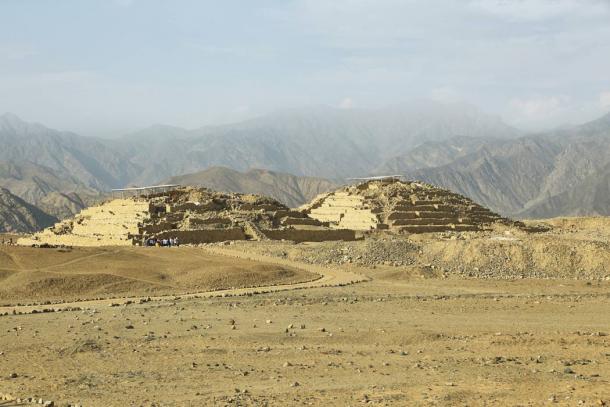
c. 2627 BCE: Caral Pyramids (Peru) https://www.ancient-origins.net/sites/d ... k=fBXOardL
The pyramids at Caral in the Supe Valley of Peru are among the oldest known pyramidal structures outside Egypt. These monumental platform mounds were built by the Norte Chico civilization and predate most Egyptian pyramids.

c. 2667–2648 BCE: Pyramid of Djoser (Saqqara, Egypt)
The Step Pyramid of Djoser, designed by Imhotep, is considered the first monumental stone pyramid in Egypt and one of the earliest large-scale cut stone constructions in the world.

c. 2600 BCE: Pyramid of Meidum, Bent Pyramid, and Red Pyramid (Egypt)
The Pyramid of Meidum, the Bent Pyramid, and the Red Pyramid (all attributed to Pharaoh Snefru) mark the evolution from step-sided to smooth-sided pyramids in Egypt.

c. 2580–2560 BCE: Great Pyramid of Khufu (Giza, Egypt)
The Great Pyramid, built for Pharaoh Khufu, is the largest and most famous pyramid in Egypt, representing the pinnacle of early pyramid construction.

c. 2520 BCE: Pyramid of Khafre (Giza, Egypt)
The second-largest pyramid at Giza, built for Khufu's son Khafre.

c. 2490 BCE: Pyramid of Menkaure (Giza, Egypt)
The third and smallest of the main Giza pyramids, built for Menkaure.


YOUNGER DRYAS

These are my recent Substack posts.
ATLANTIS & YOUNGER DRYAS https://cataclysmicearthhistory.substac ... nger-dryas
Y. DRYAS ICE SHEET IMPACTS https://cataclysmicearthhistory.substac ... et-impacts
YOUNGER DRYAS CRATERS UPDATE https://cataclysmicearthhistory.substac ... ers-update
CATACLYSMS WORLD MAPS https://cataclysmicearthhistory.substac ... world-maps

In the YD Craters Update post, a Randall Carlson discussion mentioned a crater in Louisiana and mounds nearby that both date to the Younger Dryas, which I put at c. 2500 BC. I also put the Saturn Configuration breakup at about the same time. The first mounds and first pyramids seem to date to the YD and their purpose was to remember the past and try to entice the gods to return, I think.

Re: Creationism, Myth and Catastrophism

Posted: Sun Jun 29, 2025 4:03 pm
by Lloyd
373246

CRITIQUING GRAHAM HANCOCK & LLOYD PYE

Ev said he doesn't put much stock in Youtube videos and prefers books such as Mark Lehner's. So I said there are Youtube videos of Mark Lehner. And Ev has Youtube videos too. I prefer to look for gems or treasures everywhere. I think I do okay at recognizing what makes the most sense. Graham Hancock seems to be pretty popular, but I don't care much to listen to him, since he mainly assumes that civilization is much older than the mainstream claims. He bases that partly on mainstream dating of humans, i.e. 2 million years or so, and maybe on the fact that Cro Magnon apparently had bigger brains than modern humans. Lloyd Pye had a book called Everything You Know Is Wrong in which he mentioned numerous somewhat sophisticated human artifacts apparently extremely old. I think the dating was wrong, but I asked AI what some of those claims were. Here's its reply.
Artifact Type --- Alleged Discovery Context --- Claimed Age/Date
Coso Artifact: Spark plug-like object --- in a lump of rock in California --- 100,000–500,000 years
Iron chain --- Embedded in coal seam --- ~300 million years (Carboniferous)
Iron nail --- In sandstone quarry block --- 100+ million years
Tile floor --- Under coal layer --- 10–100+ million years
Gold chain --- In coal seam --- 10–100+ million years
Coso artifact --- Encased in geode/rock --- 500,000 years
Stone tools/figurines --- Deep strata, below accepted human layers --- 100,000s–millions of years
I guess Hancock doesn't reference those, but he cites precision-made objects in ancient Egypt and elsewhere and the dating of Gobekli Tepe and nearby sites. I consider almost all of the above to be misdated. I think Gobekli Tepe was built before the Younger Dryas cataclysms, which latter occurred about 2,500 BC. I know there are sometimes said to be star image arrangements that date to 12,000 or so years ago, but I haven't seen anything authoratitive about that yet. I learned that coaldust slurry in mines can harden and look like original coal, so artifacts found in coal could more likely be recent.

EGYPTOLOGIST MARK LEHNER'S WORKS

I asked AI for more info on Mark Lehner and here's part of what it says.

The Complete Pyramids (1997)
Comprehensive Catalog: This book is an exhaustive reference on Egypt’s pyramids, covering about 90 sites, with detailed diagrams, photographs, and plans.

Giza and the Pyramids: The Definitive History (2017, with Zahi Hawass)
Vivid Reconstruction: Lehner and Hawass reconstruct the ancient landscape of Giza, showing that the pyramids and Sphinx were once surrounded by bustling towns, temples, harbors, and cemeteries—not isolated in the desert as they appear today.
Religious and Social Significance: The book details the religious meaning of the pyramids, their role in ancient Egyptian society, and their connection to broader state formation and ideology.

The Red Sea Scrolls: How Ancient Papyri Reveal the Secrets of the Pyramids (2022, with Pierre Tallet)
Eyewitness Testimony: This book analyzes the discovery of ancient papyri at Wadi al-Jarf, including Inspector Merer’s logbooks, which provide the first direct written evidence from a participant in the construction of the Great Pyramid.
Daily Life of Builders: The papyri reveal details about the organization of labor, transportation of limestone from Tura to Giza, and the maintenance of canals and infrastructure supporting pyramid construction.

PAPYRI FROM THE TIME OF KHUFU

(It amazed me to learn about those papyri, so I asked for more into and got this.)

The papyri discussed in The Red Sea Scrolls are over 4,500 years old. Specifically, they date to the 26th year of the reign of Pharaoh Khufu, who ruled during the early 26th century BC (c. 2589–2566 BC) in Egypt’s Fourth Dynasty. These documents are the oldest known papyri with text ever discovered and were found at Wadi al-Jarf, an ancient harbor on the Red Sea coast.

The extraordinary preservation of the Wadi al-Jarf papyri is primarily due to the site’s remote desert location and unique storage conditions:

Arid Environment: Wadi al-Jarf is located in a remote, hyper-arid desert along the Red Sea coast. The extremely dry climate inhibits the growth of bacteria and fungi that would otherwise decompose organic materials like papyrus.

Isolation from Human Activity: Unlike administrative centers such as Memphis and Giza, which were continuously occupied, reused, and looted over millennia, Wadi al-Jarf remained largely undisturbed, reducing the risk of destruction or loss.

Protected Storage: The papyri were found in association with storage galleries — cave-like structures sealed with large limestone blocks. Some papyri were buried in pits between these blocks, which shielded them from the elements and from human interference for thousands of years.

Accidental Abandonment: The documents appear to have been left at the site, rather than transported back to the Nile Valley for archiving, which inadvertently contributed to their preservation.

Re: Creationism, Myth and Catastrophism

Posted: Tue Jul 01, 2025 2:01 pm
by Lloyd
373327

ATLANTEANS FARMED THE SAHARA?

This video, https://www.youtube.com/watch?v=lJw1e-rG3Ac, discusses a recent paper that analyzed DNA from mummies in the Sahara, which indicated mostly Eurasian relations instead of African. I asked AI if that means the Berbers may be their descendants. In a recent post of mine at https://cataclysmicearthhistory.substac ... nger-dryas I mentioned evidence that Berbers, Basques, Irish & other western Europeans were survivors of Atlantis in the Azores area during the Younger Dryas catastrophic sea level rise.
AI says: Berbers (Amazigh/Imazighen) are considered descendants—at least in part—of the ancient populations who lived in the Green Sahara thousands of years ago, but with important caveats:

Genetic continuity: Modern genetic studies show that Berbers have a significant component of ancestry from the “autochthonous” (indigenous) North African populations, which are linked to the prehistoric groups who inhabited the Sahara during the African Humid Period (the “Green Sahara”) and earlier. This includes ancestry from the Iberomaurusian and Capsian cultures, which predate the Neolithic and are associated with ancient North African hunter-gatherers and early herders.

Distinct Maghrebi component: The so-called “Maghrebi” genetic component present in Berbers today is believed to derive from these ancient North African populations, who remained relatively isolated through periods of both climate change and migration. This matches the findings from the recent DNA study in the Takarkori rock shelter, which revealed a unique North African lineage persisting for thousands of years.

Admixture: While this ancient ancestry is strong, modern Berbers are genetically heterogeneous. Over the millennia, there have been waves of admixture from sub-Saharan Africa, the Middle East (especially during the Neolithic and Arabization), and Europe. The proportions of these influences vary widely among different Berber groups.

Cultural and linguistic continuity: Berbers are also the cultural and linguistic descendants of these ancient populations, maintaining indigenous North African languages and traditions.

Re: Creationism, Myth and Catastrophism

Posted: Wed Jul 02, 2025 3:51 am
by Lloyd
373363

MORRISON FORMATION IN W, U.S.

This video "Radioactive Fossils of the Jurassic Morrison Formation" https://www.youtube.com/watch?v=bQAr3xDDZSQ says: The Morrison Formation (Late Jurassic) rocks primarily consist of ancient river beds (paleo channels) and paleosols (ancient soils) formed from clays, organic material, and volcanic ash. The “popcorn texture” of Morrison mudstones results from shrinking and swelling during wet-dry cycles, and the colorful banding patterns come from oxidation (reds and purples) and reduction (whites and greens) by moving groundwater {or floodwater?}.

HUGE PLANTS
Modern horsetail plants are “living fossils” that were common in the Jurassic, but were much larger back then. The Morrison’s fossil flora includes ferns, cycads, ginkgos, horsetails, and large evergreen trees, some as big as today’s tallest redwoods. The Morrison Formation’s climate was much warmer and more humid than today, as evidenced by the size and type of fossilized plants found in the area. Ancient horsetail plants were dramatically larger than modern ones — by at least an order of magnitude. Modern horsetails (genus Equisetum) typically grow to less than 1 meter (about 3 feet) tall, with most species ranging from 25 cm to 60 cm (10–24 inches). Common species like Equisetum hyemale usually grow 2–4 feet (60–120 cm) tall. The largest living species, such as Equisetum giganteum and Equisetum myriochaetum, can reach heights of 4 to 10 meters (16–32 feet), but this is exceptional. Ancient horsetails — notably those from the Carboniferous period such as the extinct genus Calamites — could reached heights of 10 to 30 meters (33–98 feet). Their stems could be up to 20 cm (8 inches) in diameter.

AI has more. Other delicate plants that grew extremely tall in ancient times, like horsetail, include:
Lycophytes were giant, tree-like clubmosses that dominated Carboniferous coal forests. Lepidodendron could reach heights of up to 30 meters (about 100 feet). Despite their size, their tissues were relatively soft compared to modern woody trees, making them structurally delicate. Lycopods dominated ancient wetland ecosystems and contributed significantly to the formation of coal beds. Today, their living relatives are small, herbaceous plants like club mosses and quillworts — none approaching the size of their ancient ancestors.
Ancient Ferns (e.g., Psaronius): Some ancient ferns, particularly the tree ferns like Psaronius, also reached impressive heights—often over 10 meters (33 feet). Their trunks were composed of a fibrous mat of roots, not true wood, which made them less sturdy than modern trees.
Sphenopsids (Calamites): As you mentioned, horsetails’ ancient relatives like Calamites were also among these delicate giants, growing up to 20–30 meters (66–98 feet) tall with hollow, jointed stems.
These plants, while towering, relied on unique structural adaptations (like fibrous root mats or specialized stem tissues) rather than the dense wood of modern trees, making them both tall and comparatively fragile. They were key components of the lush, swampy forests of the Paleozoic era that later became major coal deposits.

RADIOACTIVE BONES. Bones from the Morrison Formation are often radioactive. This is due to uranium being carried by groundwater and deposited in the fossil bones and wood. Organic matter in bones acts as a reducing agent, causing uranium to precipitate and accumulate in higher concentrations than in surrounding rock. During the uranium mining boom of the 1950s, a single piece of fossilized wood from the area was valued at over $100,000 for its uranium content.
{I think electrical forces during meteorite impacts probably formed the heavy elements, like uranium, but I haven't looked for much verification yet.}

CLIMATE. The video states that unionid clams are found in Morrison river sediments, and their shells are often found closed. The narrator explains that “if a clam dies in water, its muscles relax and the shell opens. But if it is buried alive or dies as the water dries up, the shell can remain closed.” The presence of closed clam shells in the fossil record is interpreted in the video as evidence of drought episodes: the clams were stranded as rivers dried up, died in place, and were rapidly buried by sediment, preserving their shells in a closed state. {Rapidly buried by droughts?}

INVERTED TOPOGRAPHY. Exhumed paleo-channels (ancient riverbeds) in the Morrison Formation now form ridges that stand higher than the surrounding landscape. This is called “inverted topography”—the lowest parts of the ancient landscape are now the highest, due to differential erosion. These inverted topography features in Utah are strikingly similar to features observed on Mars, suggesting similar sedimentary and erosional processes occurred on both planets.

FOSSILIZATION. There are three main types of fossilization in Morrison bones and wood: pyritization (iron sulfide), silicification (silica), and carbonate mineralization (calcium carbonate). The process of permineralization involves bacteria in the bone producing calcium carbonate as a byproduct, which then permeates and fossilizes the bone. {Those chemicals were likely widely available during the Great Flood.}


HOW GEOLOGICAL ARCHES FORMED

The video "Why Arches National Park Exists: Radical New Geologic Ideas" by Myron Cook at https://www.youtube.com/watch?v=LVLRIRo7z_s explores the unique and puzzling geology of Arches National Park and the surrounding region in Utah, focusing on the origins of its striking landforms and the scientific mysteries that have challenged geologists for decades.

NORMAL WAY. Researchers eroded sandstone blocks under compressive stress in the lab and observed that arches and pillars developed as erosion removed less-stressed material, while stressed zones became more resistant. In these experiments, stress was applied by placing weights on top of the sandstone blocks to simulate the pressure from overlying rock layers. These experiments show that arches form from the combination of erosion and stress distribution within the rock.

UTAH WAY. Arches at Arches National Park are different. Salt was buried under thick sediment. Being less dense and more flexible than other sediments, salt rose upward through soft, overlying sediment layers. This upward flow formed large salt domes, bending and fracturing the surrounding sediments as the salt pushed through. Erosion then exposed these bent and fractured layers at the surface, helping to create the arches and dramatic landscapes seen today.

Arches National Park covers about 310 km^2 119 mi^2 (~45 mi. x 2.6 mi.). It contains over 2,000 documented natural stone arches, along with numerous other geological formations such as fins, pinnacles, and balanced rocks. The park is located in eastern Utah, just north of the town of Moab.

MEANING. A 40 mi. long narrow 2.6 mi. wide layer of salt was laying on the ground or in a trawf minding its own business, when a Great Flood came along and covered it with a deep layer of sediments. The salt tried to come up for air, but only got partway up. It buckled the sediments, which hardened. Then the salt got gradually washed away. How did the salt get there in the first place?

SALT ORIGIN. An article at https://creation.com/magmatic-origin-salt-deposits has a map of large global salt deposits. I noticed that one labeled Paradox Basin seems to be close to Utah. Here's the map link: https://dl0.creation.com/articles/p092/ ... lt-map.jpg. And AI confirms ""Arches National Park is located within the Paradox Basin. The park lies centrally in the geologic "fault and fold belt" of the Pennsylvanian-aged Paradox Basin, which is part of the Colorado Plateau. The Paradox Basin is known for its thick salt deposits and these salt beds have played a key role in shaping the unique geological features of Arches National Park, including its famous natural sandstone arches."" The article itself theorizes that salt deposits formed magmatically during the Great Flood. It states: "The huge salt deposits found around the globe are not the result of the evaporation of seawater over long periods of time. Rather, the deposits were emplaced as a molten magma at temperatures above 800°C."

Re: Creationism, Myth and Catastrophism

Posted: Wed Jul 09, 2025 4:50 am
by Lloyd
374546

FROM FERTILE CRESCENT TO EVERYWHERE

These are my latest Substack posts.

Y. DRYAS ICE SHEET IMPACTS And Catastrophic Meltwater Flooding https://cataclysmicearthhistory.substac ... et-impacts

YOUNGER DRYAS CRATERS UPDATE Louisiana Crater and Mounds https://cataclysmicearthhistory.substac ... ers-update

CATACLYSMS WORLD MAPS Sediments, Ice Age, Craters https://cataclysmicearthhistory.substac ... world-maps

HOW CONTINENTS DIVIDED And How My Thinking Evolved https://cataclysmicearthhistory.substac ... ts-divided

HOW CONTINENTS DIVIDED 2 Flood Geology https://cataclysmicearthhistory.substac ... -divided-2

WORLD AXIS, UMBILICAL CORD -- HANDS TO NAVEL SYMBOL https://cataclysmicearthhistory.substac ... lical-cord

The last post there has a couple maps showing migration of people westward and eastward from the Fertile Crescent in the area of Mesopotamia and the Levant (east coast of the Mediterranean). I think the dates are inaccurate but possibly correct for a relative timeline. My thinking is that Noah's ark actually did land in SE Turkey and the 8 people from it raised families in that area and after a couple generations, they built Gobekli Tepe, which means "Navel Hill", which fits in with the Saturn Theory, since they were possibly imitating the Saturn configuration in the sky and the polar column may have been visible connecting "heaven" and Earth. As they spread out through the Fertile Crescent, they started building ziggurats instead of plain mounds. After the Tower of Babel incident, some of them moved to the Nile and started building pyramids for the same reason. But others moved east and west building mounds, stone circles and pyramids everywhere. Some did so on the island of Atlantis, now the Azores, when sea level was much lower, during the Ice Age when glaciation removed sea water onto the northern continents and onto mountain chains. People probably entered the Americas via Atlantis and via the Bering Sea area. The oldest mounds were in Louisiana, built right after the Younger Dryas impacts. An airburst occurred nearby just before they were built. The ice boulders that carved the Carolina bays etc didn't reach quite as far as Louisiana apparently. Pyramids were built in Peru before anywhere else about the same time. Some day we'll figure out when the Saturn configuration broke up. Since rock art shows the Squatterman all around the globe and it must have been drawn when it was seen in the sky, that suggests that people had already spread around the globe, which would have been about 300 years after Noah's Flood. 300 years is about the earliest time after the Flood that the Squatterman images could have been made. But Squatterman was possibly a prelude to the Younger Dryas cataclysm, so maybe that will help decide the issue of when the configuration broke up.

Re: Creationism, Myth and Catastrophism

Posted: Wed Jul 16, 2025 9:51 pm
by Lloyd
377380

BOOK: THE SATURN MYTH

I forgot to mention last time, above, that I found free copies of Dave Talbott's 1980 book, The Saturn Myth, online. In my last Substack post I included a link to one of them at https://paradigmthreat.com/cosmology/Ta ... th1980.pdf.
Here's THE SATURN MYTH -- CONTENTS

_I: INTRODUCTION
MYTH AND CATASTROPHE

_II: THE GREAT FATHER (in the sky)
THE “ONE GOD” OF ARCHAIC MONOTHEISM -- THE UNIVERSAL MONARCH -- THE AGE OF KRONOS -- India -- Iran -- China -- Northern Europe -- THE RITES OF KINGSHIP -- THE HEAVEN MAN -- WHO WAS ADAM? -- THE GREAT FATHER SATURN -- THE SATURN MYTH RECONSTRUCTED

_III: THE POLAR SUN (in the sky)
SUN AND SATURN -- DAY AND NIGHT -- SATURN AND THE POLE -- THE UNMOVED MOVER -- Egypt -- Mesopotamia -- India -- China -- The Americas

_IV: SATURN’S COSMOS (in the sky)
THE ENCLOSED SUN -- THE LOST ISLAND -- The Egg -- THE COSMOS AND THE DIVINE ASSEMBLY -- THE CIRCLE OF THE GODS -- THE GREAT MOTHER -- WOMB AND THIGH -- WOMB AND COSMOS -- THE HERMAPHRODITE

_V: THE HOLY LAND (in the sky)
THE MOTHER LAND -- SATURN’S EARTH -- THE EGYPTIAN PARADISE -- THE WORLD WHEEL -- THE ONE-WHEELED CHARIOT -- THE CITY OF HEAVEN -- THE ENCLOSURE AS PROTOTYPE -- THE WORLD NAVEL -- THE OCEAN

_VI. THE ENCLOSED SUN-CROSS (in the sky)
THE FOUR RIVERS OF PARADISE -- THE CROSSROADS -- THE FOUR-EYED OR FOUR-FACED GOD -- THE FOUNDATION STONE -- THE FOUR PILLARS OF HEAVEN -- SYMMETRICAL ELABORATIONS OF THE SUN-CROSS

_VII: TEMPLE, CROWN, VASE, EYE, AND CIRCULAR SERPENT (in the sky)
THE TEMPLE -- THE EGYPTIAN TEMPLE -- TEMPLE AND WOMB -- THE CROWN -- THE VASE -- THE EYE -- THE CIRCULAR SERPENT -- IN SUMMARY: A COHERENT DOCTRINE

_VIII: THE COSMIC MOUNTAIN (on the horizon?)
Egypt -- Mesopotamia -- India -- Japan, China, Iran, Siberia -- Siberia -- Greece And Rome -- Western Semitic -- The Americas -- A COLLECTIVE MEMORY -- THE MOUNT OF MASCULINE POWER -- THE COSMIC MOUNTAIN PERSONIFIED -- THE SINGLE LEG -- THE SERPENT/DRAGON -- THE STREAM OF LIFE -- Boreas And The Hyperboreans -- The North Wind Shu -- The River Of Life -- The Eden-Fountain -- THE KING OF THE MOUNTAIN

_IX: THE CRESCENT (in the sky)
THE CRESCENT AND SATURN -- THE CRESCENT AND WOMB -- CRESCENT AND MOTHERLAND -- THE CRESCENT AND MOUNT -- THE HEAVENLY TWINS -- WHO WERE THE DIOSCURI? -- THE BLACK AND WHITE TWINS -- The Two Assemblies -- The Two Lands -- The Two Crowns -- The Two Eyes -- The Two Serpents -- The Two Thrones -- The Two Vases (=Two Eyes) -- The Two Lakes or Rivers -- The Two Cords -- SYMBOLISM OF THE CRESCENT -- THE CRESCENT HORN -- THE HORNED MOUNTAIN

_X: THE CRESCENT-SHIP (PART 2) (in the sky)
The World-Ship -- The Island-Ship -- The City-Ship -- The Temple-Ship -- The Wheel-Ship -- The Egg-Ship -- The Eye-Ship -- The Vase-Ship -- The Shield-Ship -- The Throne-Ship -- The Serpent (Dragon)-Ship -- THE CRESCENT-ARMS -- THE KA-ARMS -- THE CRESCENT-WINGS -- INTERCONNECTED SYMBOLS -- The Plant Of Life -- Sword -- The Altar -- ABOVE AND BELOW, LEFT AND RIGHT -- SATURN’S DAY

_XI: CONCLUSION
BIBLIOGRAPHY -- ENDNOTES

Re: Creationism, Myth and Catastrophism

Posted: Thu Jul 17, 2025 6:05 pm
by Lloyd
ANCIENT IMPACT IMAGES?

I just posted on Substack at https://lenkinder.substack.com/p/ancien ... ges-theory. I found a website that has lots of ancient images. The author thinks the images were of water impacts that people thought were gods. I disagree, but it's an interesting idea. I go with plasma apparitions, but maybe some images somewhere were meant to portray impacts.

Re: Creationism, Myth and Catastrophism

Posted: Sat Jul 26, 2025 1:19 pm
by Lloyd
381307

ELECTRIC ASTEROIDS

Working on my weekly Sci News Blog, I came across this article: Giant space 'boulders' unleashed by NASA's DART mission aren't behaving as expected, revealing hidden risks of deflecting asteroids at https://www.sott.net/article/500760-Gia ... -asteroids.

Of course, I suspected that the unexpected motions of debris might be electrical effects, so I checked out the article.
It says: Three years ago, NASA made history by deliberately smashing a spacecraft into a large asteroid, altering its course and demonstrating humankind's ability to protect our planet from "potentially hazardous" space rocks in the future. But a new analysis hints that the debris from this monumental collision is not behaving as expected, raising doubts about the success of future asteroid-deflecting missions.
... However, a new study, published July 4 in The Planetary Science Journal, has revealed a hidden complication: Dozens of large "boulders," which were knocked loose from the asteroid by the spacecraft are apparently traveling with greater momentum than predicted and have configured into surprisingly non-random patterns.
... The big takeaway was that these boulders had around three times more momentum than predicted, likely as the result of "an additional kick" the boulders received as they were pushed away from the asteroid's surface....
... "We saw that the boulders weren't scattered randomly in space," Farnham said. "Instead, they were clustered in two pretty distinct groups, with an absence of material elsewhere, which means that something unknown is at work here."
Perplexity.ai says: A collision in space on an asteroid can impart static electric charge to rocks that are ejected. Hypervelocity impacts — such as micrometeoroid or asteroid collisions — can produce electrostatic charge separation during impact. This occurs because the collision ionizes material, produces plasma, and causes charge to separate between the ejecta and the target surface. The electric fields generated can be substantial immediately following the impact. Dust grains on asteroid surfaces can become charged due to tribocharging effects (frictional charging) and solar wind interactions, producing electrostatic forces that can even loft dust off the asteroid surface. The charged ejecta resulting from a collision can have enough electrostatic force to influence their motion relative to the asteroid. Similar plasma and electric field phenomena have been observed following meteoroid impacts on spacecraft, reinforcing the concept that impact events cause electrical charge effects.

Non-hypervelocity impacts on asteroids — that is, collisions occurring at lower speeds (below about 10 km/s) — can still result in electrostatic charging of ejected rocks and particles, but the mechanisms and amount of charge generated differ from those of hypervelocity impacts. Research shows that traditional models explaining charge production through shock wave ionization work well for hypervelocity impacts (around 10 km/s or higher). However, for lower-speed impacts of a few km/s or less, these models underestimate the amount of charge generated. Other mechanisms such as contact charging (triboelectric effects due to friction and contact between materials) become important in these lower-speed collisions. Charge generation is influenced more by surface contact, frictional electrification, and slower ionization processes rather than rapid plasma formation characteristic of hypervelocity impacts. The asteroid surface and ejected particles still accumulate static electric charge, which can influence dust transport and particle behavior near the surface, especially given the low plasma density environment that allows electric fields to extend over meters or more.

Debye cells are regions of charge separation where a positively charged core (nucleus) is surrounded by a cloud of negative charges. The plasma and charged dust cloud behavior around impact sites can be described by plasma physics principles, and the shielding effect around charged objects does resemble Debye shielding in plasmas, but a stable Debye cell with a single charged nucleus surrounded by a uniformly opposite dust cloud is not directly confirmed by collision studies.
It wouldn't admit that electric forces could cause the clustering of the debris from the asteroid impact, but that's surely the cause.

Re: Creationism, Myth and Catastrophism

Posted: Tue Jul 29, 2025 5:48 pm
by Lloyd
382426

GRAY ON ANCIENT CIVILIZATION

I just posted GRAY ON ANCIENT CIVILIZATION at https://cataclysmicearthhistory.substac ... vilization.
This is the Table of Contents:
OUR ANCESTRAL MEMORY OF THE GOLDEN ERA - THE DELUGE - SUDDEN EMERGENCE OF THE FIRST CITIES - A COMMON ORIGIN? - COMMON SOURCE OF ANCIENT CIVILIZATIONS - RECONSTRUCTION OF CIVILIZATION AFTER THE FLOOD - ANCIENT MAPS - OPERATION SPIDER WEB — ENERGY NETWORK - EARLY FUNCTIONS OF THE ENERGY NETWORK - THE BABEL CONNECTION AND GLOBAL UNITY - PROGRESSIVE DECLINE - PHYSICAL DEGENERATION ALSO - REASSESSING THE STONE AGE - QUALITY OF CAVEMAN ART - CAVEMEN’S HOUSES & CLOTHES ETC. - “STONE AGE” MEN MINED METALS

It's by Jonathan Gray and is probably over ten years old. I posted from his book, THE BIG DATING SHOCK, previously at https://cataclysmicearthhistory.substac ... ting-shock earlier. In this one he dates the Great Flood at 2345BC, but in the one above he dates it at 3398BC, which I regard as close to correct, while the later date, 2345BC, is close to the Younger Dryas date. I think he says civilization was more advanced than now before and after the Flood, but was set back by nuclear war. That's plausible, but doesn't seem probable so far.

Re: Creationism, Myth and Catastrophism

Posted: Mon Aug 04, 2025 4:50 am
by Lloyd
389975

GRAY ON ANCIENT CIVILIZATION 2

I just posted that at https://cataclysmicearthhistory.substac ... lization-2.
It's a continuation of the previous post above with additional contents, as follows.
ODD ANCIENT ARTIFACTS
ANCIENT GLOBAL CONNECTIONS
ANCIENT ASTRONOMY
ANCIENT SCIENCE, MATH & TECH
ANCIENT CONSTRUCTION ETC
In the first section here is mention of a never-ending light source, which I suspect was produced by electricity. I don't imagine the ancients had alternating current and high voltage transmission lines, but they probably had direct current from batteries like the Baghdad battery or from telluric currents or atmospheric voltage.

SHATTERED HISTORY has a new video called "In the Shadow of the Rainbow: The Great Flood Was Just the Beginning of Their Nightmare". She dates the Great Flood at about 2348BC, indicating that she confuses the Younger Dryas flood with Noah's Flood, so I commented under her video.
The Masoretic Bible shortened the time of the Patriarchs, likely in an attempt to disprove Jesus as "savior". So 2348 BC would be incorrect for Noah's Flood, but it would have been close to the time of the Younger Dryas cataclysm, which involved glacial meltwater floods due to impacts on ice sheets, volcanism etc. I date the Younger Dryas at about 2500 BC. Noah's Flood was about 700 years earlier, according to Michael Oard. So I date it at c. 3200 BC, which is about what the Septuagint Bible dates it at, in line with the correct timing of the Patriarchs. The Great Flood was more easily able to cover all of Pangaea, because it was all lowland. Mountains didn't form until a huge asteroid hit Pangaea and caused rapid continental drift later during the Flood. My Substack is Cataclysmic Earth History.
She mentioned that the "flood/s" killed a lot of people and that geoglyphs like the Nazca lines in Peru, I think, were possibly designed to direct lost people to their locations. I commented that I thought that was an interesting idea.

Re: Creationism, Myth and Catastrophism

Posted: Sat Aug 09, 2025 4:05 am
by Lloyd
406647

CREATIONISM, MYTH & CATASTROPHISM INDEX
https://cataclysmicearthhistory.substac ... ophism-75b
That's an index through page 50 of this thread. I have 18 more pages to add yet.
These are the sections:
AD:CatastrophismPromotion — CO:CataclysmsOverview — DA:Dating — PF:PreFlood — FL:Flood — SR:Strata — IM:Impacts — RA:Radioactivity — TC:Technology — SD:ShockDynamics — GC:GrandCanyon — AR:Arctic — IC:IceSheet — SL:SeaLevels — YD:YoungerDryas — AX:PoleShift — BR:BronzeAge — MY:Myths — ST:SaturnTheory

Re: Creationism, Myth and Catastrophism

Posted: Sun Aug 10, 2025 3:33 am
by Lloyd
407032

EVIDENCE OF ADVANCED TOOLWORK IN ANCIENT EGYPT

I just came across a 4 year old video: The Secret of Ancient Tools: METAL MICROPARTICLE research at https://www.youtube.com/watch?v=bkrmM_AlryQ. It's interesting that I never came across this before, but it seems to be a major finding. It seems to be good evidence that Jonathan Gray was right about advanced ancient civilization that was wiped out. He thought if was via nuclear war, but I think it may have been via the Younger Dryas cataclysms. I'm using AI to help describe the video. (Here's one of their playlists: https://www.youtube.com/watch?v=rZUG0ei ... CkmJGJeQti.)

OVERVIEW

[Intro & Purpose of the Research]
The presenter recalls first noticing unusual tool marks on ancient Egyptian stone monuments — too straight, sharp, and precise to align perfectly with the stone-carving methods currently accepted by historians. This observation set off a multi-year investigation aimed at finding physical, microscopic evidence of the actual tools used — not just guessing based on visual inspection. The focus became the microscopic debris embedded in the stone itself, since these tiny particles might be remnants from the building process.

[Challenges in Conducting the Analysis]
They explain that access to ancient monuments is highly restricted. Even when permissions are granted, samples have to be collected in an ethical, minimally invasive way. The particles of interest — smaller than the width of a human hair — are easily lost or contaminated. And because many stones are weathered, hunted down in tourist-heavy areas, or have been restored, separating original evidence from modern contamination can be difficult.

[Dashur Quartzite Sarcophagus]
The first major case study focuses on a sarcophagus in Dashur, carved out of extremely hard quartzite — a stone much harder to shape than granite. Under a microscope, they find metal microfragments embedded in its carved surfaces. The shape and composition of these fragments strongly suggest they are residues from stone-cutting tools. Most could be linked to conventional metals, but one fragment — labeled “The X-Particle” — stands out. It has a complex structure of fused materials and microscopic surface features inconsistent with erosion or restoration work. This anomaly suggests a technology or material science not accounted for in current archaeological theory.

[Karnak Temple Granite Pylon]
Next, the investigation shifts to a massive granite pylon at Karnak Temple. Granite is harder than steel on the Mohs scale, yet it too bears tool marks and contains embedded microparticles. Again, both metallic and non-metallic debris is present, and some fragments are fused into the stone surface itself. The recurrence of this particle pattern at geographically separate sites hints at a standardized, repeatable technique.

[Discovery of Spherules]
In both Dashur and Karnak samples, the researchers detect perfectly spherical microscopic beads of metal and other materials. Known as “spherules,” these often form when material is melted and rapidly cooled — implying intense localized heating, possibly above 1,000°C. The creation of these spheres under ancient field conditions is difficult to explain within accepted tool technology.

[The Paradox]
Here lies the paradox: some of the evidence — scratches, tool-shaped fragments — is consistent with chisels and hammering. But the melted spherules, fused micro-layers, and high-temperature discoloration patterns suggest a completely different method, involving heat-intensive processes. This raises the possibility that multiple unrelated techniques, perhaps even from different time periods, were used on the same stones.

[Zone Fusion Phenomenon]
They highlight zones where the stone’s outer surface appears partially melted and re-solidified — “zone fusion.” Under magnification, these areas show a glassy texture and complex layering of stone and residue, almost like modern laser or plasma cutting might produce. The process responsible remains unknown — chemical, thermal, or a combination.

[Closing Thoughts]
The presenter ends by stressing that while these findings don’t prove advanced technology existed in ancient Egypt, they do prove that physical evidence exists which doesn’t fit neatly into mainstream interpretations. They suggest that future research should look beyond tool marks and consider microscopic analysis as a key to unlocking the lost methods of ancient engineering. The video closes with the idea that countless other monuments may contain similar micro-signatures waiting to be recognized — potentially rewriting our technological history.

MICROPARTICLES

Metal Elements in Microparticles:
The microparticles analyzed from ancient Egyptian tools and stone surfaces often contain metals such as iron, copper, and sometimes traces of alloy elements. For example, iron presence typically indicates ochre (iron oxide) residues, and copper-based compounds are known components in Egyptian pigments and tools. These metals suggest that ancient craftsmen used metallic tools or manipulated materials that left such metallic residues embedded microscopically in the stone.

Composite Materials Containing Carbon and Silicon:
Besides pure metals, microparticles often show complex compositions, including carbon (from organic residues or carbon-based compounds) and silicon (due to quartz or sand in the stone matrix or pigments). Silicon appears as silicon dioxide (quartz) which was commonly available and used, and carbon can be present due to combustion or other chemical processes involved in tool manufacture or usage. The presence of composites containing carbon and silicon may indicate advanced material processing such as composite tool technologies or pigments made by combining mineral and organic components.

These were directly identified through the electron microscope / composition testing of residues from the stone samples:
Arsenic (As) – as part of arsenic bronze and in fused compounds
Copper (Cu) – in bronze alloys, various forms, not pure copper
Tin (Sn) – in bronze and unusual fused compounds
Iron (Fe) – both in compounds (including meteoric iron) and as part of alloys
Titanium (Ti) – combined with iron (similar to natural ilmenite), also in fused compounds
Nickel (Ni) – as admixture in unusual bronze alloy
Cobalt (Co) – as admixture in unusual bronze alloy
Tungsten (W) – part of the “X‑particle” alloy
Bismuth (Bi) – part of the “X‑particle” alloy
Molybdenum (Mo) – part of the “X‑particle” alloy and discussed for its high‑temperature uses
Silicon (Si) – present in discussion of composite materials and zone fusion context
Carbon (C) – present in suspected composite material base

Implications:
These elemental details highlight that the tools and materials ancient Egyptians used were not just simple metals but potentially advanced composites and pigments involving multiple elements and processes, including heating and chemical treatments. The presence of unusual particles like the “X-particle” suggests materials that don’t fit conventional archaeological expectations and could imply lost or sophisticated technological methods that involved combining metals, carbon, and siliceous minerals.

TOOL TYPE/S

The video highlights the absence of evidence for rotary or circular saw-like tools being used on the stone monuments analyzed. This is significant because some mainstream and alternative hypotheses discuss circular saws or advanced mechanical tools as possibilities, but the study of microparticles and surface textures does not support this.

Instead, the tool marks and microparticle residues suggest cutting methods distinct from circular sawing or rotating blades. The cuts show evidence of abrasive or impact techniques, likely involving the use of hard materials combined with abrasives, but without the typical groove patterns or mechanical traces one would expect from a circular saw.

The video implies the tools and techniques used were possibly heat-assisted or involved localized fusion (the "zone fusion" effect), and the cutting process might have involved very fine, precise abrasion or other unknown complex methods that left microscopic metallic and composite residues, rather than broad mechanical cutting typical of circular saws.

In the broader archaeological context, ancient Egyptians are commonly understood to have used copper tools with abrasive sand (quartz grit) to saw and drill stone, but these methods are slow and do not produce circular saw marks. Instead, materials were worked by pounding with dolerite pounders, chiseling, drilling holes in series, and then grinding or abrading the stone surfaces.

Scholarly studies and archaeological findings confirm the absence of rotary saw marks on granite and basalt artifacts, consistent with the video’s focus that the observed microparticles and fusion zones indicate some other, possibly lost or unknown technology, but not circular saw cutting.

ADVANCED PRECISION CARVING

The precision of certain stone artifacts, such as the quartzite sarcophagus pieces, features internal three-axis angles that are extremely precise—a geometric machining element that today would require two separate parts in a composite assembly to achieve manually. This level of precision suggests the use of a machine tool or mechanical processing rather than manual carving[transcript].

Microscopic analysis of the sarcophagus surface shows microstructures indicating very rapid impact from something like an abrasive stone tool moving at very high speeds, able to chip quartz grains cleanly and sharply—something only possible with a tool of comparable or greater hardness, such as diamond or quartz abrasives combined with high-speed motion[transcript].

Comparing ancient tool marks on sarcophagus surfaces to those made by modern industrial machines reveals an identical micro surface structure, implying ancient tools left traces similar to those produced by modern equipment at the microscopic level, suggesting technology far beyond simple hand tools[transcript].

Evidence from a massive granite pylon in Karnak Temple shows anomalous v-shaped cuts with blade-sharp edges and parallel grooves along the entire length of the cut, which remain consistent in depth regardless of the media cut (feldspar or quartz). These grooves rule out rotary or angle grinder-type tools, as those would leave concentric circular marks. Instead, the groove pattern suggests a fixed abrasive tool or a knife-like object with extraordinary cutting ability, allowing granite to be cut like "butter" with extraordinary precision[transcript].

The granite cuts are extremely precise, with grooves less than a tenth of a millimeter deep at the edge—phenomena physically impossible with known hand tools or circular saws, especially for such a large, six-meter-high pillar. This points to tools and cutting methods unknown or lost to history, likely involving machine-like precision and possibly advanced abrasives or coatings[transcript].

The presence of numerous metal microparticles consistent with alloys such as bronze mixed with meteoric iron further supports the idea that these tools were sophisticated metal instruments capable of cutting hard stones with high efficiency[transcript].

The overall conclusion drawn is that these tools and techniques exceed the capabilities of currently known ancient Egyptian hand tools like chisels and pounding stones, suggesting either the dynastic Egyptians had access to highly advanced technology or that some artifacts were inherited from an earlier, more technologically advanced civilization[transcript].

Additionally, the idea of zone fusion, high-temperature effects, and complex composite materials observed in the stone surfaces suggests the use of heat-assisted or perhaps even partially melted or chemically treated cutting methods that are not yet understood by modern science[transcript].

ADDITIONAL READING

https://www.academia.edu/7151718/Metals ... _Egyptian_
https://www.youtube.com/watch?v=Ggw1c_3Cdk4
https://www.youtube.com/watch?v=ZAd5yW-1gzY
https://ejmse.ro/articles/09_01_04_EJMSE-23-212.pdf
https://theconversation.com/ancient-egy ... aint-60037
https://www.youtube.com/watch?v=QzFMDS6dkWU
https://media.nms.ac.uk/news/story-of-a ... first-time
Re: Creationism, Myth and Catastrophism

Posted: Sun Aug 17, 2025 11:58 pm
by Lloyd
411725

MANY STARS ARE CLOSE AND SMALL - ONE MAY BE PLANET X

A year and a half ago I posted MANY STARS & QUASARS ARE CLOSE at https://electricastrophysics.substack.c ... -are-close. I quoted from https://www.gsjournal.net/Science-Journ ... nload/4635 as follows.
Betelgeuse can be estimated to be about 70,000 miles {in diameter}, or about 1/13 that of the sun. Betelgeuse has a color index of 1.83, which would classify it as a normal red dwarf. It also has been found to emit radio energy, much as does the sun, and one of the few stars to do so. Another interesting fact about Betelgeuse is that its diameter has been seen to decrease by 15% since 1993. Astronomers have been puzzled by this, but it is easily explained if Betelgeuse is nearby and moving away from us. In fact, it has a measured redshift of 22 miles per second, or a recessional velocity of 79,000 miles per hour. Using a simple calculator indicates that it has receded around 1.3 x 10^10 miles {140 AU} since 1993. A very simple explanation for the observed reduction in diameter!
Here's a chart partly from that site plus additional info. X-Dist means mainstream distance estimate. Change means Dist/X.Dist. Note that the mainstream thinks Betelgeuse is over a billion miles in diameter, whereas the author of the paper finds it to be about 70,000 miles, which is a little smaller than Saturn. He calls it a Red Dwarf, but we would say a Brown Dwarf. So a Red Supergiant reduces to a Brown Dwarf and the distance reduces from 310 ly to 3,200 AU. So all of these giants and supergiants are either dwarfs or normal stars. Only 4 of these stars are close to the mainstream estimate. Instead of traveling toward Alpha Centauri, aka Rigil Kentauri, there are apparently at least 24 stars that are closer, many being much closer. Betelgeuse and Antares appear to be within the theorized Oort Cloud. AI says Betelgeuse is moving away at under 19 miles/second. It's .05 ly away, according to the author, which is 3,200 AU. At its current speed of recession, it would have come from perihelion closest to the Sun about 500 years ago. So it might be orbiting the Sun and it might be PLANET X. Antares might be PLANET Y. Antares is coming toward the Sun at 1.9 miles/second. So both of them may be orbiting and may have been involved in former Cataclysms. Pioneer 10 is said to be headed toward Aldebaran, which is the 3rd closest star, but still 11 times farther than Betelgeuse.
Change --- X-Dist --- Dist --- Name ------ Dia (mi.) --- Star Type
1.61E-4 --- 310 --- 0.05 --- Betelgeuse --- 1183200000 --- Red supergiant
2.45E-4 --- 326 --- 0.08 --- Antares --- 835200000 --- Red supergiant
8.09E-3 --- 68 --- 0.55 --- Aldebaran --- 110400000 --- Red giant
6.25E-3 --- 88 --- 0.55 --- Gacrux --- 68400000 --- Red supergiant
1.17E-3 --- 489 --- 0.57 --- Suhail --- 31968 --- Yellow supergiant
3.58E-3 --- 176 --- 0.63 --- Scheat --- 33700000 --- Red giant
5.08E-3 --- 130 --- 0.66 --- Menkar --- 227000 --- Red giant
4.22E-3 --- 173 --- 0.73 --- Kornepnoros --- 30599000 --- Blue giant
9.09E-3 --- 88 --- 0.8 --- Mirach --- 58232000 --- Red giant
3.06E-2 --- 36 --- 1.1 --- Arcturus --- 37800000 --- Red giant
1.19E-2 --- 101 --- 1.2 --- Eltanin --- 39999000 --- Orange giant
1.26E-2 --- 95 --- 1.2 --- Kochab --- 36300000 --- Orange giant
2.49E-3 --- 522 --- 1.3 --- Enif --- 40600000 --- Yellow supergiant
1.53E-2 --- 85 --- 1.3 --- Alphard --- 37800000 --- Orange giant
2.55E-2 --- 55 --- 1.4 --- Atria --- 45000000 --- Red giant
1.09E-2 --- 202 --- 2.2 --- Avior --- 32000000 --- Blue giant
2.63E-2 --- 95 --- 2.5 --- Mira --- 26700000 --- Red giant
4.15E-2 --- 65 --- 2.7 --- eta Scorpio --- 30900000 --- Blue giant
2.89E-2 --- 121 --- 3.5 --- Almach --- 32000000 --- Binary star
4.35E-2 --- 85 --- 3.7 --- Hamal --- 22900000 --- Orange giant
1.03E-1 --- 36 --- 3.7 --- Pollux --- 31400000 --- Orange giant
3.47E-2 --- 121 --- 4.2 --- Schedar --- 22900000 --- Red giant
1.00E-1 --- 42 --- 4.2 --- Capella --- 31800000 --- Binary star
6.13E-2 --- 75 --- 4.6 --- Dubhe --- 22300000 --- Orange giant
1.38E+0 --- 4 --- 5.5 --- Rigil Kent --- 33200000 --- Blue subgiant
5.38E-2 --- 104 --- 5.6 --- Algeiba --- 77700000 --- Yellow giant
8.68E-2 --- 68 --- 5.9 --- Diphda --- 30200000 --- Red giant
1.33E-1 --- 46 --- 6.1 --- Menkent --- 31200000 --- Blue giant
7.95E-2 --- 78 --- 6.2 --- Ankaa --- 29800000 --- Blue giant
8.17E-2 --- 82 --- 6.7 --- Gienar --- 31200000 --- Blue giant
8.89E-1 --- 9 --- 8 --- Sirius --- 22300000 --- Main sequence (A1)
8.52E-3 --- 1174 --- 10 --- Canopus --- 71000000 --- F supergiant
1.00E+0 --- 11 --- 11 --- Procyon --- 21500000 --- Main sequence (F)
4.24E-3 --- 3064 --- 13 --- Wesen --- 20200000 --- Giant star
6.54E-1 --- 26 --- 17 --- Vega --- 15700000 --- Main sequence (A)
1.06E+0 --- 17 --- 18 --- Altair --- 15300000 --- Main sequence (A)
2.08E-2 --- 913 --- 19 --- Rigel --- 70000000 --- Blue supergiant
3.07E-2 --- 619 --- 19 --- Mirfak --- 26700000 --- Supergiant
2.94E-1 --- 85 --- 25 --- Achernar --- 23800000 --- Blue subgiant
1.14E+0 --- 22 --- 25 --- Formalhaut --- 28000000 --- Main sequence (A)
1.42E-2 --- 1826 --- 26 --- Deneb --- 101000000 --- Blue supergiant
7.80E-2 --- 359 --- 28 --- Acrux --- 22900000 --- Blue giant
6.58E-2 --- 456 --- 30 --- Hadar --- 30900000 --- Blue giant
1.32E-1 --- 258 --- 34 --- Spica --- 23000000 --- Blue giant
4.24E-1 --- 85 --- 36 --- Miaplacidus --- 30400000 --- Blue giant
4.35E-1 --- 85 --- 37 --- Regulus --- 22100000 --- Blue main sequence
8.26E-1 --- 46 --- 38 --- Castor --- 16200000 --- Binary star
9.20E-2 --- 424 --- 39 --- Mimosa --- 30900000 --- Blue giant
5.42E-1 --- 72 --- 39 --- Menkalinan --- 29200000 --- Binary star
6.45E-1 --- 62 --- 40 --- Alioth --- 31900000 --- Main sequence (A)
4.71E-1 --- 85 --- 40 --- Kans Australis --- 25000000 --- Orange giant
3.23E-1 --- 130 --- 42 --- El Nath --- 23800000 --- Blue giant
4.94E-1 --- 85 --- 42 --- Alhena --- 5800000 --- Main sequence (A)
8.79E-2 --- 489 --- 43 --- Adhara --- 37500000 --- Blue giant
1.61E-1 --- 274 --- 44 --- Shaula --- 34300000 --- Blue giant
6.47E-1 --- 68 --- 44 --- Al Nair --- 7700000 --- Blue main sequence
1.25E-1 --- 359 --- 45 --- Bellatrix --- 22000000 --- Blue giant
3.73E-2 --- 1206 --- 45 --- Alnilam --- 35000000 --- Blue supergiant
4.44E-1 --- 108 --- 48 --- Alkaid --- 25000000 --- Blue main sequence