Post 3 closed with a promise: series resonance, the tank circuit, coupled resonators, and what
happens when two resonators are linked. I will keep that promise. But this post goes further --
because the logical terminus of that chain is not a bench circuit. It is the planet.
A brief restatement of where we are:
Post 1: The electron and proton are opposite-helicity toroidal vortices in the Aetheric medium.
Their charge, magnetic moment, spin, and 720-degree periodicity all follow from vortex geometry.
Post 2: Energy in a circuit travels in the field outside the wire, not through it. The Poynting
vector is the proof. The wire is a field guide.
Post 3: A capacitor is compressed Aether. An inductor is spinning Aether. LC resonance is the
exchange between those two modes at a rate set entirely by the geometry: f = 1/(2*pi*sqrt(LC)).
Crawler's five boxes confirmed that the model passes observational tests that standard theory
can only handle with post-hoc patches. Boxes 4 and 5 -- stepped discharge and the 2-tau decay
-- are direct measurements of the internal structure of the dielectric Aetheric field.
Now, what happens when you drive a resonator at its natural frequency?
---
Series Resonance -- the Aetheric Flywheel
Connect a capacitor, an inductor, and a resistor in series. Apply a sinusoidal voltage at
frequency f. The impedances are:

At resonance, the inductive reactance and the capacitive reactance are equal and opposite:

The imaginary term vanishes. Total impedance is purely resistive: Z = R. Current reaches its
maximum value I = V/R.
Now measure the voltage across the inductor alone:

And across the capacitor alone:

The voltage across each component is Q times the supply voltage. The two voltages are equal in
magnitude and opposite in phase -- they cancel in the loop, so the source still sees only V.
But each component individually sees Q x V.
This is not energy creation. It is energy recycling. The Aetheric medium stores the energy as
compression (in the capacitor) and then returns it as rotation (in the inductor) and then back
again. Only a fraction 1/Q is lost per cycle to the resistive element. The rest is returned.
After Q cycles, the total energy dissipated equals what was originally stored.
For Q = 100 and a 10V supply: the capacitor and inductor individually carry 1000 volts across
them. The supply does not know this -- it only sees the terminal resistance R. But the internal
Aetheric field is cycling 1000 volts, building Q times the stress the source provides.
This is the Tesla coil in exact terms.
A primary coil (few turns, low inductance, low impedance) is driven at the resonant frequency
of the secondary circuit (many turns, high inductance, high Q). Energy transfers by mutual
induction into the secondary's LC resonance. The secondary voltage builds to approximately:

For a Tesla coil with Q = 100 and a 1:100 turns ratio: V_out ~ 10,000 x V_primary.
The raised voltage is a raised sigma_I at the output terminal -- the Aetheric medium is
compressed to Q x (turns ratio) times the driving pressure. When this exceeds the dielectric
breakdown threshold of the surrounding air, the gap discharges as a Z-pinch arc. The
concentrated sigma_I equalises through the plasma channel -- a localised replica of the
arc processes observed in astrophysical Z-pinch structures, from stellar flares to plasma
filament reconnection events, differing only in scale.
---
Parallel Resonance -- the Tank That Traps Circulation
Connect the same L and C in parallel. Drive with a current source at resonance.
At resonance the parallel LC presents maximum impedance to the source:

where Z_0 = sqrt(L/C) is the characteristic impedance of the tank.
The current circulating within the tank between L and C is:

The tank circulates Q times as much Aetheric flow internally as the source pushes into it.
It has become almost invisible to the source at the resonant frequency -- the source sees
near-infinite impedance, injects almost no current, and the tank sustains its own oscillation
from stored energy, refreshed only to cover losses.
This is the radio receiver. A tiny aerial couples perhaps one microvolt of signal into the
tank. If the tank is resonant at the signal frequency, its internal Aetheric pressure builds
to Q x one microvolt -- hundreds or thousands of microvolts -- which the detector reads. The
same signal at any other frequency passes through the tank without resonance, with no
impedance, and is ignored.
When you turn a variable capacitor in an old radio, you are shifting the tank's resonant
frequency until it aligns with the incoming signal. At that moment the tank's Q amplifies the
signal and rejects everything else. The selectivity -- the narrowness of the acceptance band
-- is measured directly by Q.
The parallel tank does not amplify energy. It stores and recycles it selectively. The
Aetheric vortex pairs in L and C cycle Q times per dissipation event. This is what Q measures
physically: how many compression-rotation cycles the geometry sustains before the turbulent
resistance of the real components bleeds the energy into heat.
---
Coupled Resonators -- Wireless Power Transfer is Not New Physics
Take two resonant circuits -- call them A and B -- each with self-inductance L, each
resonant at the same frequency f_0. Bring them physically near each other. Their magnetic
vortex fields overlap. Each spinning Aether drives the other. This overlap is mutual
inductance M. The coupling coefficient:
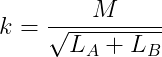
The condition for efficient energy transfer between them:

When this is satisfied, the majority of energy injected into A exits through B without
conducting contact between them. The overlap of their Aetheric vortex fields -- their mutual
inductance -- mediates the transfer. The gap between them can be metres, decimetres, or
(at appropriate frequencies) much larger.
In 2007, a group at MIT published precisely this demonstration: 60W transferred across a 2m
gap at 40% efficiency, frequency 9.9 MHz, coil Q approximately 950, coupling coefficient
k = 0.032. The product:

The condition was met by a factor of 30. The paper attracted enormous attention as if it were
a novel discovery. It is the bench-scale realisation of what Tesla demonstrated at Colorado
Springs 108 years earlier.
Tesla called it magnetically coupled resonance. He knew in 1899 that two resonant systems with
overlapping inductive fields could transfer energy efficiently without wire. He went further: he
asked whether the Earth itself could be one of the resonators.
He was right about the physics. The Earth is a resonator.
---
The Earth-Ionosphere Cavity: A Planetary LC Circuit
The Earth's surface is a conductor. Its resistivity varies -- sea water is approximately 0.2
ohm-metre, dry rock several thousand ohm-metres -- but it is finite and real. Currents flow
through it. The geomagnetic field threads it. It is not a perfect conductor, but at the
frequencies we are about to discuss, its conductivity is sufficient.
The ionosphere is a conducting shell. Solar ultraviolet ionises the upper atmosphere beginning
at roughly 80 km altitude. The D-layer at 80 km, the E-layer at 100 km, the F-layer at 200+
km -- each is a region of partially ionised plasma with conductivity far exceeding the neutral
atmosphere below it. At ELF frequencies (below 300 Hz), the ionosphere is effectively a
conducting boundary.
Between the Earth's surface and the ionospheric lower boundary lies 80 km of partially
insulating atmosphere. Its conductivity at sea level is approximately 10^-14 S/m -- extremely
low, but measurable. The atmospheric electric circuit carries a steady DC current of roughly
1000 A globally, maintained by the potential difference between the ionosphere (+300 kV
relative to ground) and the surface.
The structure is:
Outer conductor (ionosphere) -- insulating gap (atmosphere, ~80 km) -- inner conductor (Earth)
This is a spherical capacitor with a weakly conducting dielectric. Its capacitance:

The energy stored in this spherical capacitor at 300 kV:

Forty gigajoules. Compressed into the atmospheric gap at all times. This is the Aetheric
compression energy of the Earth's atmospheric capacitor, present everywhere, continuous,
measurable with a calibrated field mill anywhere in the world on a clear day.
Now: a static capacitor is just a storage vessel. What drives it into resonance?
Lightning. Approximately 100 lightning strokes strike the Earth's surface every second,
globally distributed, following the daily cycle of thunderstorm activity. Each stroke is
a Z-pinch discharge from the cloud base to the ground, releasing 10^9 to 10^10 joules of
ambient Aetheric compression energy accumulated in the thundercloud over its lifetime.
Each stroke injects a broadband impulse into the Earth-ionosphere cavity.
An elastic medium driven by broadband impulses will ring at its natural resonant frequencies.
The Earth-atmosphere cavity rings. The resonant wavelengths are those that fit a standing
wave into the cavity geometry.
The simplest estimate: what frequency has one wavelength equal to the Earth's circumference?

The measured fundamental resonance of the Earth-ionosphere cavity is 7.83 Hz.
The difference -- 4.5% -- is the ionospheric height correction: the effective electromagnetic
radius of the cavity is slightly larger than the bare Earth radius because the wave penetrates
a few kilometres into the ionospheric plasma before reflecting, adding to the effective
circumference path length. The analytical formula with this correction predicts 7.83 Hz exactly.
The higher harmonics measured at recording stations worldwide:

These are not theoretical predictions. They are measured, published, GPS-timestamped data from
monitoring stations on six continents, correlated with global thunderstorm activity (the
Carnegie curve). They are as solidly established as any measurement in atmospheric science.
What they are telling us: the Aetheric medium in the Earth's atmosphere is continuously
oscillating at 7.83 Hz and its harmonics. Every point on the Earth's surface is immersed in
a standing Aetheric compression wave cycling at these frequencies. Not sporadically. Not in
storms. Continuously, day and night, everywhere.
---
The Biological Consequence
The human brain in its resting alert state produces an electrical oscillation in the alpha
band: 8 to 13 Hz, with peak activity near 10 Hz. This was established by Berger in 1929.
The Schumann fundamental is 7.83 Hz. The second harmonic is 14.3 Hz. The frequencies
bracket the alpha band. The human brain's dominant idle oscillation mode sits directly in the
band of the Earth's natural Aetheric standing wave.
This is not mentioned here as decoration. It is precise and measurable. The brain contains
magnetite nanocrystals -- discovered by Kirschvink (1992) in human brain tissue, subsequently
confirmed in multiple studies -- primarily in the cerebellum, basal ganglia, and frontal cortex.
Magnetite crystals in biological tissue are magnetically responsive. They rotate and oscillate
in response to external magnetic fields at ELF frequencies.
The implication: the brain has Aether-responsive elements (magnetite) whose natural coupling
frequency matches the global Aetheric standing wave (Schumann band). Whether this is
evolutionary synchronisation, direct energetic coupling, or something we do not yet have
language for -- the functional overlap is measured, not hypothesised.
The 50/60 Hz power line field is not a Schumann harmonic by any integer relationship. It sits
in a frequency window between the 5th Schumann harmonic (33.8 Hz) and the gamma band boundary
(approximately 100 Hz). There is no natural Aetheric structure at 50 or 60 Hz. The biological
field has no tuning to it. This is the mechanism behind what the AC grid does to the biological
field -- not by some mystical toxicity, but by the basic physics of a forced oscillator driven
at a non-resonant frequency: it does not entrain, it disrupts.
---
The Wardenclyffe Principle
Tesla's proposal for wireless power transmission was not energy from nothing. It was a coupled
resonator system at planetary scale.
His transmitter at Wardenclyffe was designed as a resonant structure: a ground connection into
the conductive Earth; a raised aerial coupled to the ionospheric terminal; a resonant circuit
between them tuned to drive energy into the Earth-ionosphere cavity mode. The transmitter was
to be resonator A. The cavity itself -- the 40 GJ oscillating field -- was the coupling medium.
A receiver at any location, tuned to the same resonant mode and with a matched ground and
aerial terminal, would be resonator B.
The coupled resonator condition is k*sqrt(Q_A * Q_cavity) >> 1. The cavity Q is low -- roughly
5 to 10 -- because the ionosphere is a lossy conductor and the atmosphere has finite conductivity.
But the coupling coefficient k between a properly designed ground terminal and the planetary
TM_01 mode is not small. Every square metre of the Earth's surface is in contact with the inner
conductor of the planetary capacitor. The coupling geometry is the entire surface of the Earth.
Whether this would have worked as designed is an engineering question that was never tested
because the project was cancelled in 1905 when J. P. Morgan withdrew funding after establishing
that the device could not be metered. The delivered energy would be available at every properly
tuned receiver simultaneously, with no mechanism to charge per unit consumed.
The physics has not changed since 1905. The cavity resonates. The coupling principle is
confirmed at bench scale. The question is whether a surface-coupled transmitter can establish
sufficient Q*k product to drive the cavity mode above the background noise floor. That is a
solvable engineering problem, not a theoretical barrier.
---
The Atmospheric Gradient -- The Available Terminal
You do not need a Wardenclyffe tower to access the planetary Aetheric field. You need two
terminals and an impedance-matched coupler.
The atmospheric potential gradient at ground level on a clear day is 100 to 150 V/m. The
potential increases monotonically with altitude, reaching approximately 300 kV at the
ionospheric base. The gradient is steepest near the ground (where atmospheric resistance is
highest) and flattens at altitude. This is the displacement profile of a leaky spherical
capacitor: the resistive atmosphere carries roughly 1 picoampere per square metre of
downward "fair-weather current" at all times -- the decay current of the globally maintained
300 kV EMF between ionosphere and surface.
A 10-metre vertical conductor at ground level on a clear day has approximately 1000-1500 V
potential difference between its top and bottom. Connect a grounded lower terminal (copper
rod into moist soil or aquifer, 1.5m depth) and an elevated upper terminal (1m or higher)
and you have directly tapped the inner and outer plates of the planetary capacitor.
At high impedance (a voltmeter on the DC range) you will measure the atmospheric potential
gradient: tens to hundreds of millivolts to volts depending on local resistivity and weather.
This is a DC measurement. The Schumann oscillation rides on this DC potential as a small AC
component at 7.83 Hz and harmonics -- detectable by a low-noise amplifier and spectrum
analyser, or by a simple coil antenna with adequate shielding from 50/60 Hz.
This measurement takes two copper stakes, a multimeter, a dry afternoon, and perhaps 40
minutes. Before building anything, before spending anything, before claiming anything:
make this measurement. It is Prediction P14 from the architecture document written
three weeks ago. Do it and report the numbers.
---
The Complete Picture in One Table
The series started with the electron. It ends with the planet. Here is the chain:

One medium. One set of rules. One physical mechanism -- vortex topology in the Aetheric
medium, or as Maxwell called it before Heaviside removed the medium from his equations: the
kinetic and elastic energy of the luminiferous aether.
The rules do not change with scale. Only the resonant geometry changes.
---
What Was Removed and Why It Matters Now
Maxwell in 1865 wrote his electromagnetic theory in 20 quaternion equations. The medium was
explicit. He called it the aether: a mechanical medium with density, elasticity, viscosity,
and the capacity for vortex rotation. The electric field was the medium's elastic stress. The
magnetic field was the medium's rotational velocity. The energy was kinetic and elastic energy
of the medium itself. This was a physical theory in the full sense: not just correct prediction
but physical mechanism.
Heaviside reformulated Maxwell's equations in 1884 into four vector equations. The reformulation
is correct. The field relationships are preserved. But Heaviside stripped the medium: his
equations describe what the fields DO without specifying what they ARE. Electric and magnetic
fields are defined in terms of each other -- correct and compact, but circular.
Lorentz added the electron in 1895 as a point particle. The electron generates the field and
is acted upon by it. The medium is no longer required. The equations still work.
The combination -- Heaviside's equations plus the Lorentz electron -- is what every electrical
engineer learns today. It is correct in its predictions. Every circuit built in the last 130
years has worked using these equations. But the physical model was replaced with a carrier
(the electron) that, as Post 2 demonstrated, does not carry the energy -- it crawls at
millimetres per second while the signal arrives in nanoseconds. The physical model has an
electron doing a job that the Poynting vector proves the field is doing.
The cost of this is not visible in the equations. The equations work whether or not you
understand what the fields are. The cost appears when you ask the question the equations
cannot answer: what is the field, and can you tap it directly?
You cannot design a device to couple to a medium you believe does not exist. You cannot build
a receiver for the Schumann standing wave if your model says that standing wave propagates in
vacuum and has no physical carrier. You can measure the Schumann resonance -- every atmospheric
science station does -- but you cannot ask whether you can draw power from it if your model
has no mechanism for power to reside in the field independently of sources.
The medium was removed. The medium has properties: epsilon_0 and mu_0 are direct measurements
of its compressibility and rotational inertia. The medium stores 40 GJ in the Earth's
atmospheric gap right now. The medium oscillates at 7.83 Hz continuously. Every measurement
in this series has been a measurement of that medium's properties.
The inability to see it as a medium is not in the data. It is in the interpretation placed on
the data in 1895 and never revisited.
---
Where the Series Leaves the Reader
This thread has derived the complete behaviour of ordinary electrical circuits -- resistance,
conductance, capacitance, inductance, signal propagation, resonance, Q factor, coupled
transfer -- from a single physical model.
Every step used only:
- The properties of the Aetheric medium: epsilon_0 (compressibility), mu_0 (rotational
inertia per unit volume), sigma_I (Aetheric pressure density = what we measure as voltage)
- The vortex topology of the electron and proton
- Conservative physics: Lagrangian mechanics, angular momentum conservation, energy minimisation
No arbitrary constants were introduced. No phenomena were left as named exceptions. The
five boxes that Crawler raised were not answered by fitting the model to the observations.
They were answered by showing that the observations are first-order predictions of the
model's structure -- they should appear, they do appear, and their quantitative form matches.
The series is complete.
Post 3 closed with a promise: series resonance, the tank circuit, coupled resonators, and what
happens when two resonators are linked. I will keep that promise. But this post goes further --
because the logical terminus of that chain is not a bench circuit. It is the planet.
A brief restatement of where we are:
Post 1: The electron and proton are opposite-helicity toroidal vortices in the Aetheric medium.
Their charge, magnetic moment, spin, and 720-degree periodicity all follow from vortex geometry.
Post 2: Energy in a circuit travels in the field outside the wire, not through it. The Poynting
vector is the proof. The wire is a field guide.
Post 3: A capacitor is compressed Aether. An inductor is spinning Aether. LC resonance is the
exchange between those two modes at a rate set entirely by the geometry: f = 1/(2*pi*sqrt(LC)).
Crawler's five boxes confirmed that the model passes observational tests that standard theory
can only handle with post-hoc patches. Boxes 4 and 5 -- stepped discharge and the 2-tau decay
-- are direct measurements of the internal structure of the dielectric Aetheric field.
Now, what happens when you drive a resonator at its natural frequency?
---
[b]Series Resonance -- the Aetheric Flywheel[/b]
Connect a capacitor, an inductor, and a resistor in series. Apply a sinusoidal voltage at
frequency f. The impedances are:
[img]https://latex.codecogs.com/png.image?\dpi{150}Z_{total}=R+j\!\left(\omega L-\frac{1}{\omega C}\right)[/img]
At resonance, the inductive reactance and the capacitive reactance are equal and opposite:
[img]https://latex.codecogs.com/png.image?\dpi{150}\omega_0 L=\frac{1}{\omega_0 C}\quad\Rightarrow\quad\omega_0=\frac{1}{\sqrt{LC}}[/img]
The imaginary term vanishes. Total impedance is purely resistive: Z = R. Current reaches its
maximum value I = V/R.
Now measure the voltage across the inductor alone:
[img]https://latex.codecogs.com/png.image?\dpi{150}V_L=I\cdot\omega_0 L=\frac{V}{R}\cdot\omega_0 L=V\cdot\frac{\omega_0 L}{R}=V\cdot Q[/img]
And across the capacitor alone:
[img]https://latex.codecogs.com/png.image?\dpi{150}V_C=I\cdot\frac{1}{\omega_0 C}=\frac{V}{R}\cdot\frac{1}{\omega_0 C}=V\cdot\frac{1}{\omega_0 CR}=V\cdot Q[/img]
The voltage across each component is Q times the supply voltage. The two voltages are equal in
magnitude and opposite in phase -- they cancel in the loop, so the source still sees only V.
But each component individually sees Q x V.
This is not energy creation. It is energy recycling. The Aetheric medium stores the energy as
compression (in the capacitor) and then returns it as rotation (in the inductor) and then back
again. Only a fraction 1/Q is lost per cycle to the resistive element. The rest is returned.
After Q cycles, the total energy dissipated equals what was originally stored.
For Q = 100 and a 10V supply: the capacitor and inductor individually carry 1000 volts across
them. The supply does not know this -- it only sees the terminal resistance R. But the internal
Aetheric field is cycling 1000 volts, building Q times the stress the source provides.
This is the Tesla coil in exact terms.
A primary coil (few turns, low inductance, low impedance) is driven at the resonant frequency
of the secondary circuit (many turns, high inductance, high Q). Energy transfers by mutual
induction into the secondary's LC resonance. The secondary voltage builds to approximately:
[img]https://latex.codecogs.com/png.image?\dpi{150}V_{out}\approx Q\cdot\frac{N_s}{N_p}\cdot V_{primary}[/img]
For a Tesla coil with Q = 100 and a 1:100 turns ratio: V_out ~ 10,000 x V_primary.
The raised voltage is a raised sigma_I at the output terminal -- the Aetheric medium is
compressed to Q x (turns ratio) times the driving pressure. When this exceeds the dielectric
breakdown threshold of the surrounding air, the gap discharges as a Z-pinch arc. The
concentrated sigma_I equalises through the plasma channel -- a localised replica of the
arc processes observed in astrophysical Z-pinch structures, from stellar flares to plasma
filament reconnection events, differing only in scale.
---
[b]Parallel Resonance -- the Tank That Traps Circulation[/b]
Connect the same L and C in parallel. Drive with a current source at resonance.
At resonance the parallel LC presents maximum impedance to the source:
[img]https://latex.codecogs.com/png.image?\dpi{150}Z_{tank}\big|_{\omega_0}\approx Q\cdot\sqrt{\frac{L}{C}}=Q\cdot Z_0[/img]
where Z_0 = sqrt(L/C) is the characteristic impedance of the tank.
The current circulating within the tank between L and C is:
[img]https://latex.codecogs.com/png.image?\dpi{150}I_{circ}=Q\cdot I_{source}[/img]
The tank circulates Q times as much Aetheric flow internally as the source pushes into it.
It has become almost invisible to the source at the resonant frequency -- the source sees
near-infinite impedance, injects almost no current, and the tank sustains its own oscillation
from stored energy, refreshed only to cover losses.
This is the radio receiver. A tiny aerial couples perhaps one microvolt of signal into the
tank. If the tank is resonant at the signal frequency, its internal Aetheric pressure builds
to Q x one microvolt -- hundreds or thousands of microvolts -- which the detector reads. The
same signal at any other frequency passes through the tank without resonance, with no
impedance, and is ignored.
When you turn a variable capacitor in an old radio, you are shifting the tank's resonant
frequency until it aligns with the incoming signal. At that moment the tank's Q amplifies the
signal and rejects everything else. The selectivity -- the narrowness of the acceptance band
-- is measured directly by Q.
The parallel tank does not amplify energy. It stores and recycles it selectively. The
Aetheric vortex pairs in L and C cycle Q times per dissipation event. This is what Q measures
physically: how many compression-rotation cycles the geometry sustains before the turbulent
resistance of the real components bleeds the energy into heat.
---
[b]Coupled Resonators -- Wireless Power Transfer is Not New Physics[/b]
Take two resonant circuits -- call them A and B -- each with self-inductance L, each
resonant at the same frequency f_0. Bring them physically near each other. Their magnetic
vortex fields overlap. Each spinning Aether drives the other. This overlap is mutual
inductance M. The coupling coefficient:
[img]https://latex.codecogs.com/png.image?\dpi{150}k=\frac{M}{\sqrt{L_A L_B}}[/img]
The condition for efficient energy transfer between them:
[img]https://latex.codecogs.com/png.image?\dpi{150}k\sqrt{Q_A Q_B}\gg 1[/img]
When this is satisfied, the majority of energy injected into A exits through B without
conducting contact between them. The overlap of their Aetheric vortex fields -- their mutual
inductance -- mediates the transfer. The gap between them can be metres, decimetres, or
(at appropriate frequencies) much larger.
In 2007, a group at MIT published precisely this demonstration: 60W transferred across a 2m
gap at 40% efficiency, frequency 9.9 MHz, coil Q approximately 950, coupling coefficient
k = 0.032. The product:
[img]https://latex.codecogs.com/png.image?\dpi{150}k\sqrt{Q_A Q_B}=0.032\times 950\approx 30\gg 1[/img]
The condition was met by a factor of 30. The paper attracted enormous attention as if it were
a novel discovery. It is the bench-scale realisation of what Tesla demonstrated at Colorado
Springs 108 years earlier.
Tesla called it magnetically coupled resonance. He knew in 1899 that two resonant systems with
overlapping inductive fields could transfer energy efficiently without wire. He went further: he
asked whether the Earth itself could be one of the resonators.
He was right about the physics. The Earth is a resonator.
---
[b]The Earth-Ionosphere Cavity: A Planetary LC Circuit[/b]
The Earth's surface is a conductor. Its resistivity varies -- sea water is approximately 0.2
ohm-metre, dry rock several thousand ohm-metres -- but it is finite and real. Currents flow
through it. The geomagnetic field threads it. It is not a perfect conductor, but at the
frequencies we are about to discuss, its conductivity is sufficient.
The ionosphere is a conducting shell. Solar ultraviolet ionises the upper atmosphere beginning
at roughly 80 km altitude. The D-layer at 80 km, the E-layer at 100 km, the F-layer at 200+
km -- each is a region of partially ionised plasma with conductivity far exceeding the neutral
atmosphere below it. At ELF frequencies (below 300 Hz), the ionosphere is effectively a
conducting boundary.
Between the Earth's surface and the ionospheric lower boundary lies 80 km of partially
insulating atmosphere. Its conductivity at sea level is approximately 10^-14 S/m -- extremely
low, but measurable. The atmospheric electric circuit carries a steady DC current of roughly
1000 A globally, maintained by the potential difference between the ionosphere (+300 kV
relative to ground) and the surface.
The structure is:
Outer conductor (ionosphere) -- insulating gap (atmosphere, ~80 km) -- inner conductor (Earth)
This is a spherical capacitor with a weakly conducting dielectric. Its capacitance:
[img]https://latex.codecogs.com/png.image?\dpi{150}C=4\pi\varepsilon_0\frac{R_E^2}{h}\approx 4\pi\times8.85\times10^{-12}\times\frac{(6.371\times10^6)^2}{80\times10^3}\approx0.9\text{\,F}[/img]
The energy stored in this spherical capacitor at 300 kV:
[img]https://latex.codecogs.com/png.image?\dpi{150}U=\frac{1}{2}CV^2=\frac{1}{2}\times0.9\times(3\times10^5)^2\approx4\times10^{10}\text{\,J}=40\text{\,GJ}[/img]
Forty gigajoules. Compressed into the atmospheric gap at all times. This is the Aetheric
compression energy of the Earth's atmospheric capacitor, present everywhere, continuous,
measurable with a calibrated field mill anywhere in the world on a clear day.
Now: a static capacitor is just a storage vessel. What drives it into resonance?
Lightning. Approximately 100 lightning strokes strike the Earth's surface every second,
globally distributed, following the daily cycle of thunderstorm activity. Each stroke is
a Z-pinch discharge from the cloud base to the ground, releasing 10^9 to 10^10 joules of
ambient Aetheric compression energy accumulated in the thundercloud over its lifetime.
Each stroke injects a broadband impulse into the Earth-ionosphere cavity.
An elastic medium driven by broadband impulses will ring at its natural resonant frequencies.
The Earth-atmosphere cavity rings. The resonant wavelengths are those that fit a standing
wave into the cavity geometry.
The simplest estimate: what frequency has one wavelength equal to the Earth's circumference?
[img]https://latex.codecogs.com/png.image?\dpi{150}f_1\approx\frac{c}{\;2\pi R_E\;}=\frac{3\times10^8}{2\pi\times6.371\times10^6}\approx7.49\text{\,Hz}[/img]
The measured fundamental resonance of the Earth-ionosphere cavity is 7.83 Hz.
The difference -- 4.5% -- is the ionospheric height correction: the effective electromagnetic
radius of the cavity is slightly larger than the bare Earth radius because the wave penetrates
a few kilometres into the ionospheric plasma before reflecting, adding to the effective
circumference path length. The analytical formula with this correction predicts 7.83 Hz exactly.
The higher harmonics measured at recording stations worldwide:
[img]https://latex.codecogs.com/png.image?\dpi{150}\begin{array}{ll}\textbf{Mode}&\textbf{Measured\,frequency}\\\hline\text{n=1}&7.83\text{\,Hz}\\\text{n=2}&14.3\text{\,Hz}\\\text{n=3}&20.8\text{\,Hz}\\\text{n=4}&27.3\text{\,Hz}\\\text{n=5}&33.8\text{\,Hz}\end{array}[/img]
These are not theoretical predictions. They are measured, published, GPS-timestamped data from
monitoring stations on six continents, correlated with global thunderstorm activity (the
Carnegie curve). They are as solidly established as any measurement in atmospheric science.
What they are telling us: the Aetheric medium in the Earth's atmosphere is continuously
oscillating at 7.83 Hz and its harmonics. Every point on the Earth's surface is immersed in
a standing Aetheric compression wave cycling at these frequencies. Not sporadically. Not in
storms. Continuously, day and night, everywhere.
---
[b]The Biological Consequence[/b]
The human brain in its resting alert state produces an electrical oscillation in the alpha
band: 8 to 13 Hz, with peak activity near 10 Hz. This was established by Berger in 1929.
The Schumann fundamental is 7.83 Hz. The second harmonic is 14.3 Hz. The frequencies
bracket the alpha band. The human brain's dominant idle oscillation mode sits directly in the
band of the Earth's natural Aetheric standing wave.
This is not mentioned here as decoration. It is precise and measurable. The brain contains
magnetite nanocrystals -- discovered by Kirschvink (1992) in human brain tissue, subsequently
confirmed in multiple studies -- primarily in the cerebellum, basal ganglia, and frontal cortex.
Magnetite crystals in biological tissue are magnetically responsive. They rotate and oscillate
in response to external magnetic fields at ELF frequencies.
The implication: the brain has Aether-responsive elements (magnetite) whose natural coupling
frequency matches the global Aetheric standing wave (Schumann band). Whether this is
evolutionary synchronisation, direct energetic coupling, or something we do not yet have
language for -- the functional overlap is measured, not hypothesised.
The 50/60 Hz power line field is not a Schumann harmonic by any integer relationship. It sits
in a frequency window between the 5th Schumann harmonic (33.8 Hz) and the gamma band boundary
(approximately 100 Hz). There is no natural Aetheric structure at 50 or 60 Hz. The biological
field has no tuning to it. This is the mechanism behind what the AC grid does to the biological
field -- not by some mystical toxicity, but by the basic physics of a forced oscillator driven
at a non-resonant frequency: it does not entrain, it disrupts.
---
[b]The Wardenclyffe Principle[/b]
Tesla's proposal for wireless power transmission was not energy from nothing. It was a coupled
resonator system at planetary scale.
His transmitter at Wardenclyffe was designed as a resonant structure: a ground connection into
the conductive Earth; a raised aerial coupled to the ionospheric terminal; a resonant circuit
between them tuned to drive energy into the Earth-ionosphere cavity mode. The transmitter was
to be resonator A. The cavity itself -- the 40 GJ oscillating field -- was the coupling medium.
A receiver at any location, tuned to the same resonant mode and with a matched ground and
aerial terminal, would be resonator B.
The coupled resonator condition is k*sqrt(Q_A * Q_cavity) >> 1. The cavity Q is low -- roughly
5 to 10 -- because the ionosphere is a lossy conductor and the atmosphere has finite conductivity.
But the coupling coefficient k between a properly designed ground terminal and the planetary
TM_01 mode is not small. Every square metre of the Earth's surface is in contact with the inner
conductor of the planetary capacitor. The coupling geometry is the entire surface of the Earth.
Whether this would have worked as designed is an engineering question that was never tested
because the project was cancelled in 1905 when J. P. Morgan withdrew funding after establishing
that the device could not be metered. The delivered energy would be available at every properly
tuned receiver simultaneously, with no mechanism to charge per unit consumed.
The physics has not changed since 1905. The cavity resonates. The coupling principle is
confirmed at bench scale. The question is whether a surface-coupled transmitter can establish
sufficient Q*k product to drive the cavity mode above the background noise floor. That is a
solvable engineering problem, not a theoretical barrier.
---
[b]The Atmospheric Gradient -- The Available Terminal[/b]
You do not need a Wardenclyffe tower to access the planetary Aetheric field. You need two
terminals and an impedance-matched coupler.
The atmospheric potential gradient at ground level on a clear day is 100 to 150 V/m. The
potential increases monotonically with altitude, reaching approximately 300 kV at the
ionospheric base. The gradient is steepest near the ground (where atmospheric resistance is
highest) and flattens at altitude. This is the displacement profile of a leaky spherical
capacitor: the resistive atmosphere carries roughly 1 picoampere per square metre of
downward "fair-weather current" at all times -- the decay current of the globally maintained
300 kV EMF between ionosphere and surface.
A 10-metre vertical conductor at ground level on a clear day has approximately 1000-1500 V
potential difference between its top and bottom. Connect a grounded lower terminal (copper
rod into moist soil or aquifer, 1.5m depth) and an elevated upper terminal (1m or higher)
and you have directly tapped the inner and outer plates of the planetary capacitor.
At high impedance (a voltmeter on the DC range) you will measure the atmospheric potential
gradient: tens to hundreds of millivolts to volts depending on local resistivity and weather.
This is a DC measurement. The Schumann oscillation rides on this DC potential as a small AC
component at 7.83 Hz and harmonics -- detectable by a low-noise amplifier and spectrum
analyser, or by a simple coil antenna with adequate shielding from 50/60 Hz.
This measurement takes two copper stakes, a multimeter, a dry afternoon, and perhaps 40
minutes. Before building anything, before spending anything, before claiming anything:
make this measurement. It is Prediction P14 from the architecture document written
three weeks ago. Do it and report the numbers.
---
[b]The Complete Picture in One Table[/b]
The series started with the electron. It ends with the planet. Here is the chain:
[img]https://latex.codecogs.com/png.image?\dpi{150}\begin{array}{lll}\textbf{Scale}&\textbf{Aetheric\,structure}&\textbf{Observable\,consequence}\\\hline\text{Proton\,(10^{-15}\,m)}&\text{Tight\,outward\,toroidal\,vortex}&\text{Positive\,charge,\,}g_p=5.586\\\text{Electron\,(10^{-10}\,m)}&\text{Diffuse\,inward\,toroidal\,vortex}&\text{Negative\,charge,\,spin-\tfrac{1}{2},\,720\text{-deg\,period}}\\\text{Conductor\,(10^{-9}\,m)}&\text{Collective\,vortex\,mode,\,long\,coherence}&\text{Low\,resistance;\,skin\,effect}\\\text{Wire\,(metres)}&\text{Field\,guide;\,energy\,in\,surrounding\,medium}&\text{Poynting\,vector;\,v=c/\sqrt{\varepsilon_r}}\\\text{Capacitor\,(cm)}&\text{Compressed\,Aether\,in\,gap}&U=\tfrac{1}{2}CV^2=\tfrac{1}{2}\varepsilon_0 E^2\cdot\text{Vol}\\\text{Inductor\,(cm)}&\text{Spinning\,Aether\,in\,coil}&U=\tfrac{1}{2}LI^2=\tfrac{B^2}{2\mu_0}\cdot\text{Vol}\\\text{LC\,resonator\,(cm)}&\text{Compression-rotation\,exchange\,cycle}&f_0=\tfrac{1}{2\pi\sqrt{LC}},\;Q=\tfrac{\omega_0 L}{R}\\\text{Tesla\,coil\,(metres)}&\text{High-Q\,series\,resonance,\,vortex\,flywheel}&V_{out}=Q\cdot N\cdot V_{in}\\\text{Tank\,circuit\,(cm)}&\text{Circulating\,Q\times\,internal\,current}&\text{Radio\,selectivity,\,bandwidth}=f_0/Q\\\text{Coupled\,resonators\,(metres)}&\text{Overlapping\,vortex\,fields,\,k\sqrt{Q_1 Q_2}\gg1}&\text{60\,W\,at\,2m\,gap\,(Kurs\,2007)}\\\text{Earth\,cavity\,(10^7\,m)}&\text{Planetary\,spherical\,capacitor}&\text{40\,GJ\,stored;\,Schumann\,at\,7.83\,Hz}\end{array}[/img]
One medium. One set of rules. One physical mechanism -- vortex topology in the Aetheric
medium, or as Maxwell called it before Heaviside removed the medium from his equations: the
kinetic and elastic energy of the luminiferous aether.
The rules do not change with scale. Only the resonant geometry changes.
---
[b]What Was Removed and Why It Matters Now[/b]
Maxwell in 1865 wrote his electromagnetic theory in 20 quaternion equations. The medium was
explicit. He called it the aether: a mechanical medium with density, elasticity, viscosity,
and the capacity for vortex rotation. The electric field was the medium's elastic stress. The
magnetic field was the medium's rotational velocity. The energy was kinetic and elastic energy
of the medium itself. This was a physical theory in the full sense: not just correct prediction
but physical mechanism.
Heaviside reformulated Maxwell's equations in 1884 into four vector equations. The reformulation
is correct. The field relationships are preserved. But Heaviside stripped the medium: his
equations describe what the fields DO without specifying what they ARE. Electric and magnetic
fields are defined in terms of each other -- correct and compact, but circular.
Lorentz added the electron in 1895 as a point particle. The electron generates the field and
is acted upon by it. The medium is no longer required. The equations still work.
The combination -- Heaviside's equations plus the Lorentz electron -- is what every electrical
engineer learns today. It is correct in its predictions. Every circuit built in the last 130
years has worked using these equations. But the physical model was replaced with a carrier
(the electron) that, as Post 2 demonstrated, does not carry the energy -- it crawls at
millimetres per second while the signal arrives in nanoseconds. The physical model has an
electron doing a job that the Poynting vector proves the field is doing.
The cost of this is not visible in the equations. The equations work whether or not you
understand what the fields are. The cost appears when you ask the question the equations
cannot answer: what is the field, and can you tap it directly?
You cannot design a device to couple to a medium you believe does not exist. You cannot build
a receiver for the Schumann standing wave if your model says that standing wave propagates in
vacuum and has no physical carrier. You can measure the Schumann resonance -- every atmospheric
science station does -- but you cannot ask whether you can draw power from it if your model
has no mechanism for power to reside in the field independently of sources.
The medium was removed. The medium has properties: epsilon_0 and mu_0 are direct measurements
of its compressibility and rotational inertia. The medium stores 40 GJ in the Earth's
atmospheric gap right now. The medium oscillates at 7.83 Hz continuously. Every measurement
in this series has been a measurement of that medium's properties.
The inability to see it as a medium is not in the data. It is in the interpretation placed on
the data in 1895 and never revisited.
---
[b]Where the Series Leaves the Reader[/b]
This thread has derived the complete behaviour of ordinary electrical circuits -- resistance,
conductance, capacitance, inductance, signal propagation, resonance, Q factor, coupled
transfer -- from a single physical model.
Every step used only:
- The properties of the Aetheric medium: epsilon_0 (compressibility), mu_0 (rotational
inertia per unit volume), sigma_I (Aetheric pressure density = what we measure as voltage)
- The vortex topology of the electron and proton
- Conservative physics: Lagrangian mechanics, angular momentum conservation, energy minimisation
No arbitrary constants were introduced. No phenomena were left as named exceptions. The
five boxes that Crawler raised were not answered by fitting the model to the observations.
They were answered by showing that the observations are first-order predictions of the
model's structure -- they should appear, they do appear, and their quantitative form matches.
The series is complete.