Post 9 -- The Electric Earth: A Node in the Circuit
Post 8 established that the Sun is a z-pinch reactor powered by incoming electromagnetic current. If that is true, the current must come from somewhere, and it must go somewhere. This post asks what Earth looks like when you follow the circuit.
---
The Global Electric Circuit: A Driven System
At any moment, approximately 1,000 lightning strikes per second occur worldwide. The global lightning rate discharges roughly 1,000 Coulombs per second into the atmosphere. At the same time, the Earth-ionosphere system maintains a persistent potential difference of approximately 200 kilovolts between the negatively charged surface and the positively charged ionosphere some 60 to 80 kilometres above it. A return current of approximately 1 microamp per square metre flows downward through fair-weather regions globally, completing the circuit.
These numbers are measured. They are not in dispute. What is in dispute is what drives the system.
The standard explanation: global thunderstorms maintain the potential. Lightning is the generator. The fair-weather return current is the load. The global circuit is a weather-driven battery.
The problem with this: it is not a closed accounting. The total fair-weather return current integrated over the Earth's surface exceeds what thunderstorms alone can sustain in energy budget calculations. Global lightning activity also correlates with the solar wind pressure and the interplanetary magnetic field orientation -- neither of which has a plausible mechanism in a purely weather-driven picture. If thunderstorms were the sole driver, the global circuit would be decoupled from space weather. It is not.
The Aetheric model: the Earth-ionosphere capacitor is maintained by incoming Birkeland current from the solar circuit. Thunderstorms are not the power source. They are the pressure-relief valve -- the mechanism by which the capacitor discharges locally when charge density builds beyond the breakdown potential of moist air. The power input is electromagnetic, from above. The discharge is mechanical and luminous, from below. Earth is not generating the circuit. It is a node in a circuit that is being driven externally.
---
The Birkeland Connection: Auroras Are Current
The aurora borealis and aurora australis are not illuminated gas clouds coincidentally near the magnetic poles. They are the visible termination points of Birkeland current filaments connecting the solar wind plasma sheet to the Earth's ionosphere along magnetic field lines.
The evidence is direct. Satellite measurements confirm that the auroral zones carry field-aligned currents of order 10^6 Amperes flowing between the magnetosphere and the ionosphere -- the Region 1 and Region 2 Birkeland current systems mapped by Iijima and Potemra in the 1970s. These are not model inferences. They are measured currents in measured locations. The total power dissipated in the auroral zones by these currents -- measurable from the UV brightness alone -- runs to tens of gigawatts during quiet conditions and terawatts during geomagnetic storms.
Earth is electrically connected to the Sun. The connection is the Birkeland current system coupling the heliospheric current sheet to the magnetosphere to the ionosphere to the global atmospheric electric circuit. This is not an analogy or a metaphor. It is a measured, mapped, power-carrying electromagnetic connection.
Post 8: the Sun is a z-pinch node.
Post 9: Earth is the next node down the circuit.
---
Earth's Magnetic Field as an Aetheric Vortex
The standard explanation for Earth's magnetic field is the geodynamo: a self-sustaining dynamo driven by convection in the deep interior generating differential rotation that produces and sustains the dipole field. The quantitative problems are severe.
The heat budget is the first problem. The proposed convection requires a sustained heat flux that radiogenic decay alone cannot provide -- estimates fall short of what the convective models require by roughly a factor of two. The proposed supplements (latent heat from boundary crystallisation, compositional buoyancy from light element exclusion) remain contested and are not independently constrained.
The reversal timescale is the second problem. Polarity reversals occur on average every 200,000 to 300,000 years, but individual reversals complete in centuries to thousands of years -- some palaeomagnetic records suggest transition times as short as a few centuries. Chaotic dynamo simulations produce reversals, but they cannot reproduce the observed reversal rate or the reversal duration distribution without adjusting parameters. Rapid geomagnetic excursions -- short-lived directional departures that do not complete a full reversal -- are even harder to fit.
The Aetheric model resolves both problems with the same mechanism. Earth's magnetic field is a toroidal vortex configuration in the Aetheric medium, maintained by the incoming Birkeland current and Earth's own charge state as a node in the solar circuit. The current-generating mechanism does not require mechanical convection powered by an uncertain heat source. It requires charge flow -- which is directly supplied by the Birkeland input. Heat in the deep interior is a product of electrical dissipation in the current-carrying material, not the source of the field. The Aetheric model reverses the causal direction: the current drives the heat, not the heat drives the current.
Polarity reversals in this picture are vortex mode transitions. The same toroidal Aetheric configuration that holds the dipole field stable can flip orientation when the driving current undergoes a mode transition -- the same physics as a laboratory plasma pinch switching polarity when its driving circuit reverses. Mode transitions in a driven medium can be rapid. The historical reversal record -- fast transitions, occasional excursions, long stable polarity epochs -- matches a driven vortex system far more naturally than a self-sustaining chaotic convective dynamo.
---
The Schumann Resonance: Earth's Electromagnetic Heartbeat
The cavity between the Earth's surface and the ionosphere is a conducting shell with a defined geometry. Any electromagnetic disturbance within this spherical cavity will excite resonant standing wave modes, just as sound excites resonant modes in a pipe or a bell. The resonant frequencies of the Earth-ionosphere cavity were predicted by Winfried Otto Schumann in 1952 and confirmed by measurement shortly after. The fundamental mode and its harmonics are:

where n is the mode number (1, 2, 3, ...), c is the speed of light, and R_E is the Earth's mean radius (6.371 x 10^6 m). This gives f_1 approximately 7.49 Hz. The measured value, corrected for the finite conductivity of the ionosphere and the non-uniform geometry of the cavity, is 7.83 Hz. Harmonics are observed at approximately 14.3, 20.8, 27.3, and 33.8 Hz.
In the Aetheric model these are not merely electromagnetic cavity resonances in the engineering sense. They are standing Aetheric wave modes of the medium filling the Earth-ionosphere cavity, driven continuously by the Birkeland current input at the top and discharged by the global lightning system at the bottom. The cavity is resonant because the Aetheric medium has defined elastic constants (epsilon_0 and mu_0 as established in Post 7) and a defined geometry. The 7.83 Hz fundamental is the lowest standing wave mode of the planetary Aetheric cavity.
Human brain alpha rhythms operate in the 8 to 13 Hz band, centred close to the Schumann fundamental. The human heart's primary electromagnetic mode and the physiological states associated with coherent heart-brain entrainment cluster in the same frequency neighbourhood. This alignment is not coincidental in the Aetheric framework. Post 10 will address it directly. For now it is sufficient to note it: Earth's resonant Aetheric cavity frequency and the dominant oscillatory frequencies of the human nervous system are in the same register. The Aetheric medium does not change its rules when it enters a living system.
---
The Geomagnetic Shield and the Van Allen Belts
Earth's magnetosphere extends approximately 6 to 10 Earth radii on the sunward side and stretches into a magnetotail of hundreds of Earth radii on the nightside -- shaped by the solar wind pressing from one direction and the Birkeland circuit pulling from the field lines threading outward. Within this structure sit the Van Allen belts: two nested toroidal regions where charged particles are trapped in large numbers.
The inner belt lies from roughly 1 to 2 Earth radii above the surface. The outer belt lies from roughly 4 to 5 Earth radii. Between them is a relatively clear slot region.
The standard description of trapping is geometric: charged particles gyrate around magnetic field lines, bounce between magnetic mirror points at the poles, and drift around the Earth, remaining confined as long as they do not cross field lines into the upper atmosphere. This description is accurate as far as it goes.
The Aetheric description adds the mechanism. The Van Allen belt boundaries are Aetheric density boundaries in the medium -- regions where sigma_I changes abruptly as the Aetheric configuration transitions between the compressed inner magnetosphere, the belt structure, and the outer magnetosphere merging into the solar wind interface. Charged particles traversing these boundaries experience the same inertia-shift effect described in Post 7 for Mercury crossing the solar density gradient. The trapping is not purely geometric -- it is energetically enforced by the medium. A particle attempting to cross an Aetheric density boundary loses effective velocity relative to the boundary faster than geometry alone predicts.
The slot region between the belts is a region of intermediate density -- a nodal surface of the toroidal Aetheric field where neither belt's density boundary provides effective confinement. The two belts are not arbitrary. They reflect the two primary toroidal vortex modes of Earth's Aetheric field configuration: inner and outer toroidal shells of the same structure, nested at the radii determined by the Bennett equilibrium of the Earth-scale Birkeland current.
---
Three Anomalies Without a Standard Mechanism
1. Earthquake electromagnetic precursors. In the days and hours before large earthquakes, anomalous electromagnetic emissions are consistently documented: ultra-low frequency radio emissions from the epicentral region, radon concentration increases in groundwater, and -- most strikingly -- total electron content (TEC) anomalies in the ionosphere directly above the future rupture zone. These ionospheric disturbances appear days before the seismic event. No geological stress propagation mechanism can move a signal from the seismogenic zone to the ionosphere faster than the seismic wave itself. Standard geophysics has no accepted mechanism for these precursors.
In the Aetheric model the mechanism is direct. Subsurface stress accumulation before rupture is an increasing compression of the Aetheric medium in the affected rock volume. As sigma_I increases in the subsurface, the medium couples this compression upward continuously -- not by mechanical propagation but by the medium's non-local character. The Aetheric disturbance couples to the ionosphere through the same medium that connects surface to ionosphere in the Schumann resonance picture. The signal reaches the ionosphere before the rupture because it does not travel through rock. It propagates through the Aetheric medium at Aetheric wave speed. The ionospheric TEC anomaly is a sigma_I density shadow of the subsurface compression event.
This is a testable and falsifiable prediction: the spatial pattern of ionospheric TEC anomalies should correspond to the sigma_I gradient projection of the subsurface stress distribution, not to any simple surface geometry. Where seismogenic stress is concentrated at depth, the vertical Aetheric column above it reflects that compression upward. The pattern shape distinguishes this mechanism from alternatives.
2. Rapid geomagnetic excursions. Palaeomagnetic records from rapidly cooled volcanic flows provide snapshots of the geomagnetic field at the time of eruption. Some records indicate that the field direction shifted by tens of degrees within years to decades during excursion events. Chaotic geodynamo simulations do not produce transitions on this timescale without requiring physically unrealistic parameter values.
In the Aetheric model these are mode transitions of the toroidal vortex field -- the same class of event as a laboratory plasma pinch switching configurations. Plasma mode transitions in driven systems can occur on millisecond timescales in the laboratory; scaled to a planetary vortex, transition timescales of years to centuries are not only possible but expected. The driving current does not change slowly because it is coupled to the (slowly varying) solar and galactic circuit modulation. Within that modulation envelope, the vortex configuration can snap between stable modes rapidly when the system crosses a parameter threshold.
3. The Carrington event class and circuit-position risk. The Carrington event of September 1859 was a solar coronal mass ejection that compressed Earth's magnetosphere to within a few Earth radii and delivered sufficient energy to the ionospheric current system to induce kilovolt potentials in telegraph lines. In July 2012 a CME of comparable magnitude missed Earth by approximately nine days of orbital travel time. The infrastructure consequences of a direct Carrington-class hit on the modern electrical grid are estimated at multi-trillion-dollar scale with multi-year recovery timescales.
In the Aetheric model a CME is a mode transition in the solar z-pinch -- a current sheet disruption event of the type described in Post 8, where the solar plasma's electromagnetic configuration abruptly changes topology. Earth's vulnerability to CMEs is a function of its position in the circuit at the time of the mode transition, not merely of its geometric proximity to the eruption direction. When Earth sits at a particular phase of its heliospheric current sheet crossing -- the sector boundary that the Parker spiral creates -- coupling to a CME is more or less efficient. Field line connectivity to the eruption site, determined by the Birkeland structure of the heliosphere, is what determines impact severity. This is already partially understood in space weather forecasting through the concept of magnetic connectivity. The Aetheric model identifies the physical mechanism: it is circuit topology, not just geometric proximity.
---
The Same Law, Still
Post 5 applied the Bennett pinch condition to galactic filaments at 10^15 m. Post 8 applied it at nuclear scale, 10^-15 m. Post 9 applies it to the auroral Birkeland current system at planetary scale -- roughly 10^7 m. The auroral zone Birkeland currents carry of order 10^6 Amperes at plasma temperatures of thousands of Kelvin across column densities measurable by satellite. The Bennett relation:
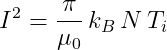
is satisfied at this scale as it is at galaxy scale and nuclear scale. The medium does not require a different law at planetary scale. It uses the same one.
---
Calculating Earth's Circuit Current: Two Independent Routes
Earth's surface magnetic field is measured, not inferred. The dipole moment m_d of the geomagnetic field is approximately 8 x 10^22 A m^2 as measured by satellite and surface magnetometers. From the measured equatorial surface field B_eq ~ 3 x 10^-5 T and Earth's radius r_E = 6.371 x 10^6 m, the equivalent single-loop Birkeland current producing this dipole follows from the dipole field formula:
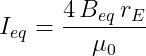
Substituting measured values: I_eq = (4 x 3 x 10^-5 x 6.371 x 10^6) / (4pi x 10^-7) ~ 6 x 10^8 A. Six hundred megaamps equivalent. The measured auroral Birkeland currents of order 10^6 A are the ionospheric termini of this system -- the total current already divided among thousands of flux tubes by the time it reaches the auroral zones.
The second route uses mass and surface gravity. In the Aetheric model, gravity and the magnetic dipole have the same source: the incoming Birkeland current maintaining the Aetheric medium density across the planetary node. The gravitational field is the gradient of sigma_I -- the medium becoming denser toward the z-pinch centre. The Aetheric density contrast required to produce observed surface gravity:
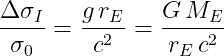
For Earth: Delta_sigma/sigma_0 = (9.81 x 6.371 x 10^6) / (9 x 10^16) ~ 6.95 x 10^-10. A shallow gradient in the medium -- but maintained by the same current I_eq that produces the magnetic moment. The formulas run in both directions: given B_surface you recover I_eq from the dipole equation; given g and M_E you recover the Aetheric density contrast that the same I_eq must sustain. Standard physics assigns B and g to entirely separate sources with no common equation. The Aetheric model assigns both to the same current supply. Any inconsistency between the two routes is a falsifiable failure of the model. Convergence is a test passed.
---
Addendum: Earth's Own Z-Pinch Core
One consequence of the Electric Earth model: if the Sun is a z-pinch nucleosynthesis reactor, and the Bennett relation operates at every scale from galactic filament to atomic nucleus, then Earth's core is itself a z-pinch.
The core is the planetary z-pinch terminus: the concentration point where Birkeland current from the auroral zones and the global circuit ultimately focuses. The z-pinch does not care what element it is compressing. It compresses what is available at the current density that exists at that depth. The composition of the deep interior is whatever z-pinch nucleosynthesis at planetary-scale current density produces over geological time -- a synthesis frequency curve weighted toward the elements stable at those conditions, not a primordial nebular inheritance.
Plasmoid physics adds a further consequence that standard geophysics does not predict and cannot explain. In laboratory plasma pinch experiments, z-pinch discharge events do not produce uniform columns of compressed plasma. They produce plasmoids -- discrete, magnetically self-contained plasma structures that form, evolve, and can persist or collapse within the pinch column. The internal structure of a sustained z-pinch is not homogeneous. It is organised into regions of high current density (the pinch cores) separated by regions of lower density and differing magnetic topology. In the planetary core context, these correspond to voids -- regions within the interior where the z-pinch current has organised the surrounding material outward, leaving a lower-density plasmoid core.
This predicts that Earth's interior is not a uniform nested shell structure (outer core, inner core) as seismic tomography's simplest models assume. It predicts an inner core with internal heterogeneity: plasmoid-scale voids or low-density regions embedded within the solid-equivalent inner core, organised by the magnetic topology of the z-pinch rather than by mechanical pressure alone. Seismic tomography of the inner core has in fact revealed anomalous velocity structures -- regions where P-wave speeds deviate from the uniform model in ways that have no standard explanation. The plasmoid void structure predicted by z-pinch physics at core scale is a candidate mechanism for these anomalies. It is testable: the predicted void geometry should correlate with the inner core's known seismic anisotropy axis, which in turn aligns with the geomagnetic dipole axis -- the axis of the planetary z-pinch.
The geodynamo heat problem mentioned earlier is also readdressed by this picture. A z-pinch synthesising matter at core scale is releasing binding energy as it does so. Nuclear binding energy release from ongoing heavy-element synthesis within the core provides a present-tense, continuous heat source that does not depend on radiogenic decay alone and does not require tuning an uncertain composition model. The heat flux from the core is a product of active nucleosynthesis, not merely the slow leak of a primordial heat reservoir.
Earth is not a passive node consuming the solar circuit's current. It is an active z-pinch node -- smaller than the Sun, operating at lower current density, producing a different synthesis output, but using the same mechanism. The medium does not know the scale. The rules are the same.
---
Open Questions
The sigma_I coupling between the subsurface compression field and the ionosphere has not yet been characterised quantitatively. The Aetheric precursor model makes geometric predictions about TEC anomaly patterns that are testable against existing satellite archives (GNSS-derived TEC data exists globally and retrospectively). A systematic comparison of historical TEC anomaly geometry against the mapped stress field of known earthquakes would either confirm or constrain the model specifically on this prediction.
The relationship between the 11-year solar cycle and the global lightning rate is measured but incompletely explained. The Aetheric chain -- galactic circuit modulation --> solar Birkeland output modulation --> Earth circuit input modulation --> global atmospheric charge distribution --> lightning rate -- makes a specific phase and amplitude prediction for this correlation that differs from the standard cosmic ray / cloud seeding model.
Post 10 closes the thread by pulling back to the largest possible view. Earth's toroidal Aetheric field is not unique. The same structure -- identical mechanism, different scale -- appears from the heliosphere to the atomic orbital to the structures at the very foundation of matter. Post 10 shows the pattern all the way down, and all the way up, and names what that pattern means.
As above, so below. As within, so without. Cells, galaxies, atoms. Same acting forces and properties
"Aether does not know the scale that it is at."[i/i]